
Introduction
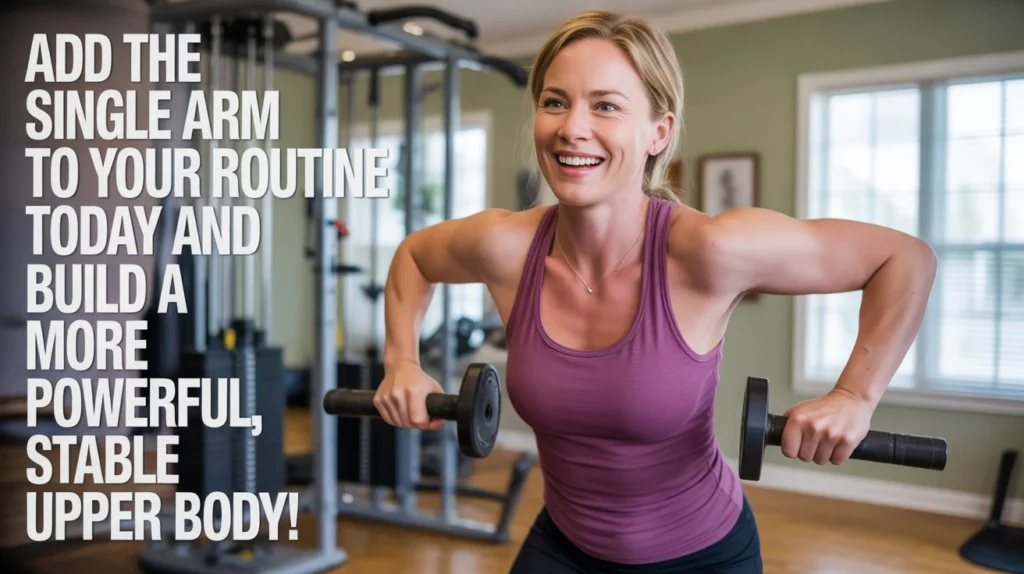
The Single Arm Row is a powerhouse exercise that targets your upper back, shoulders, and arms. If you’re aiming for a toned, strong back and better posture, this exercise should be a staple in your workout routine. Whether you’re performing it with a dumbbell or a kettlebell, the single arm row is an effective move to isolate and strengthen key muscles that contribute to a healthier, more stable body.
But this exercise isn’t just about shaping your upper back; it also plays a crucial role in improving posture and overall strength. Let’s dive into the benefits of the single arm row, how to do it correctly, and how to avoid common mistakes to get the best results.
What is the Single Arm Row?
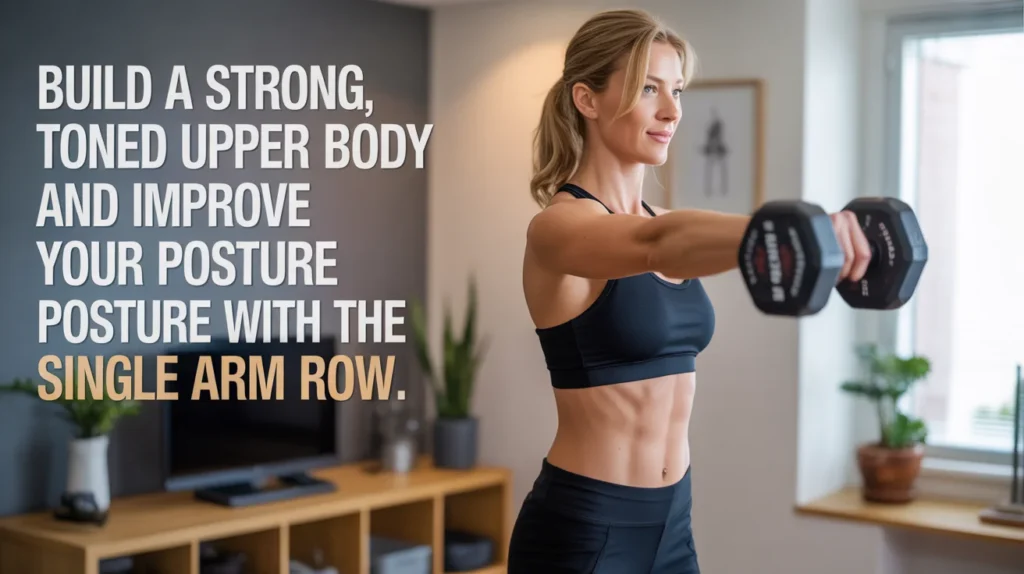
The Single Arm Row is an upper-body exercise that targets the latissimus dorsi, rhomboids, trapezius, and deltoids—the key muscles in your back and shoulders. Using a single dumbbell, the exercise is performed one arm at a time, allowing you to focus on strengthening each side individually. This is particularly beneficial for fixing any muscle imbalances that may exist between the left and right sides of your body.
The movement not only helps with toning and sculpting but also contributes to better posture and upper body stability, making it ideal for those who want to stand taller and move more efficiently.
How to Perform the Single Arm Row with Proper Form
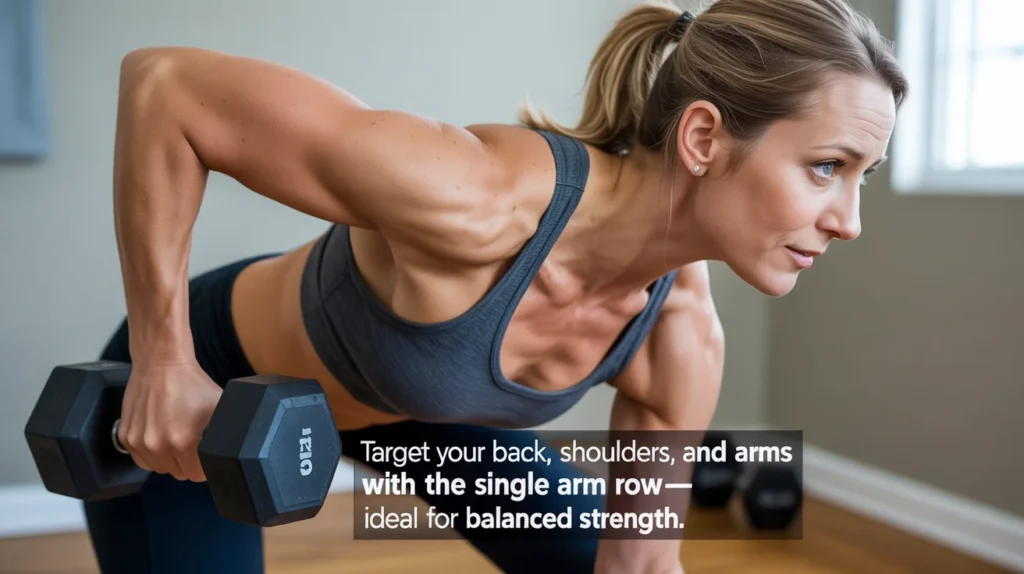
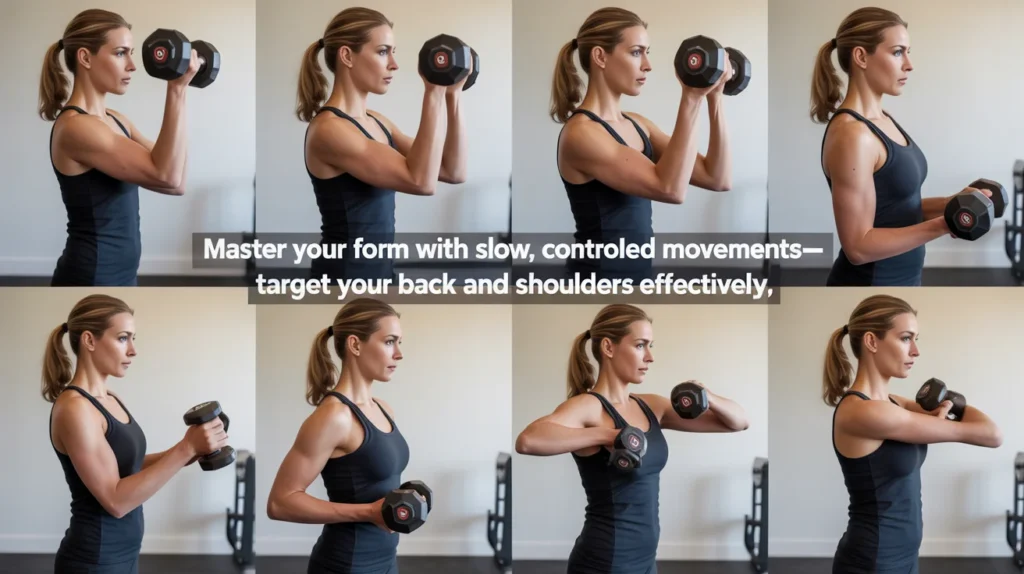
Form is crucial when performing the single arm row to ensure you’re engaging the correct muscles and avoiding injury. Follow these steps to perform the exercise correctly:
1. Set Up Your Stance
- Start by standing in a split stance with one foot forward and the other back for stability.
- Hold a dumbbell in your left hand with your arm fully extended towards the floor.
- Slightly hinge at your hips, keeping your back straight and core engaged to protect your lower back. Ensure your torso is almost parallel to the floor, but avoid rounding your back.
2. Begin the Rowing Motion
- Pull the dumbbell upward in a controlled motion by drawing your elbow straight back past your hip. Keep your elbow close to your body—do not let it flare out.
- Squeeze your back muscles at the top of the movement, focusing on the muscles between your shoulder blades and your lats.
- Lower the dumbbell back down slowly to the starting position with control. The movement should be slow to maximize muscle engagement and avoid using momentum.
3. Complete the Set
- Perform the desired number of reps (typically 10-12 reps per side). After completing one arm, switch to the other side.
Tips for Effective Single Arm Rows
- Engage your core: Keep your abdominal muscles tight throughout the exercise to support your lower back.
- Pull to the right spot: Focus on pulling the weight toward your lower rib cage or hip bones, not the upper chest. This helps to target your back muscles effectively and avoids shoulder tension.
- Go slow: Control the movement at both the top and bottom of the row to fully engage the muscles and avoid using momentum.
Common Mistakes to Avoid in Single Arm Rows
While the single arm row is simple to execute, there are several common mistakes that can hinder your progress and even lead to injury. Here are the most important ones to watch out for:
1. Pulling the Weight Too High
- Pulling the weight too high can cause your shoulders to shrug, which shifts the focus away from your back and puts unnecessary strain on the neck and traps.
- Solution: Think of pulling the weight toward your pockets, not the upper part of your rib cage. Focus on squeezing your shoulder blades together as you row.
2. Using Too Heavy a Weight
- If you choose a weight that’s too heavy, you may struggle to complete the movement with proper form. This often leads to using your biceps more than your back muscles.
- Solution: Start with a manageable weight that allows you to perform the exercise with control. Gradually increase the weight as your strength improves.
3. Rounding the Shoulders
- Allowing your shoulders to round forward can place stress on your lower back and make it harder to engage your back muscles effectively.
- Solution: Keep your back straight and your shoulders pulled back, maintaining a strong, neutral spine throughout the movement.
4. Using Too Much Momentum
- Swinging the dumbbell or using momentum to pull the weight up can reduce the effectiveness of the exercise.
- Solution: Focus on slow, controlled movements and avoid jerking or swinging the weight. The goal is to work the muscles, not to lift the weight as quickly as possible.

Benefits of the Single Arm Row
The single arm row is more than just a back exercise—it offers a range of functional benefits that extend beyond muscle tone. Here’s why you should incorporate it into your routine:
1. Strengthens the Upper Back
- The primary target of the single arm row is the upper back, which includes muscles like the latissimus dorsi (lats), rhomboids, and trapezius. A stronger upper back helps improve posture and provides better support for your shoulders and spine.
2. Improves Posture
- A stable upper back is key to standing tall and maintaining a healthy posture. By strengthening the muscles responsible for pulling your shoulder blades back, the single arm row naturally promotes an upright, confident stance.
3. Enhances Stability and Control
- Because the single arm row isolates each side of the body, it helps identify and correct muscle imbalances. As a result, it improves overall body stability and coordination, essential for balance and functional movement.
4. Increases Shoulder and Arm Strength
- The single arm row also targets the deltoids and biceps, contributing to stronger shoulders and arms. This makes it a great exercise for building upper body strength and improving performance in other exercises or daily tasks.
5. Promotes Functional Strength
- Strengthening the upper back is not just about appearance; it’s also about improving your ability to perform functional movements in daily life. Whether lifting groceries, carrying kids, or performing other physical activities, a strong upper back supports these motions.

Single Arm Row FAQs
Q1: What equipment do I need for single arm rows?
You’ll need a dumbbell or kettlebell for single arm rows. Choose a weight that allows you to perform the exercise with good form.
Q2: Can single arm rows help improve posture?
Yes! Single arm rows are excellent for strengthening the upper back, which is essential for good posture. By engaging the muscles between your shoulder blades, you’ll naturally improve your stance and alignment.
Q3: Can I do single arm rows if I have back pain?
If you have existing back pain, consult with a healthcare provider before performing this exercise. With proper form and appropriate weight, the single arm row can help strengthen your back muscles, but it’s important to ensure that you are not overloading your body.
Key Takeaways
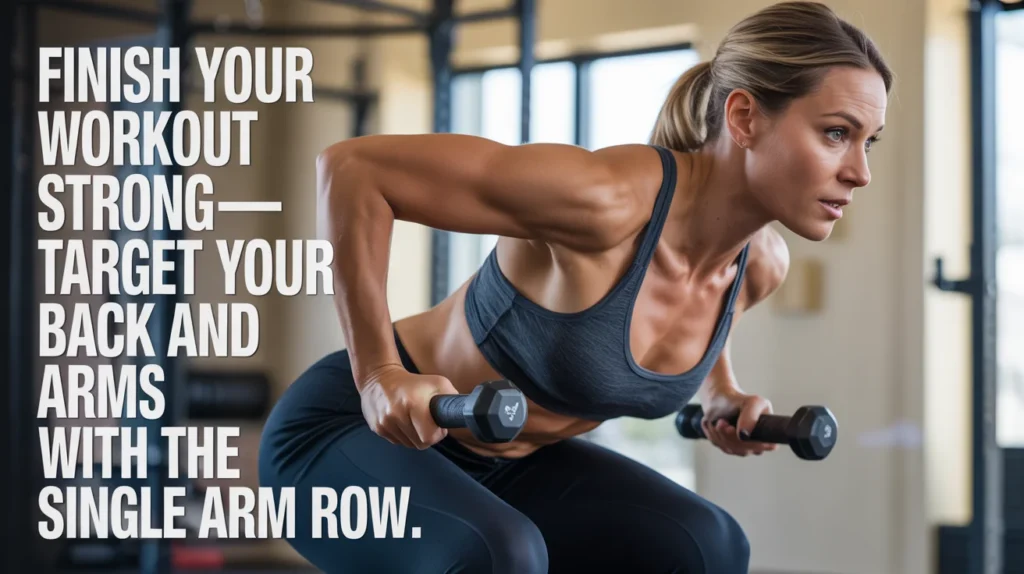
- The single arm row is a powerful exercise for strengthening the upper back, shoulders, and arms.
- Perform the exercise with proper form by focusing on controlled, slow movements and engaging your core.
- This exercise enhances posture, stability, and functional strength, making it essential for overall body fitness.
Final Thoughts
The single arm row is a simple yet effective exercise that targets several major muscle groups in your upper body. Whether you’re looking to improve your posture, build stronger shoulders, or increase your overall strength, this exercise should be a staple in your fitness routine. By performing the movement with proper form and consistency, you’ll see noticeable improvements in both your appearance and physical performance.
Add the single arm row to your workout today and start experiencing the benefits of a stronger, more stable upper body.