Introduction
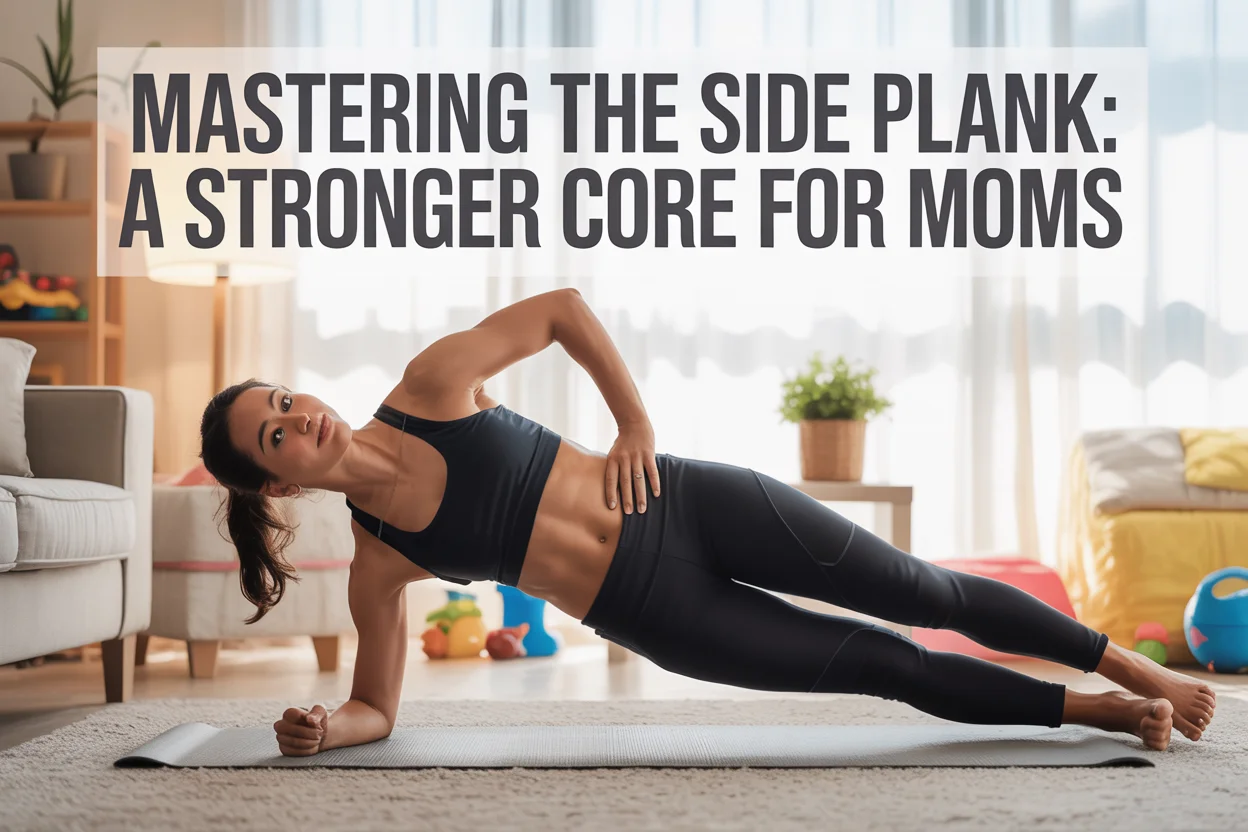
As a mom, strengthening your core is one of the best ways to build overall strength, improve posture, and make daily tasks easier. The Side Plank is a fantastic exercise that targets your obliques, shoulders, and core muscles—critical areas for maintaining balance and reducing back pain. Plus, it’s gentle on the lower back, making it perfect for postpartum recovery and strengthening for moms with a busy lifestyle.
What Is a Side Plank?
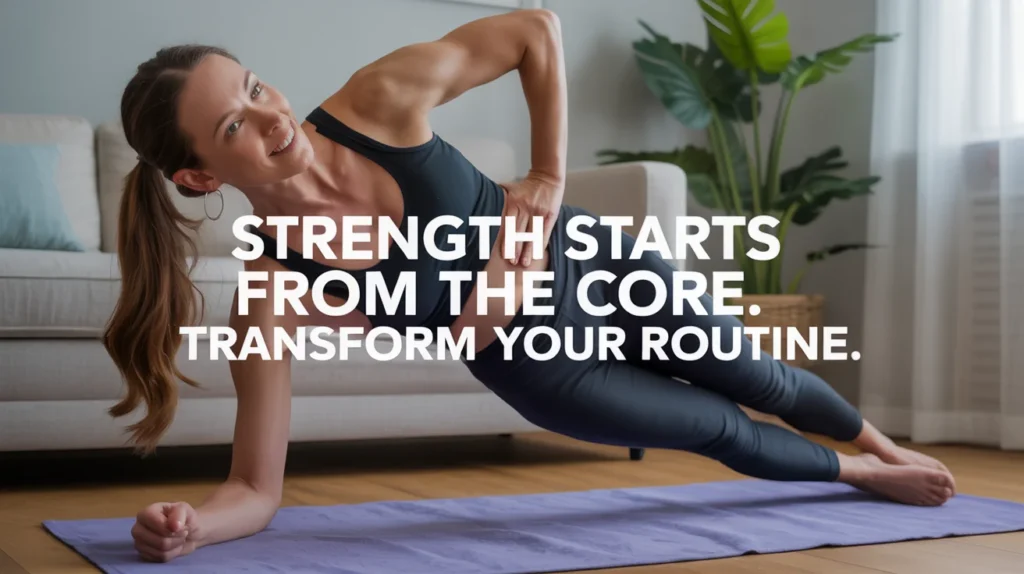
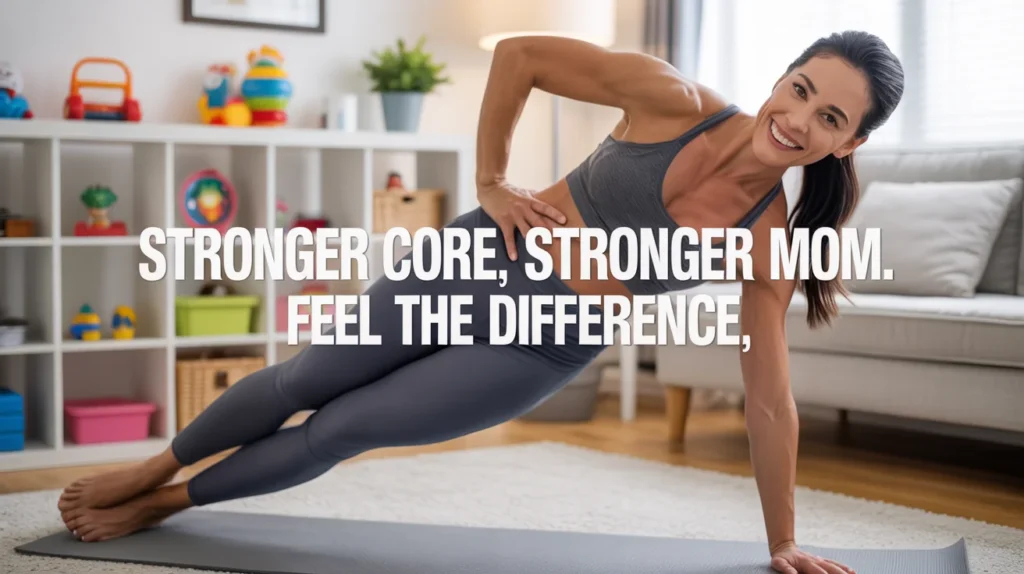
The Side Plank is an isometric core exercise where you hold your body on its side in a straight line, supported by one arm and the side of one foot. It’s a great move to engage your obliques (the muscles along your sides), which often get overlooked in traditional ab workouts like crunches.
This exercise is especially beneficial for moms because it strengthens key muscles that help with posture, balance, and the daily activities that come with motherhood—whether you’re lifting your baby, carrying heavy bags, or maintaining stability when bending down.
Why Moms Should Do the Side Plank
- Build Core Strength for Everyday Tasks
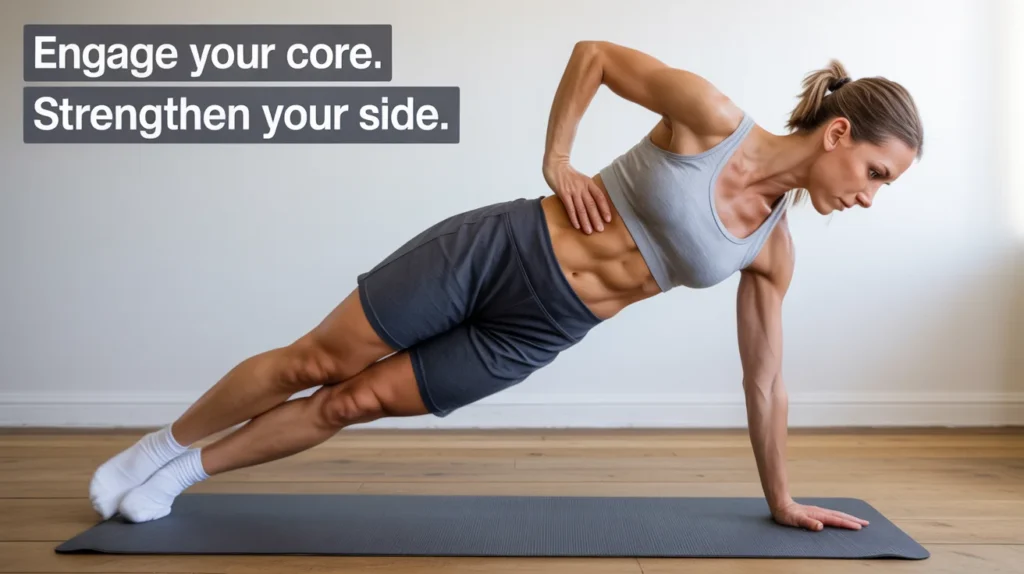
A strong core is crucial for moms. Whether you’re carrying your child, lifting groceries, or bending to pick something up, a solid core makes these activities easier and less stressful on your body. The Side Plank targets the obliques, which are key muscles for stabilizing your body. - Posture Improvement
Moms often find themselves slouching or rounding their backs, especially when carrying their babies or toddlers. Strengthening the core with side planks can help improve posture, alleviate back strain, and provide better alignment for the entire body. - Reduce Lower Back Pain
Back pain is a common complaint among moms, especially postpartum. The Side Plank helps strengthen the lower back and obliques, providing support for your spine and reducing discomfort. - Gentle on Your Back and Neck
Unlike many core exercises, the Side Plank doesn’t put pressure on your neck or lower back. This makes it a great option if you’re recovering from childbirth or dealing with back discomfort.

How to Do a Side Plank: Step-by-Step for Moms
Getting the form right is key to reaping the full benefits of the Side Plank. Here’s how to do it:
- Starting Position:
- Lie on your right side with your legs extended and stacked from hip to feet. Your right elbow should be directly under your shoulder.
- Keep your head aligned with your spine to avoid straining your neck.
- Place your left arm along your body or on your hip, whichever feels more comfortable.
- Engage Your Core:
- Engage your core by drawing your navel toward your spine. This helps stabilize your body and prevents sagging in the hips.
- Lift your hips and knees off the floor, creating a straight line from your head to your heels.
- Hold the position, making sure your hips don’t sag or lift too high. Keep your body in a straight line.
- Breathing and Holding:
- Breathe deeply and hold for 20-30 seconds if you’re a beginner. As you get stronger, work up to holding the plank for 60 seconds.
- Switch Sides:
- After holding for the desired time, return to the starting position and repeat on the other side.
Pro Tip: If you’re struggling to keep your balance, try starting with your knees on the ground, or use a pillow for extra support.

Side Plank Variations for Moms
As you get stronger, you can increase the challenge with different variations:
1. Side Plank from Knees
This is a great starting point if you’re new to core exercises or postpartum. In this variation, your knees stay on the ground while your forearm supports your upper body. This helps you build strength in your obliques without putting too much pressure on your back.
- Hold for 20-30 seconds, and then switch sides.
2. Single-Knee Side Plank
For a more challenging variation, try a single-knee side plank. In this version, you’ll support your body weight on your hip and forearm, with one knee bent on the ground for support. This helps strengthen your obliques and engage the core more deeply.
- Hold for up to 1 minute, and work on increasing your hold time as you get stronger.
3. Stability Ball Side Plank
Add an extra challenge by incorporating a stability ball or BOSU ball under your lower hip. This variation requires more balance and helps engage additional muscles.
- Make sure to keep your hips aligned and don’t allow them to dip too low.
4. Side Plank with Leg Lift
If you’re ready to take your side plank to the next level, try lifting your top leg while holding the position. This increases the intensity and engages the inner thighs as well as the obliques.
- Keep your top leg parallel to the ground, and hold for 20-30 seconds before switching sides.

Common Mistakes to Avoid in Side Planks
To get the most from side planks, avoid these common mistakes:
- Sagging Hips
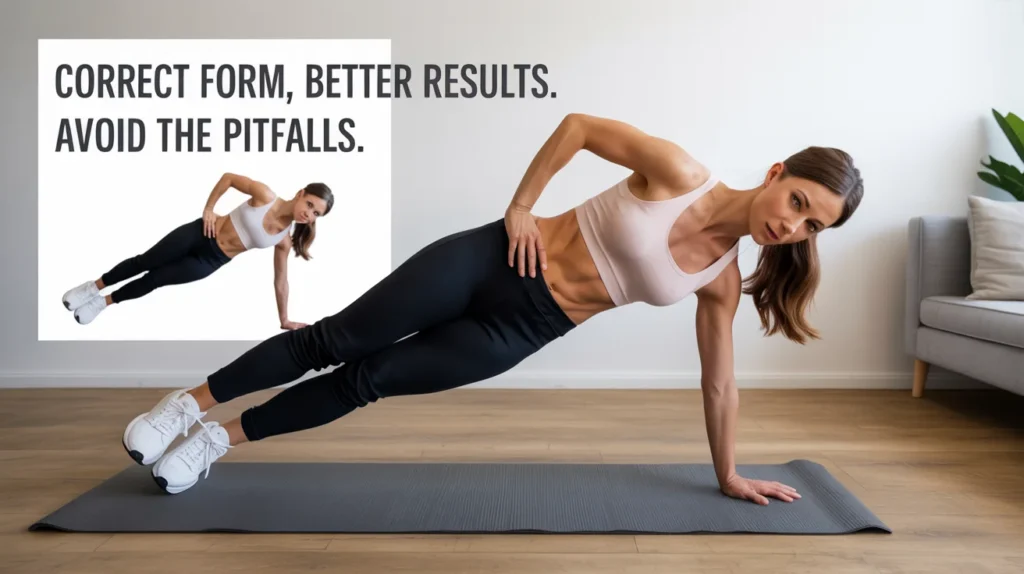
If your hips drop toward the floor, you’re not engaging your core properly, and you risk straining your lower back. Keep your hips lifted and in line with your body. - Rolling Forward
Without enough balance, you might roll forward, causing your body to lose its alignment. Focus on maintaining a straight line, and if needed, use your knees for extra support. - Holding Too Long
Don’t push yourself too hard at the start. If your form starts to break down or you begin to feel fatigued, it’s better to stop and rest. Gradually increase your hold time as you build strength.
Safety and Precautions
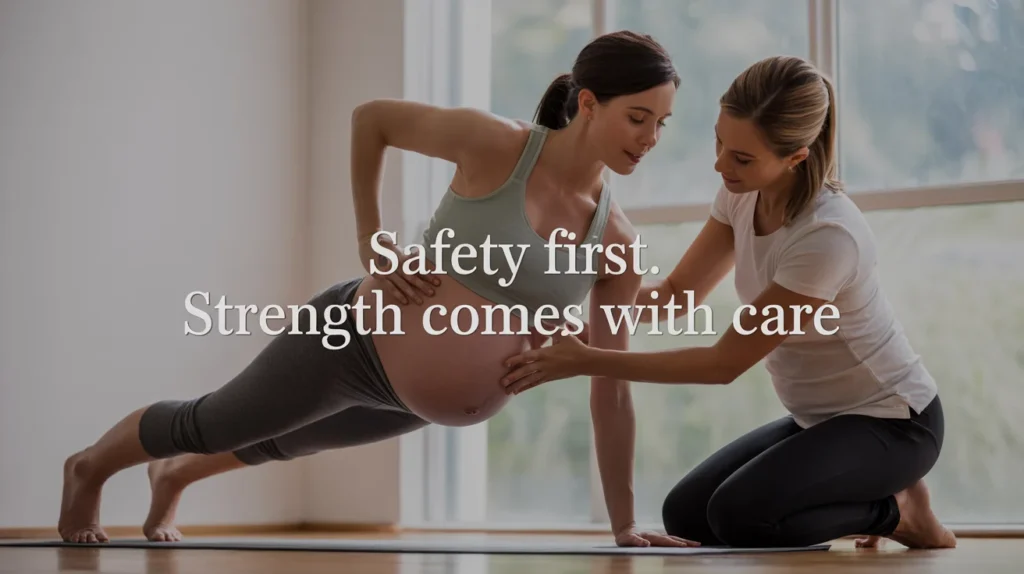
If you have any shoulder, arm, or lower body injuries, or if you’re dealing with any back pain, consult your doctor or physical therapist before performing the Side Plank. It’s important to listen to your body—stop if you feel any pain or discomfort.
Key Takeaways for Moms
- Side Planks are a fantastic core exercise that targets the obliques, improves posture, and helps reduce back pain—important for moms who spend a lot of time lifting and carrying.
- Start with easier variations like the Side Plank from Knees, and gradually work up to more challenging versions.
- Consistent practice will help you build strength, balance, and stability for everyday tasks.
FAQ: Side Planks for Moms
- How long should I hold a side plank as a beginner?
Start with 20-30 seconds and gradually increase the time as you feel more comfortable. - Can I do side planks if I have back pain?
Side planks are gentle on the back when done correctly. If you have chronic back pain, consult your doctor before trying this exercise. - How often should I do side planks?
Aim for 2-3 times a week to build core strength. Consistency is key