
Introduction:
Pregnancy brings a beautiful transformation to a woman’s body, but it also comes with its challenges. One of the most common issues expectant mothers experience is sacroiliac (SI) joint pain, a discomfort located in the lower back and pelvis. While this pain can be frustrating, there are modern, less traditional exercises that can help alleviate SI joint pain and provide much-needed relief. These exercises are specifically chosen to target the pelvic area and improve mobility, all while being gentle enough for pregnancy.
Understanding and addressing SI joint pain early can lead to greater comfort during pregnancy and a smoother transition into postpartum recovery.

What Is SI Joint Pain?
The sacroiliac (SI) joints are found at the base of the spine, where the sacrum connects to the pelvis. These joints are crucial for supporting your body’s weight and allowing smooth movement. During pregnancy, the body releases relaxin, a hormone that helps loosen the ligaments in the pelvis to prepare for childbirth. While this is necessary for delivery, it can also lead to instability in the SI joints, causing pain.
Common symptoms of SI joint pain during pregnancy include:
- Lower back pain that radiates to the buttocks or thighs.
- Pelvic discomfort, often felt in the hips, groin, or pubic area.
- Pain with movement such as standing up, sitting down, or rolling over in bed.
Although uncomfortable, SI joint pain is common, and there are safe ways to manage it during pregnancy.

Modern Exercises to Alleviate SI Joint Pain
Here are targeted, contemporary exercises that focus on strengthening, stabilizing, and relieving tension in the pelvis and lower back. These exercises are effective for managing SI joint pain while being safe and adaptable for pregnancy.
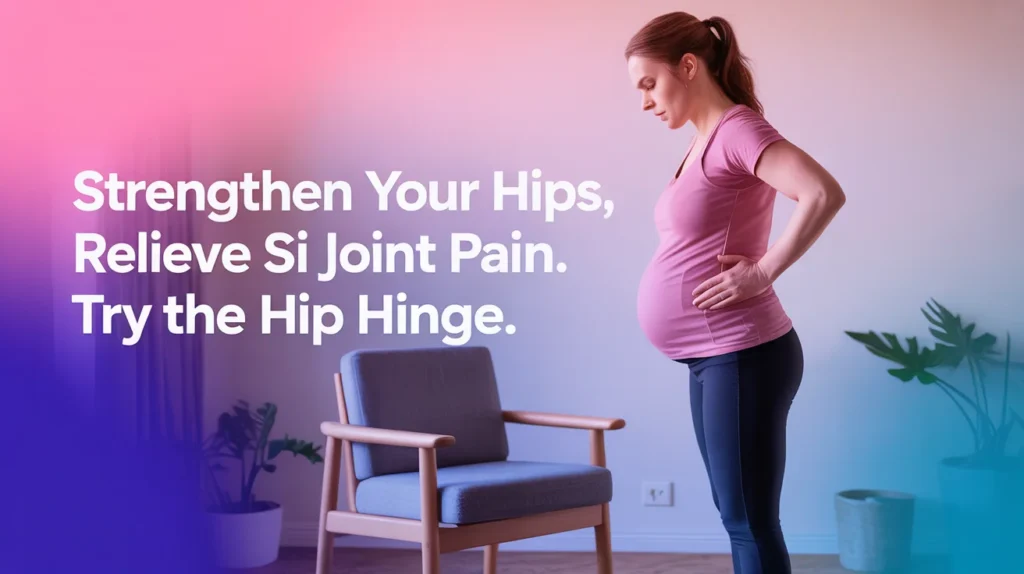
1. The Hip Hinge
How to do it:
- Stand with your feet hip-width apart, keeping your knees slightly bent.
- Keeping your back straight, push your hips back as if you are reaching for a chair behind you (not bending at the waist).
- Squeeze your glutes to return to standing.
- Repeat 10-12 times.
Benefits:
The hip hinge is an essential movement pattern that helps stabilize the pelvis and strengthen the glutes, which in turn provides support to the SI joints. It’s a modern variation of the traditional deadlift and works to prevent excessive pressure on the lower back.
2. The Pregnant Butterfly Stretch
How to do it:
- Sit on the floor with your feet together and knees bent outward, resembling the shape of a butterfly.
- Hold your feet and gently press your knees toward the floor while maintaining a tall spine.
- Hold for 20-30 seconds, then relax.
- Repeat 3-4 times.
Benefits:
This stretch targets the inner thighs, hips, and lower back. It helps release tightness around the pelvis and enhances the flexibility of the hip flexors, which can be tight during pregnancy and contribute to SI joint discomfort.

3. The Seated Leg Extensions
How to do it:
- Sit on a chair with your feet flat on the ground and your knees bent.
- Slowly extend one leg out in front of you, keeping it straight, and hold for a few seconds.
- Lower your leg and repeat on the other side.
- Perform 10-12 repetitions on each leg.
Benefits:
Seated leg extensions work the quadriceps and help strengthen the muscles around the pelvic area, promoting pelvic stability. This exercise is gentle yet effective for targeting areas that can be weak or imbalanced during pregnancy, such as the lower back and thighs.

4. Modified Side Plank
How to do it:
- Lie on your side with your elbow directly under your shoulder and knees bent.
- Lift your hips off the ground, keeping your body in a straight line from head to knees.
- Hold for 15-20 seconds, then lower back down.
- Repeat on both sides.
Benefits:
The modified side plank targets the oblique muscles, glutes, and core, all of which play a crucial role in stabilizing the pelvis and reducing SI joint pain. It’s an excellent modern exercise for building strength without putting pressure on the lower back.

When to Seek Professional Help
While these exercises can provide significant relief, it’s important to know when to seek professional help. If the pain is severe, persistent, or accompanied by symptoms like numbness or tingling, it’s time to reach out to a healthcare provider. A physical therapist specializing in prenatal care can offer personalized advice and exercises to address your specific needs.

Conclusion
SI joint pain is a common pregnancy challenge, but it doesn’t have to be debilitating. With modern exercises like the hip hinge, butterfly stretch, seated leg extensions, and modified side planks, you can target the areas most affected by SI joint pain and enjoy greater comfort during your pregnancy. As always, listen to your body, and consult with your doctor before starting any new exercise routine.
Remember, your body is doing incredible things—give it the support and care it deserves!