Introduction: Prepare Your Body for the Big Day, PT-Recommended Exercises
Pregnancy is a journey of incredible transformation, culminating in the physical and emotional marathon of labor and delivery. While classic advice often focuses on walking and squats, modern PT-Recommended Exercises a more nuanced, targeted approach. These aren’t just random exercises; they are smart, biomechanically-informed movements designed to build functional strength, increase pelvic mobility, and prepare your body for the immense work of childbirth. For the busy mom-to-be, this means a more efficient, effective, and less familiar routine that maximizes your time and energy, leaving you feeling prepared and confident for the big day.

Mobility and Alignment: The Dynamic Foundation
Physical therapists emphasize pelvic mobility and proper alignment as crucial for labor and delivery. These modern PT-Recommended Exercises go beyond static stretches to improve the dynamic movement of your pelvis, creating optimal space for the baby.
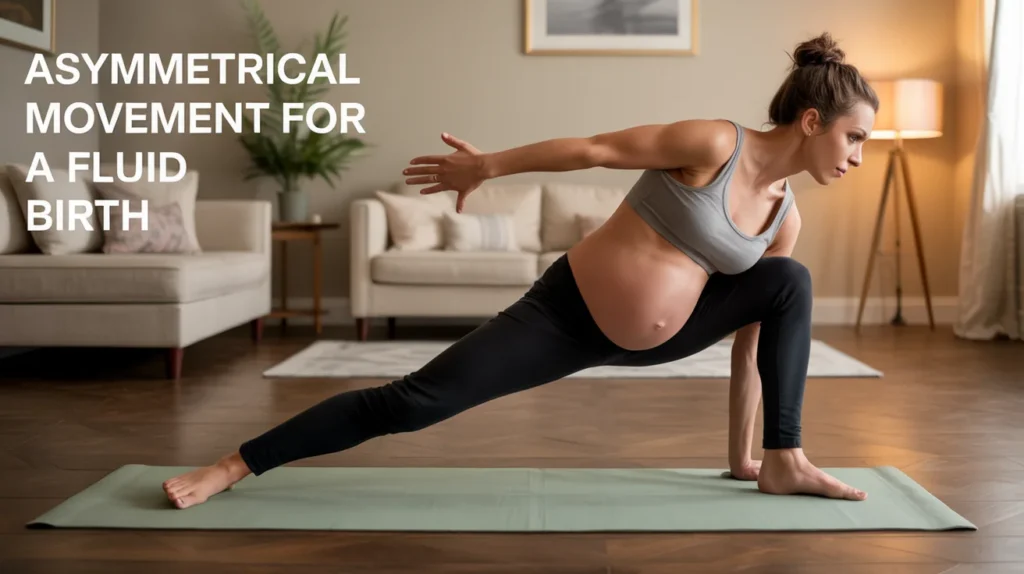
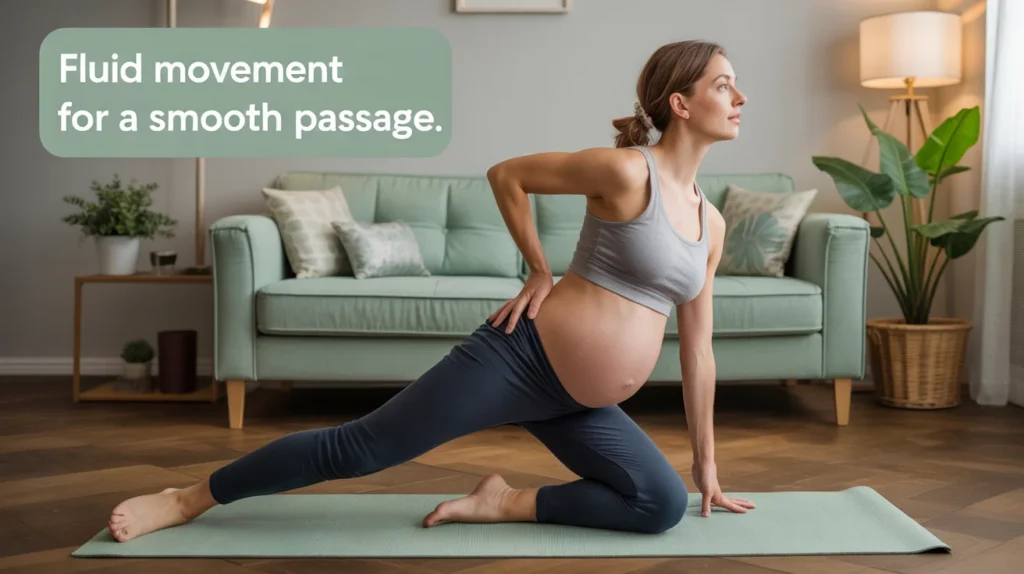
The “Fencer” Hip and Pelvis Opener
How to do it: Begin in a half-kneeling position on a soft surface, like a yoga mat. Keep one knee on the ground (use a pillow for comfort) and the other foot flat on the floor in front of you. Keep your hips facing forward. Gently shift your weight toward the leg with the foot on the floor, tucking your tailbone under slightly. You will feel a stretch in your groin and inner thigh. Rock in and out of this position a few times, then hold. Repeat on the other side.
Benefits: This asymmetrical exercise specifically targets the mobility of the bones of the pelvis. It helps create more space in the mid-pelvis, which is essential during active labor. This movement is less common than simple squats but is incredibly effective for creating targeted space where it’s needed most.
How to Maximize it: Start with 5 rocks in and out of the position, then hold for 30–60 seconds. You can increase the intensity by shifting your weight further toward your front leg.
Deep Squat with Support (Modified Malasana)
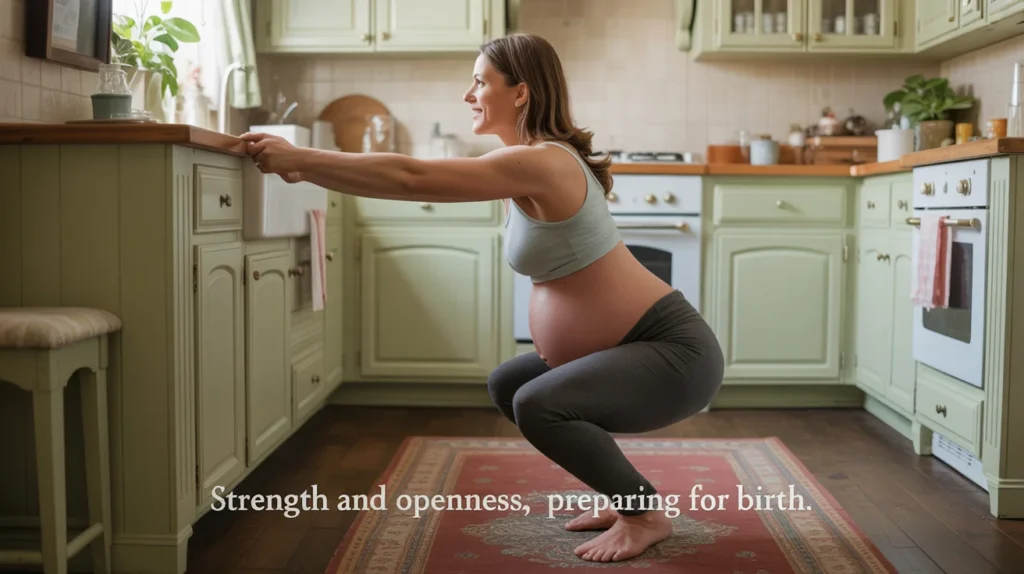
How to do it: Stand with your feet wide, toes pointed slightly outward. Place a chair or other stable support in front of you. Lower your hips down into a deep squat, as low as you comfortably can. As you do, use your elbows to gently press against your inner thighs to encourage more opening. You can use your support to manage your balance and control the movement. Inhale as you lower, and exhale as you rise.
Benefits: This position is crucial for opening the pelvic outlet and encouraging the baby to descend. Modifying it with support and an inner thigh press makes it a more active and controlled stretch, targeting the pelvic floor muscles in a more intentional way than a simple up-and-down squat.
How to Maximize it: Hold the deep squat for 30–60 seconds, or longer if comfortable. You can also move dynamically, pulsing in and out of the stretch. For added stability, you can perform this with your back against a wall.
Core and Pelvic Floor Stability and Release
These PT-Recommended Exercises focus on the coordinated action of your core and pelvic floor. The key is not just to strengthen, but to teach the pelvic floor to lengthen and release, a critical skill for birth.
The Pelvic Floor “Bulge” and Release
How to do it: Lie comfortably on your side with a pillow between your knees and your head supported. Alternatively, sit comfortably upright. Bring awareness to your pelvic floor muscles. Inhale deeply into your belly, allowing your diaphragm to descend and your pelvic floor to relax and lengthen (imagine a flower blooming). As you exhale, gently contract and lift your pelvic floor muscles (like a traditional Kegel). Focus on the sensation of releasing on the inhale and contracting on the exhale.
Benefits: This conscious focus on both contracting and releasing is a vital skill for labor. The ability to relax and lengthen the pelvic floor is just as, if not more, important than strengthening it. It helps you prepare for the intense contractions and pushing phase of birth.
How to Maximize it: Perform 5–10 repetitions, focusing on the breath and mind-muscle connection. Practice throughout the day, especially when you have a quiet moment.

Quadruped Hip Circles and Figure Eights
How to do it: Start on all fours on a comfortable mat. Gently shift your weight and circle your hips in a large, clockwise motion, keeping your back flat and your core engaged. After 5–10 circles, reverse the direction. You can also draw figure eights with your hips.
Benefits: This dynamic movement lubricates the hip joints and increases pelvic mobility in a controlled, low-impact way. The varied movement patterns encourage the baby to move into an optimal position for delivery.
How to Maximize it: Perform for 2–3 minutes at a time. The movement can be small and gentle or large and rhythmic, depending on your comfort level.
Pelvic Stability and Endurace
The final set of PT-Recommended Exercises focuses on building endurance in the muscles that support your pelvis and hips, which will provide invaluable support during the final stages of labor.
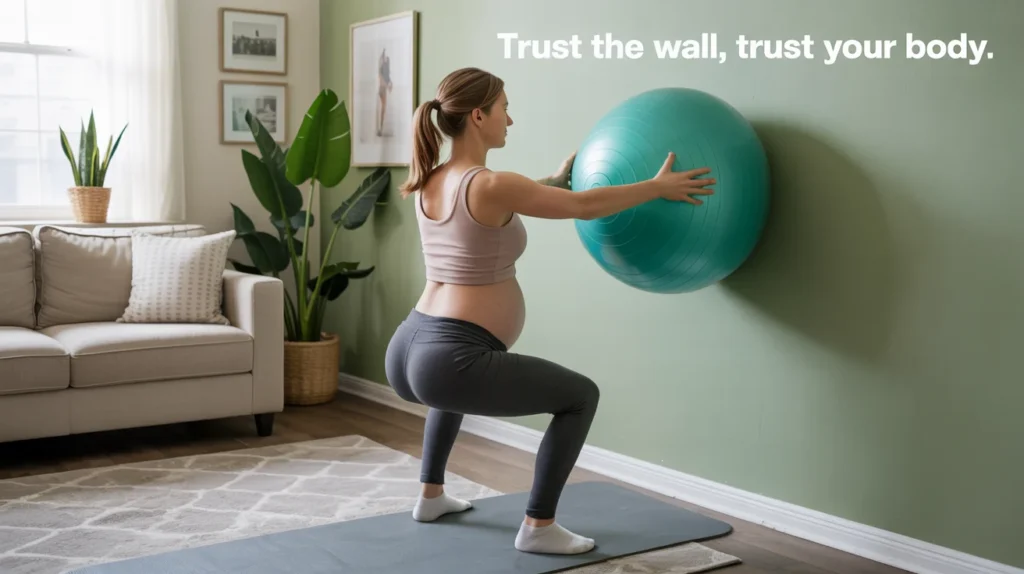
The “Wall Squat” with Pelvic Tilt
How to do it: Stand with your back against a wall, feet shoulder-width apart and a small distance away from the wall. You can place an exercise ball behind your back for added support. Slowly slide down the wall into a squat position. As you do, perform gentle pelvic tilts (tuck your tailbone under and release).
Benefits: This combines the benefits of a squat with the safety of a wall support. The pelvic tilts while in the squat position help you practice the movement and flexibility needed for labor, all while building endurance in your leg and glute muscles.
How to Maximize it: Hold the squat for 15–30 seconds while performing 5–10 pelvic tilts.
Deep Lunge with Supported Twist
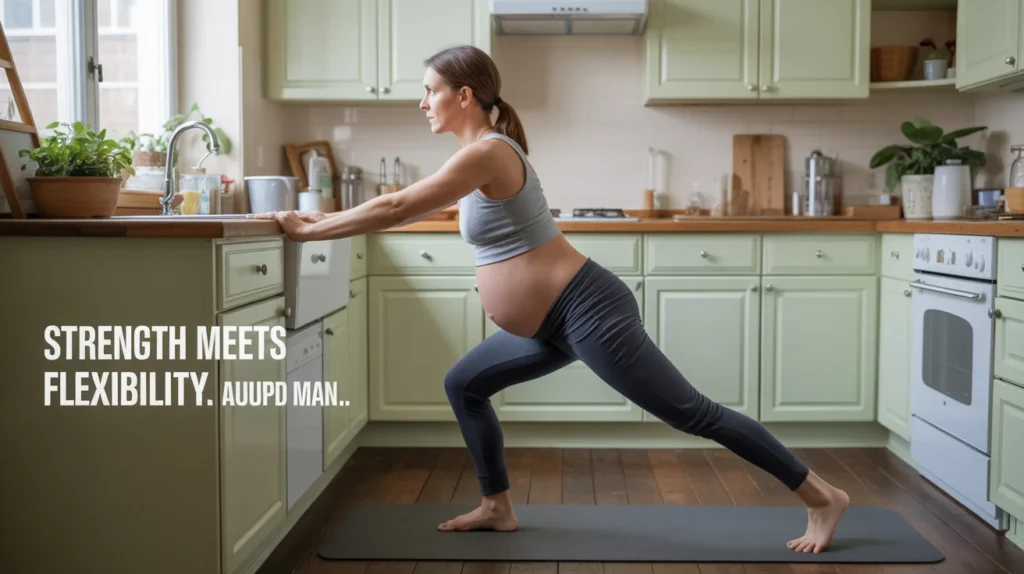
How to do it: Stand in a lunge position, with your front knee bent and back leg straight. Place your hands on a stable chair or countertop for support. Gently shift your weight forward, feeling the stretch in your hip flexors. While in this position, gently twist your upper body toward your front leg. Hold for a few breaths, then return and switch sides.
Benefits: ThisPT-Recommended Exercises stretches the hip flexors, which can become tight during pregnancy, pulling on your lower back. The gentle twist encourages spinal mobility and helps relieve back pain. It’s a functional movement that also prepares your body for different labor positions.
How to Maximize it: Move slowly and with control. Avoid overstretching or twisting too far. Focus on deep breathing while holding the position.
Conclusion: Confident, Prepared, and Empowered
Preparing for labor and delivery with these physical therapy-recommended exercises is a proactive and empowering choice. By focusing on modern, functional movements, you’re not just building strength; you’re building confidence and a deeper connection with your body. With just a few minutes a day, you can improve your pelvic mobility, strengthen your core, and prepare for a smoother, more manageable delivery. Your body was built for this, and now you have the tools to help it shine.