
Introduction
Staying active during pregnancy is one of the best things you can do for yourself and your growing baby. But as your body changes, your usual workout routine might need some adjustments. For busy moms who are already lifting, pushing, and pulling things all day.
Whether it’s a toddler, groceries, or laundry baskets—learning how to move safely is essential. This guide is packed with practical and safe Pregnant Mama workout Tips to help you feel strong and confident throughout your nine-month journey.

We’ll explore how to modify your daily movements and exercises to protect your body, manage energy levels, and prepare for labor. From understanding your changing center of gravity to mastering proper breathing techniques, you’ll find everything you need to stay active safely.
Key Takeaways
- Listen to Your Body: Pregnancy is not the time to push for personal bests. Pay close attention to signals like pain, dizziness, or excessive fatigue.
- Core and Pelvic Floor First: Strengthening your deep core and pelvic floor muscles is crucial for supporting your growing belly, preventing back pain, and aiding in postpartum recovery.
- Proper Form is Everything: Always prioritize correct form over the amount of weight you lift or the intensity of the movement.
- Breathe Correctly: Use intentional breathing to engage your core and stabilize your body during exertion, especially when lifting.
- Modify, Don’t Stop: Most activities can be modified to be safe during pregnancy. Focus on adapting your routine rather than giving it up completely.

Why Staying Active During Pregnancy Matters
Regular physical activity during a healthy, low-risk pregnancy offers incredible benefits. According to the American College of Obstetricians and Gynecologists (ACOG), Pregnant Mama workout Tips can reduce back pain, ease constipation, and may decrease your risk of gestational diabetes, preeclampsia, and cesarean delivery.
Beyond the physical perks, staying active is a powerful tool for your mental well-being. It can boost your mood, improve sleep, and help you feel more in control of your changing body. Think of it as dedicated time for yourself—a way to connect with your body and manage the stresses of daily life.
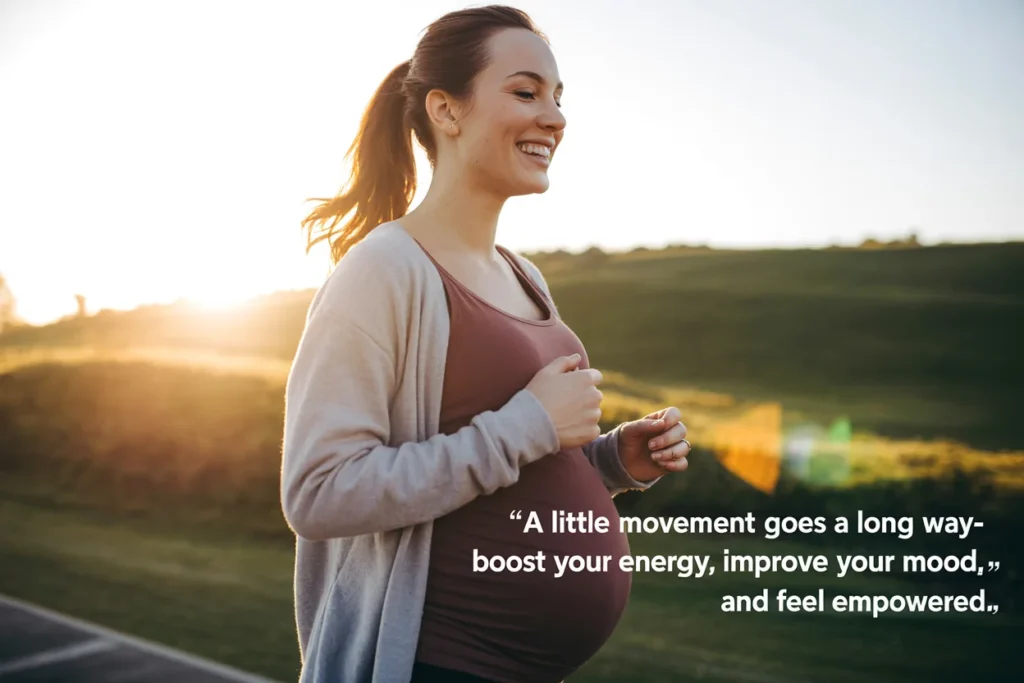
For busy moms, even a short, 15-minute walk or a quick stretching session can make a world of difference. The goal isn’t to train for a marathon but to maintain strength, flexibility, and endurance for the big event ahead: childbirth.
Understanding Your Changing Body
Pregnancy brings a wave of physical changes that affect how you move. The hormone relaxin loosens your ligaments and joints to prepare your pelvis for delivery, but it also makes you more susceptible to injury. Your center of gravity shifts forward as your belly grows, which can throw off your balance and strain your lower back.
You also have increased blood volume, which makes your heart and lungs work harder. Understanding these changes is the first step in adapting your movements. It’s why some exercises that felt easy before pregnancy might now feel challenging or uncomfortable. Honoring these shifts is a key part of our Pregnant Mama workout Tips.

Safe Lifting Techniques for Expectant Mothers
Whether you’re lifting a bag of groceries, your toddler, or a dumbbell at the gym, proper form is non-negotiable. Improper lifting can lead to back pain, hernias, or pelvic floor strain.
The “Bend and Snap” Is Out: Proper Lifting Form
Forget what you’ve seen in movies. Safe lifting during pregnancy is all about using your legs, not your back.
- Get Close: Stand close to the object you intend to lift with your feet shoulder-width apart.
- Squat Down: Bend at your knees and hips, keeping your back straight and your chest up. Avoid rounding your lower back.
- Engage Your Core: Before you lift, take a deep breath in. As you exhale, gently engage your core and pelvic floor (think of hugging your baby with your abs) and push through your heels to stand up.
- Keep it Close: Hold the object close to your body to reduce strain on your back.
- Avoid Twisting: Turn with your feet, not your waist, when moving with the object.
This Pregnant Mama workout Tips protects your spine and uses your body’s strongest muscles—your glutes and legs—to do the work.

Modifying Lifts at Home and the Gym
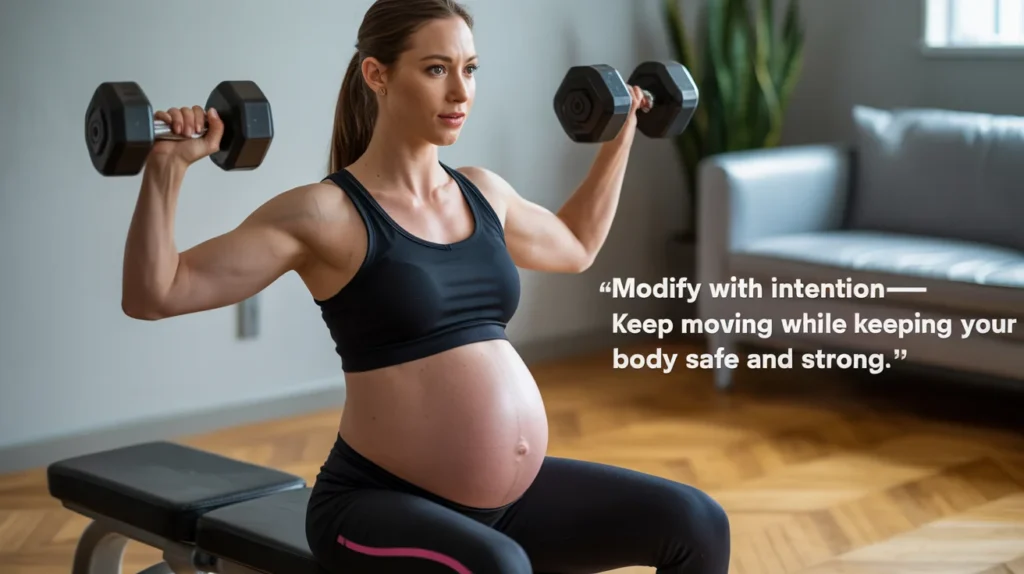
You don’t have to give up strength training, but you do need to make smart choices. Listen to your body and never lift to the point of straining.
- Reduce the Weight: Now is the time to focus on form and endurance, not setting new personal records. Decrease the amount of weight you are lifting.
- Avoid the Valsalva Maneuver: This means don’t hold your breath while lifting. Exhale on the exertion part of the movement.
- Choose Seated Exercises: As your pregnancy progresses, your balance may become unsteady. Performing exercises like overhead presses or bicep curls while seated on a stable bench provides extra support.
- Listen for Coning: Pay attention to your abdomen during core-engaging exercises. If you see a “cone” or “dome” shape pop up along the midline of your belly, the exercise is putting too much pressure on your abdominal wall. Stop and choose a different movement.
Smart Pushing and Pulling Strategies
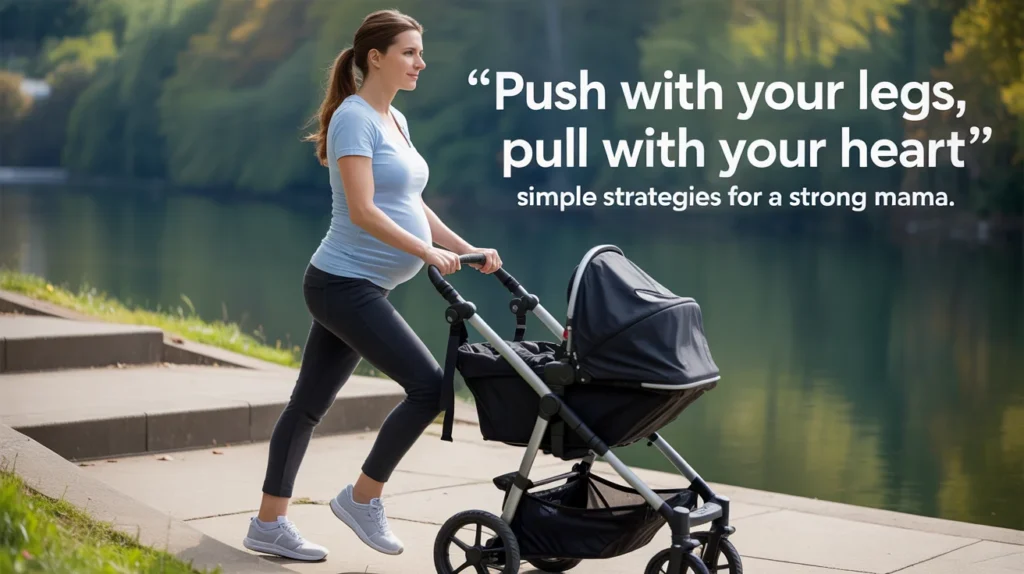
From pushing a stroller up a hill to pulling a vacuum cleaner, pushing and pulling are part of daily life. Applying the right techniques can prevent injury and conserve your energy.
Pushing: Strollers, Carts, and More
When pushing something like a shopping cart or stroller, get close to it and use your body weight to help move it forward. Keep your elbows slightly bent and your wrists straight. Engage your core and try to keep your back in a neutral position.
Instead of leaning far over, try to stay more upright and drive the movement with your legs. If you’re pushing something up an incline, take smaller steps and breathe steadily. This is a simple but effective part of our Pregnant Mama workout Tips that you can apply every day.
Pulling: Vacuums, Doors, and Resistance Bands
For pulling motions, like starting a lawnmower or using a rowing machine, the principles are similar. Get a stable, wide stance. Engage your core and use your legs and glutes as a solid base. Pull the object toward you in a smooth, controlled motion, exhaling as you exert force.
Avoid yanking or using sudden, jerky movements, as the relaxin in your system makes your joints less stable. Resistance bands are a fantastic tool for practicing safe pulling exercises with controlled tension.
Comparing Safe vs. Unsafe Movements During Pregnancy
This table highlights common mistakes and offers safer alternatives for Pregnant Mama workout Tips.
| Activity | Unsafe Approach | Safe Alternative |
|---|---|---|
| Lifting a Toddler | Bending over from the waist, rounding the back. | Squatting down with a straight back, holding the child close, and lifting with your legs. |
| Carrying Groceries | Carrying all bags in one hand, causing an imbalance. | Distributing the weight evenly between both hands to maintain balance and reduce spinal strain. |
| Getting Out of Bed | Sitting straight up using your abdominal muscles. | Rolling onto your side first, then using your arms to push yourself up to a seated position. |
| Strength Training | Performing heavy overhead lifts with a swayed back. | Using lighter weights, performing the exercise while seated, and keeping the core engaged. |

Essential Exercises for a Strong Pregnancy
Incorporating pregnancy-safe exercises into your routine can build strength where you need it most. Here are a few key moves.
The Mighty Pelvic Floor: Kegels and Beyond
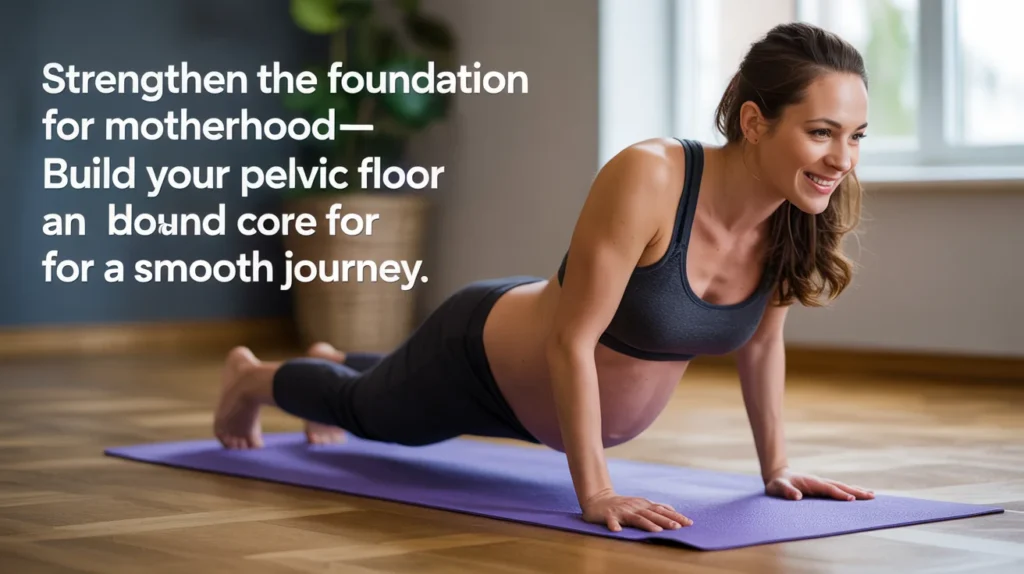
Your pelvic floor is a group of muscles that supports your bladder, bowel, and uterus. Keeping it strong and flexible is crucial.
- Kegels: To find these muscles, try to stop the flow of urine midstream. That’s the contraction. To perform a Kegel, squeeze those muscles, hold for 3-5 seconds, and then fully relax for 3-5 seconds. Aim for 10 repetitions, a few times a day.
- Pelvic Tilts: Lie on your back with your knees bent (in early pregnancy) or perform on all fours. Gently flatten your back against the floor or arch it toward the ceiling, engaging your lower abs. This relieves back pain and strengthens the core.
Building a Supportive Core
A strong core supports your back and helps with pushing during labor. Avoid traditional crunches and sit-ups, which can worsen diastasis recti (abdominal separation) i this type of Pregnant Mama workout Tips.
Safe Core Exercises
- Bird-Dog: On all fours, extend one arm straight forward and the opposite leg straight back, keeping your hips level and back flat.
- Cat-Cow: A gentle yoga pose that mobilizes the spine and engages the deep abdominal muscles.
- Standing Crunches: Stand with feet shoulder-width apart and hands behind your head. Lift one knee toward the opposite elbow, focusing on squeezing your obliques.
Full-Body Strength Moves
Full-body exercises are efficient and functional. They prepare you for the real-world movements of motherhood.
- Squats: The ultimate functional exercise. Squats strengthen your glutes, legs, and pelvic floor. Keep your chest up and back straight.
- Glute Bridges: Lie on your back with knees bent. Lift your hips toward the ceiling, squeezing your glutes. This is a great exercise to continue throughout pregnancy.
- Rows: Using a resistance band or light dumbbells, perform rows to strengthen your upper back. This helps improve posture as your breasts and belly grow.
Listening to Your Body: Red Flags and When to Stop
Knowing when to slow down or stop exercising is just as important as knowing which exercises to do. Consult your healthcare provider, such as your OB-GYN or a certified pre-and postnatal fitness specialist, before starting any new exercise program. A great resource is the U.S. Department of Health and Human Services’ guide on physical activity.
Warning Signs to Watch For
Stop exercising immediately and contact your doctor if you experience any of the following:
- Vaginal bleeding
- Dizziness or feeling faint
- Shortness of breath before starting exercise
- Chest pain
- Headache
- Muscle weakness affecting balance
- Calf pain or swelling
- Regular, painful contractions of the uterus
Always remember that these Pregnant Mama workout Tips are general guidelines. Your body is unique, and your pregnancy journey is your own. What works for one person may not work for you. Be kind to yourself, adjust as needed, and celebrate what your body can do.

Frequently Asked Questions (FAQ)
Q1: How much exercise is recommended during pregnancy?
A: Most guidelines, including those from the ACOG, recommend at least 150 minutes of moderate-intensity aerobic Pregnant Mama workout Tips per week. This can be broken down into 30-minute sessions five days a week, or even smaller 10-minute chunks throughout the day.
Q2: Can I continue running during pregnancy?
A: If you were a runner before pregnancy and have a low-risk pregnancy, you can usually continue running. However, you’ll likely need to reduce your mileage and intensity as your pregnancy progresses. Pay close attention to your balance and joint comfort.
Q3: Are there any exercises I should completely avoid?
A: Yes. Avoid activities with a high risk of falling or abdominal trauma, such as contact sports, downhill skiing, and horseback riding. After the first trimester, it’s also recommended to avoid exercises that require you to lie flat on your back for extended periods.
Q4: Is it safe to lift my toddler while pregnant?
A: Yes, it is generally safe to lift your toddler as long as you use proper form. Squat down, keep your back straight, hold your toddler close to your body, and lift with your legs. Avoid twisting your torso while lifting.
Q5: What are the best Pregnant Mama workout Tips for a beginner?
A: If you’re new to exercise, start slow. Walking is one of the best activities to begin with. Prenatal yoga, swimming, and stationary cycling are also excellent, low-impact options. Always get clearance from your doctor before starting.