
Postpartum Exercise: What Every Mom Needs to Know Before Getting Started
Bringing a new life into the world is monumental, and your body deserves all the care and patience it needs after such a journey. If you’re wondering how and when to reintroduce exercise safely, you’re not alone. Postpartum Exercise is about healing, building strength, and reconnecting with yourself—at your own pace.

Why Postpartum Exercise Matters
Exercise after childbirth offers so much more than physical change. It can boost your energy, improve sleep quality, help ease feelings of stress, and promote emotional well-being. Movement encourages circulation, aids in healing, and offers a sense of accomplishment during a time of big changes. Exercise is both self-care and a powerful tool for recovery.

When to Start Postpartum Exercise
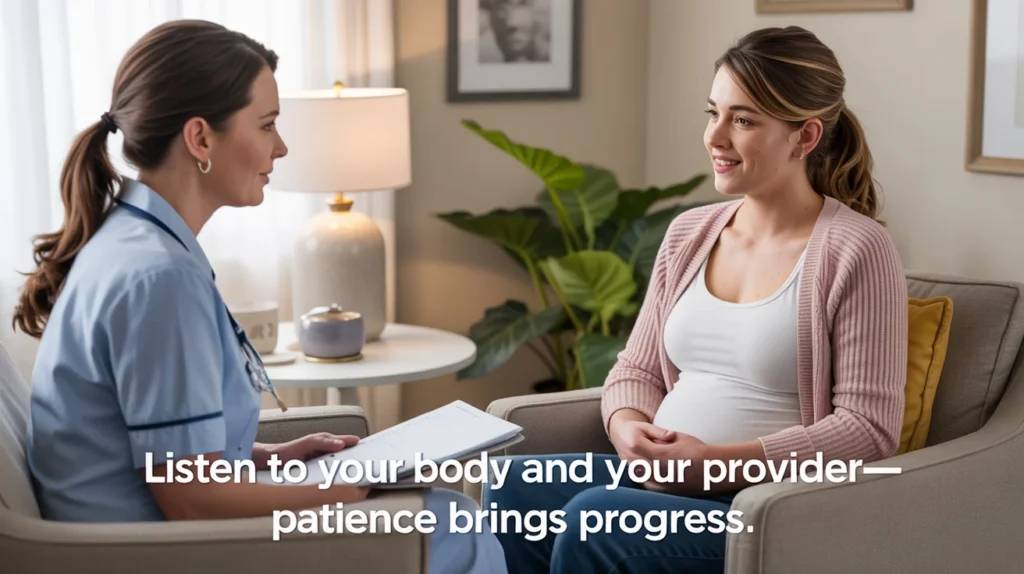
Before you start any postpartum exercise, check in with your doctor—usually at your 6-week postpartum appointment. Every body and birth are different, so your timeline may vary, especially for C-section recovery or other complications. The most important thing: move forward only when you feel ready.
Six Gentle, Less Familiar Postpartum Exercises
Here are six safe, restorative exercises perfect for early postpartum days and designed to gently rebuild strength. Move carefully, pay attention to your breath, and stop if anything feels uncomfortable. Each movement is a step toward healing and renewed confidence.
Heel Slides
Lie on your back with both knees bent and feet flat on the floor, arms resting at your sides. Engage your core and slowly slide your right heel away from your body, straightening the leg while keeping your foot in gentle contact with the floor. Pause, then glide your heel back to the starting position. Repeat 10–15 times per leg. This low-impact move helps reactivate your abdominal muscles and hip flexors while reducing stiffness in your lower back and hips. Focus on keeping your pelvis stable and your movements slow and controlled, exhaling as you slide your heel away.

Seated Marches
Find a sturdy chair and sit up tall with both feet flat on the floor, keeping your hands resting lightly on your thighs or beside you for support. Lift your right knee up toward your chest as high as is comfortable, hold for a second, then lower your foot back down. Alternate legs, marching slowly for about 1–2 minutes. This gentle move wakes up your core muscles, helps regain hip flexibility, and gets your circulation flowing—especially helpful after long hours of sitting or nursing. To add a challenge, try engaging your core and lifting your arms overhead as you alternate legs.

Tabletop Toe Tap
Begin by lying on your back with knees bent and feet flat. Draw your knees up so your hips and knees are bent at 90 degrees—shins parallel to the ceiling. Maintaining a neutral spine and tight core, slowly lower your right foot to tap the floor, then lift it back to tabletop. Alternate sides for 10–12 repetitions per leg. Avoid arching your back or letting your ribs flare up; instead, keep your belly gently “hugged in” to target deep core muscles. This move helps restore core stability lost during pregnancy and gently improves hip coordination.
Wall Angels
Stand with your back, shoulders, and head pressed gently into a wall, feet hip-width apart, a few inches from the wall. Bend your elbows to 90 degrees (like a goalpost position) so your upper arms and forearms touch the wall. Slowly slide your arms upward and downward in a “snow angel” motion, keeping as much contact with the wall as possible. Perform 10–15 slow reps. This exercise aids posture by counteracting the rounded shoulders common in new moms and gently mobilizes tight upper back muscles after long periods of holding your baby. Focus on opening your chest each time you move your arms.

Bird Dog (Modified)
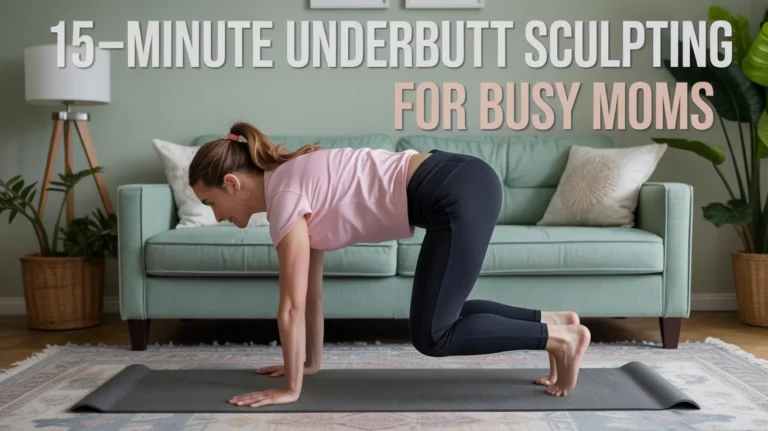
Get into an all-fours position with wrists under shoulders and knees under hips, fingers spread wide. Inhale, engage your abdominals, and as you exhale, slowly extend your right arm forward and your left leg back. Hold for a few breaths, keeping your hips level and gaze down. Return to start and switch sides; complete 8–10 reps per side. If full extension feels challenging, keep toes or fingertips lightly touching the mat for balance. Bird Dog builds foundational core and lower back strength while improving your balance, often affected in the postpartum period.

Seated Figure 4 Stretch
Sit comfortably on a sturdy chair or bench with both feet flat on the ground. Place your right ankle gently onto your left knee, letting your right knee fall open. Sit tall and hinge forward at the hips until you feel a gentle stretch in your hip and glute. Hold for 20–30 seconds, breathing slowly, then switch sides. This stretch is especially helpful for new moms who experience tight hips or lower back soreness from carrying and feeding their babies. Avoid pushing down on your knee; let gravity do the work.

Self-Care Is Part of Progress
Remember: self-care is just as important as exercise. Hydrate, nourish yourself, and get rest whenever you can. Mindfulness, gentle stretching, and even a deep breath help your whole body recover—and they’re worth celebrating.

You’re Stronger Than You Know
Above all, honor your unique journey. Every gentle movement is a step toward renewed strength and confidence. You are resilient, and you are enough.