

Introduction: The Power of a 5-Minute Mental Health Break
Being a mom is one of the most rewarding jobs, but it’s also one of the most demanding. From taking care of your kids to managing your household, your to-do list is probably never-ending. With all these responsibilities, it’s easy to forget about your own mental health. That’s where a quick 5-minute mental health break comes in.
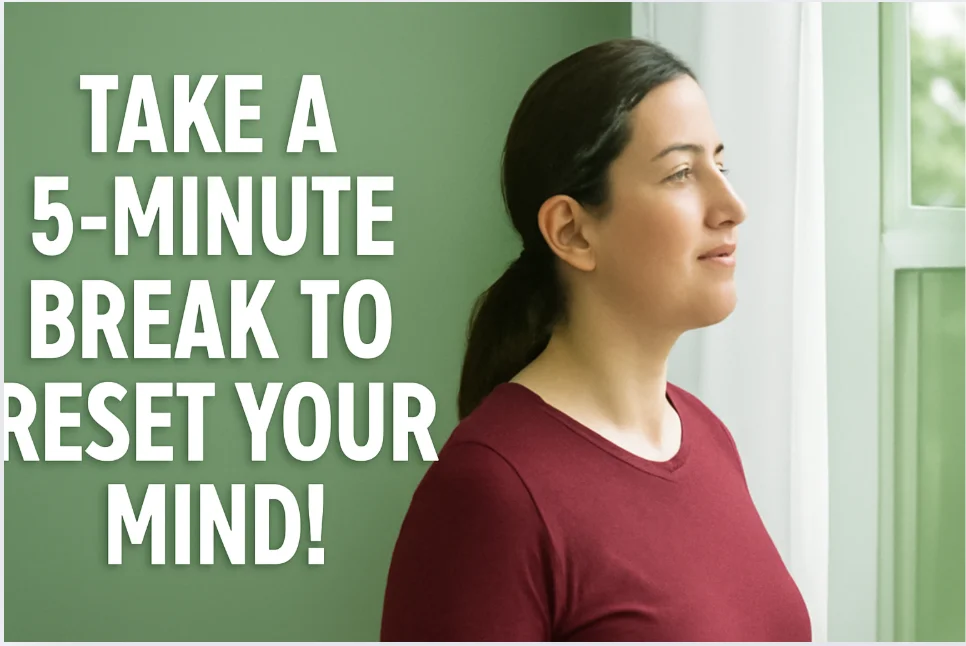
It might seem impossible to take time for yourself in a busy day, but a 5-minute Mental Health Break is all you need to reset your mind, reduce stress, and improve your overall mood. These mini-breaks are not just for relaxation—they’re a way to enhance your mental clarity, boost your mood, and feel more energized.

How Taking 5-Minute Breaks Can Improve Your Mental Health
Taking 5 minutes Mental Health Break for yourself may seem like a small thing, but the benefits can be significant. Studies show that even short breaks can:
- Reduce Stress: Taking a short mental break allows your brain to step away from stressors and recharge.
- Boost Productivity: Short, frequent breaks help your brain stay focused and prevent burnout, making you more efficient in your tasks.
- Enhance Emotional Health: A 5-minute break can improve your mood, making you feel more centered and positive.
These benefits can make a huge difference in your overall well-being, especially when you’re juggling so many responsibilities. It’s all about prioritizing yourself for just a few minutes each day.
1. Deep Breathing: Calm Your Mind and Body in 5 Minutes
How to Do It:
Deep breathing is a powerful tool to reduce stress and calm the nervous system. Here’s a simple technique that only takes 5 minutes:
- Sit comfortably in a chair or on the floor.
- Close your eyes and inhale deeply through your nose for 4 seconds.
- Hold your breath for 4 seconds.
- Exhale slowly through your mouth for 6 seconds.
- Repeat for 5 minutes, focusing on the sensation of your breath.
Benefits:
- Reduces stress: Deep breathing triggers the relaxation response, calming your mind and body.
- Improves focus: This technique helps clear mental fog and brings clarity to your thoughts.
- Boosts mood: By calming your nervous system, deep breathing can help improve your emotional state.
How to Maximize:
Use this technique whenever you’re feeling overwhelmed—during nap time, before bed, or even while cooking dinner. It’s a quick way to reset your mind in the middle of a hectic day.

2. Quick Stretching: Relieve Tension and Re-energize
How to Do It:
Stretching is not only good for your muscles but also helps release built-up tension in your body. Here’s a quick routine that takes 5 minutes:
- Neck Stretches: Gently tilt your head to each side, holding for 10-15 seconds on each side.
- Shoulder Rolls: Roll your shoulders forward and backward in a circular motion for 30 seconds.
- Seated Forward Fold: While sitting, slowly bend forward, reaching towards your toes to stretch your back and hamstrings.
- Torso Twists: Sit upright and gently twist your torso from side to side for 30 seconds.
Benefits:
- Relieves physical tension: Stretching helps loosen tight muscles, especially in your back and shoulders, which can get tight from carrying kids or sitting for long periods.
- Increases energy: A quick stretch boosts blood circulation and can help you feel more awake and alert.
- Improves flexibility: Regular stretching increases flexibility and mobility, reducing the risk of injury.
How to Maximize:
Make stretching a part of your daily routine. You can do it in the morning before you start your day, or during breaks in the afternoon to refresh yourself.

3. Mindful Moment: Focus on the Present for 5 Minutes
Mindfulness is all about being fully present in the moment in Mental Health Break. Here’s a simple 5-minute exercise:
- Find a quiet spot and sit comfortably.
- Close your eyes and take a few deep breaths.
- Focus on your surroundings: listen to the sounds, feel the air on your skin, or notice the sensations in your body.
- If your mind starts to wander, gently bring your focus back to your breath or surroundings.
Benefits:
- Reduces anxiety: Mindfulness helps reduce feelings of anxiety and overthinking.
- Improves concentration: Focusing on the present moment increases your ability to concentrate on tasks.
- Enhances emotional health: Practicing mindfulness regularly can help improve your emotional resilience and mood.
How to Maximize:
Practice mindfulness at different points in your day. Whether it’s while you’re waiting for your coffee to brew or during a break from work, it’s a great way to re-center yourself.

4. Gratitude Practice: Boost Your Mood in 5 Minutes
How to Do It:
Take a moment to reflect on what you’re grateful for. Studies show that practicing gratitude can improve mood and emotional well-being. Here’s how:
- Sit down with a journal or piece of paper.
- Write down three things you’re grateful for today, big or small.
- Focus on the positive emotions that come with each item on your list.
Benefits:
- Boosts mood: Gratitude practice helps shift your focus away from stress and negativity, improving your outlook.
- Promotes positive thinking: By focusing on the good, you train your brain to seek out positive moments in your day.
- Reduces stress: Gratitude is linked to lower levels of stress and anxiety.
How to Maximize:
Make gratitude practice a daily habit. It can be a morning ritual or a moment of reflection before bed. Even small moments of gratitude can make a big difference.

Conclusion: Make Mental Health a Priority, Even for Busy Moms
Taking a 5-minute mental health break is a powerful way to reset your mind and body, especially for busy moms who often put their needs last. Whether it’s through deep breathing, stretching, mindfulness, or gratitude, these short breaks can have a big impact on your well-being. Make self-care a priority, even in the midst of your busy day, and you’ll find that you feel more energized, focused, and ready to take on whatever comes your way.