

Introduction
Pregnancy is a beautiful journey, but it often comes with unexpected aches and pains. If you’ve been waking up with numb, tingling, or painful hands, you might be dealing with pregnancy-induced carpal tunnel syndrome. This common condition can make simple tasks feel monumental, but there is good news.
Simple, gentle stretching exercises can offer significant relief, helping you manage symptoms and focus on the joy of expecting. This guide will walk you through everything you need to know about finding comfort and achieving Carpal Tunnel Relief during this special time.

Key Takeaways
- Pregnancy carpal tunnel is caused by increased fluid retention, which puts pressure on the median nerve in your wrist.
- Gentle, regular stretching can reduce pain, numbness, and tingling by improving circulation and relieving nerve pressure.
- Simple exercises like wrist flexes, prayer stretches, and nerve glides are highly effective and can be done anywhere.
- Lifestyle adjustments, such as wearing a wrist splint and modifying daily activities, can complement stretching for better results.
- Always consult your doctor before starting any new exercise routine during pregnancy to ensure it’s safe for you and your baby.
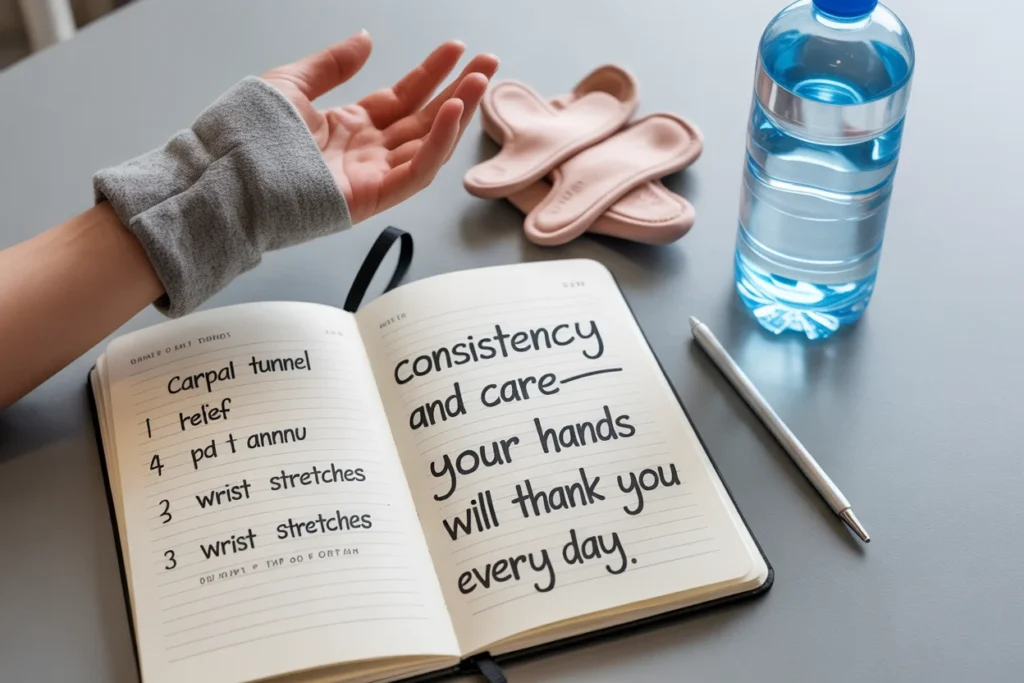
What is Pregnancy Carpal Tunnel and Why Does It Happen?
Carpal tunnel syndrome occurs when the median nerve, which runs from your forearm into your hand, becomes compressed or squeezed at the wrist. This nerve controls sensation in your thumb and first three fingers. During pregnancy, your body produces more hormones and retains more fluid to support the growing baby.
This extra fluid can cause swelling throughout the body, including in the narrow passageway in your wrist known as the carpal tunnel. As this tunnel swells, it puts pressure on the median nerve, leading to the classic symptoms of numbness, tingling, burning, or pain in the hand and wrist. While it can be uncomfortable, it’s a common issue that typically resolves after you give birth.

The Powerful Benefits of Stretching for Wrist Pain
Incorporating gentle stretches into your daily routine is one of the most effective ways to manage pregnancy carpal tunnel. Stretching helps increase blood flow to the area, reduces inflammation, and creates more space within the carpal tunnel, which can alleviate pressure on the median nerve. The benefits are significant.
Not only can you find immediate Carpal Tunnel Relief, but regular practice can also improve your hand’s flexibility and strength. Think of it as a small, daily investment in your comfort. These exercises don’t require any special equipment and can be done in just a few minutes, making them perfect for busy moms-to-be.

5 Simple and Effective Hand Stretches
Here are five easy stretches you can perform throughout the day to help ease your symptoms. Remember to move slowly and gently, and stop if you feel any sharp pain.
1. The Basic Wrist Flex and Extension
This fundamental movement helps to gently stretch the muscles and tendons in your forearm and wrist.
- How to do it: Extend one arm in front of you with your palm facing down. Use your other hand to gently bend your wrist downward, holding the stretch for 15-30 seconds. You should feel a mild stretch on top of your wrist and forearm.
- Next, turn your hand so your palm faces up. Use your other hand to gently bend your wrist downward, pulling your fingers toward your body. Hold for another 15-30 seconds.
- Repeat this sequence 3-4 times on each hand.

2. The Prayer Stretch
This popular stretch is excellent for opening up the carpal tunnel and relieving pressure.
- How to do it: Press your palms together in front of your chest, just below your chin, as if in prayer.
- Slowly lower your hands toward your waistline, keeping your palms together and your hands close to your body. You should feel a gentle to moderate stretch under your forearms.
- Hold this position for 20-30 seconds, then release. Repeat 3-5 times. This is a fantastic way to find quick Carpal Tunnel Relief.

3. The Shake It Out
This is less of a formal stretch and more of a simple release. It’s great to do whenever your hands feel particularly stiff or tingly.
- How to do it: Simply let your hands hang loosely at your sides and shake them out gently for about a minute. This encourages blood flow and can provide instant relief from that “pins and needles” sensation. Do this as often as you need throughout the day.

4. The Finger Bend
This exercise targets the individual tendons that run through the carpal tunnel, helping them glide more smoothly.
- How to do it: Hold your hand up with your fingers straight.
- Slowly bend your fingers at the middle and top joints, touching the tips of your fingers to the base of each finger. Your thumb should remain outstretched.
- Hold for a few seconds, then straighten your fingers again. Repeat 5-10 times on each hand.
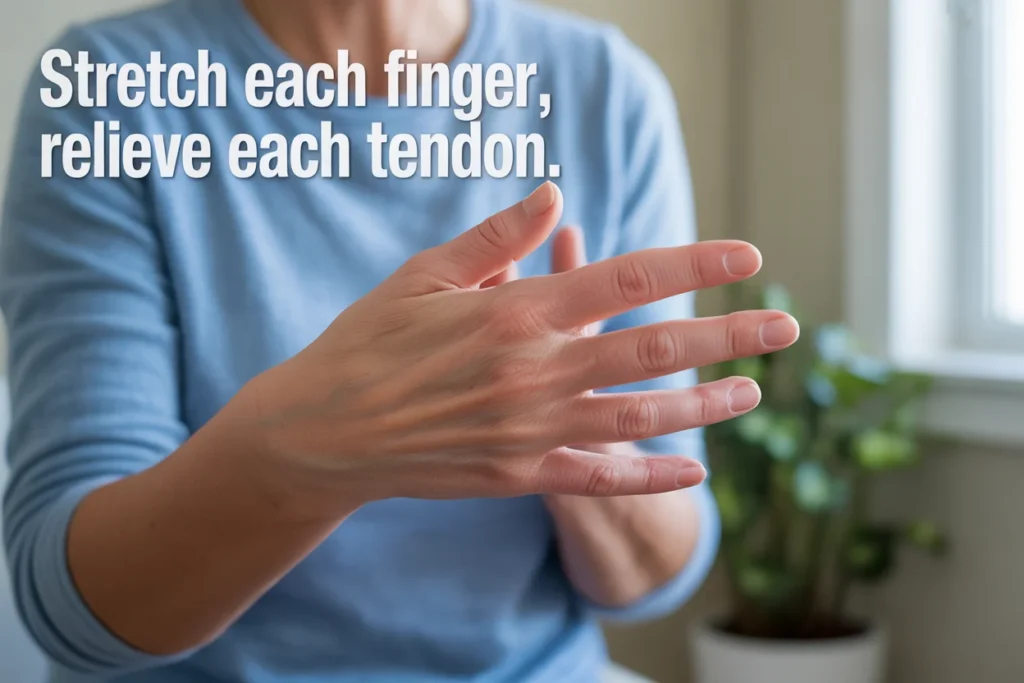
5. Median Nerve Glides
Nerve glides, or nerve flossing, are specific movements designed to help the median nerve move more freely within the carpal tunnel.
- How to do it: Start by making a fist with your thumb outside your fingers.
- Then, extend your fingers straight while keeping your thumb close to your hand.
- Bend your wrist and fingers back toward you.
- Extend your thumb away from your hand.
- Rotate your forearm so your palm faces up.
- Use your other hand to gently stretch the thumb back. Hold each position for a few seconds. Perform this sequence slowly 3-5 times.

How Often Should You Stretch?
Consistency is key when it comes to finding lasting Carpal Tunnel Relief. Aim to perform these stretches two to three times a day. You could make it part of your morning routine, take a stretch break in the afternoon, and do another round before bed.
If you work at a desk or do repetitive tasks with your hands, try to take short breaks every hour to shake out your hands and do a quick wrist flex. Listening to your body is important; if your symptoms feel worse at certain times of the day, schedule your stretching sessions just before then to proactively manage the discomfort.

Wrist Splinting: An Essential Partner to Stretching
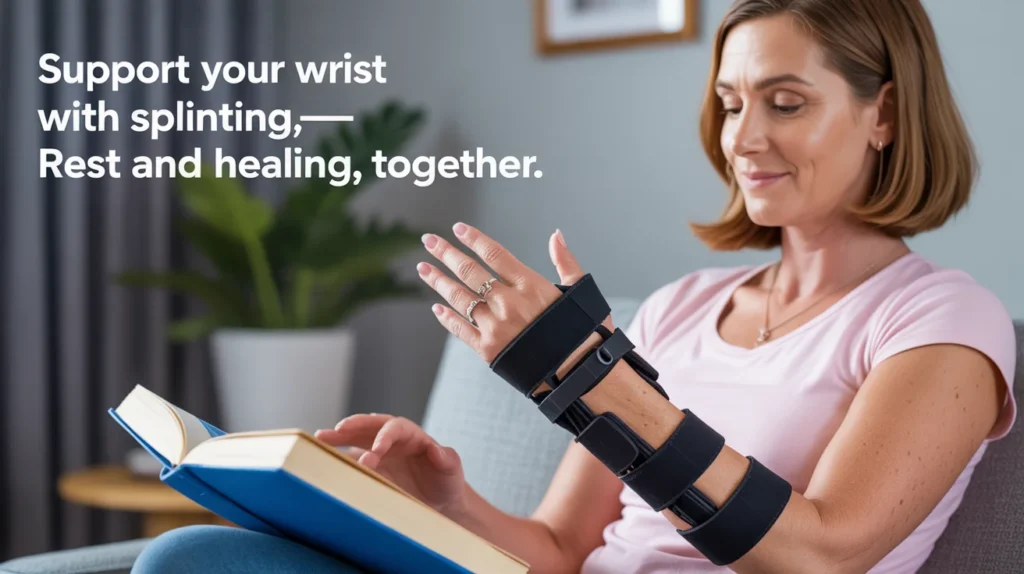
While stretching is highly beneficial, combining it with wrist splinting can provide even greater relief, especially at night. A wrist splint, or brace, keeps your wrist in a neutral, straight position. This prevents you from bending your wrist while you sleep, which can otherwise worsen nerve compression and lead to waking up with numb or painful hands.
| Feature | Wrist Splint | Stretching Exercises |
|---|---|---|
| Primary Goal | Immobilize and support the wrist in a neutral position | Improve flexibility and relieve nerve pressure |
| Best For | Preventing symptoms, especially during sleep | Actively managing and reducing daily discomfort |
| When to Use | Primarily at night, but can be worn during the day | 2-3 times daily, or as needed for stiffness |
| Mechanism | Reduces pressure by preventing wrist flexion | Increases blood flow and mobilizes the median nerve |
Many experts, including those at the American College of Obstetricians and Gynecologists (ACOG), recommend splinting as a first-line treatment for pregnancy-related carpal tunnel. Wearing a splint provides passive support, while stretching offers active Carpal Tunnel Relief. Together, they form a powerful team.
Lifestyle Tips to Complement Your Stretches
Beyond stretching and splinting, a few simple lifestyle adjustments can make a big difference in managing your symptoms.
Modify Your Daily Activities
Pay attention to activities that trigger your symptoms. This often includes typing, using a mouse, or gripping objects tightly. Try to keep your wrists as straight as possible. Ergonomic keyboards and mouse pads can help maintain a neutral wrist position while working. When holding your phone or a book, be mindful not to bend your wrist at a sharp angle for long periods.

Reduce Swelling
Managing overall fluid retention can help ease the pressure in your wrists. Try to reduce your sodium intake, as salt can contribute to swelling. Elevating your hands whenever possible can also help. For example, you can prop your hands up on pillows while sleeping or resting on the sofa. Staying hydrated by drinking plenty of water is also crucial for helping your body flush out excess fluids.

When to See a Doctor
While carpal tunnel during pregnancy is usually temporary, it’s important to keep your doctor informed. Talk to them about your symptoms at your next prenatal visit. They can confirm the diagnosis and rule out other issues. If the pain is severe.
If you experience muscle weakness in your hand, or if the stretches and lifestyle changes don’t provide adequate Carpal Tunnel Relief, your doctor may suggest other options, such as physical therapy. For more detailed medical information, resources like the National Institute of Neurological Disorders and Stroke offer comprehensive guides on carpal tunnel syndrome.

Conclusion
Dealing with hand and wrist pain is an unwelcome distraction during pregnancy, but you don’t have to simply endure it. By incorporating these gentle stretches and lifestyle modifications into your daily routine, you can actively manage your symptoms and find effective Carpal Tunnel Relief.
Remember to be consistent, listen to your body, and don’t hesitate to speak with your healthcare provider. Taking these small steps will help you feel more comfortable, allowing you to focus on the wonderful experience of preparing for your new arrival.

Frequently Asked Questions (FAQ)
Q1: Will carpal tunnel go away after pregnancy?
Yes, for most women, pregnancy-related carpal tunnel syndrome resolves on its own within a few weeks to months after giving birth. As your hormone levels return to normal and your body sheds the extra fluid, the swelling in your wrists will decrease, relieving pressure on the median nerve.
Q2: Can these stretches harm my baby?
No, the hand and wrist stretches described in this article are gentle, localized exercises. They have no impact on your baby and are considered safe to perform during pregnancy. However, it’s always a good practice to consult your doctor before starting any new exercise regimen.
Q3: How long does it take for the stretches to work?
You may feel some immediate, temporary relief after a stretching session. However, for more lasting improvement, consistency is crucial. Most people notice a significant reduction in their symptoms after performing the stretches regularly for one to two weeks. Consistent practice is the best path to sustained Carpal Tunnel Relief.