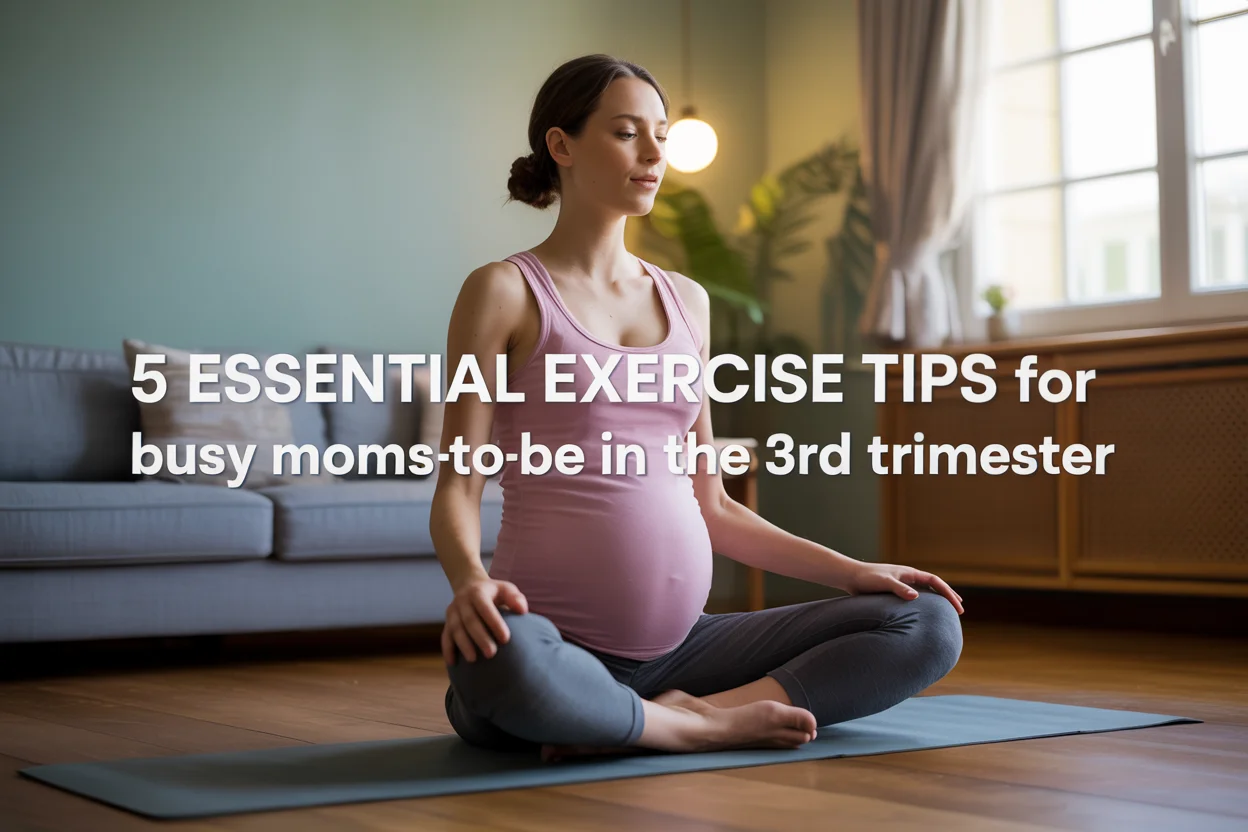
Introduction: The 3rd Trimester and Staying Active
The3rd Trimester is a time of incredible anticipation and significant physical change. As your baby grows, so does the demand on your body. You might be feeling more tired, dealing with aches and pains, and finding that movements that were once easy now feel like a monumental effort. In this final stretch of pregnancy, the thought of exercise might seem daunting, but staying active is one of the most beneficial things you can do for yourself and your baby.
Continuing with safe pregnancy workouts can provide a much-needed energy boost, alleviate common discomforts like back pain and swelling, and improve your mood. More importantly, maintaining a level of 3rd trimester fitness is like training for a marathon—
It helps prepare your body for the physical demands of labor and delivery. For busy moms-to-be, the key isn’t about intense, lengthy sessions; it’s about incorporating smart, safe, and effective movement into your routine.
This guide provides five essential exercise tips for pregnant moms navigating the final weeks. We’ll explore practical strategies, safe modifications, and how to listen to your body, ensuring you feel strong, supported, and ready for the amazing journey ahead.
1. Focus on Low-Impact Cardio
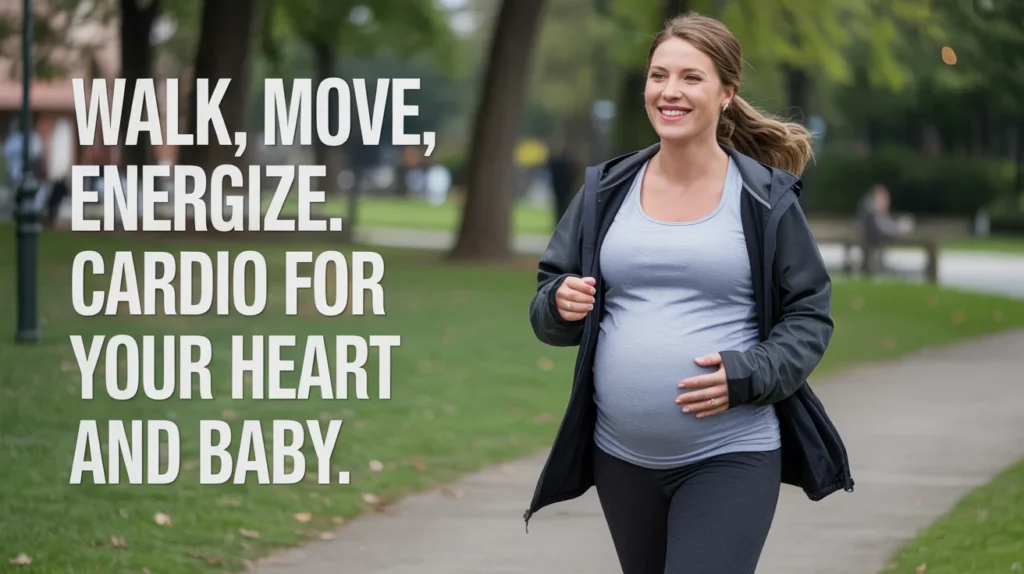
As your center of gravity shifts and your joints become looser due to the hormone relaxin, high-impact activities like running or jumping become risky. They can increase your chance of falls and put unnecessary stress on your hips, knees, and pelvic floor. The goal during the 3rd Trimester is to maintain cardiovascular health without the jarring impact. Low-impact cardio keeps your heart strong, improves circulation, and helps manage weight gain, all while keeping you and your baby safe.
Engaging in this type of exercise helps deliver oxygen-rich blood to the placenta, supporting your baby’s development. It can also help combat fatigue, reduce swelling in your legs and feet, and lower your risk of developing gestational diabetes and preeclampsia.
Safe Low-Impact Exercises
- Swimming and Water Aerobics: Water is your best friend in the 3rd Trimester. The buoyancy supports your growing belly, taking the pressure off your spine and joints. It creates a weightless feeling that can be a huge relief from the constant pull of gravity. Swimming laps or participating in a water aerobics class provides a full-body workout that is gentle and effective.
- Walking: Never underestimate the power of a good walk. It’s accessible, free, and can be easily adjusted to your energy levels. A brisk walk elevates your heart rate without stressing your body. Focus on good posture, keeping your shoulders back and your gaze forward to avoid leaning back and straining your lower back.
- Stationary Biking: Using a stationary bike, especially a recumbent one with back support, is an excellent way to get your heart rate up without worrying about balance. It allows you to control the intensity and provides a safe, stable environment for a cardio session.

Tips for Busy Moms-to-Be
You don’t need to block out an hour for cardio. Break it up into smaller, more manageable chunks. Try a 15-minute walk during your lunch break and another 15-minute walk after dinner. If you’re at home, walk in place or do laps around your living room while watching your favorite show. The key is to aim for consistency, accumulating at least 30 minutes of activity on most days of the week.

2. Prioritize Pelvic Floor and Core Strength
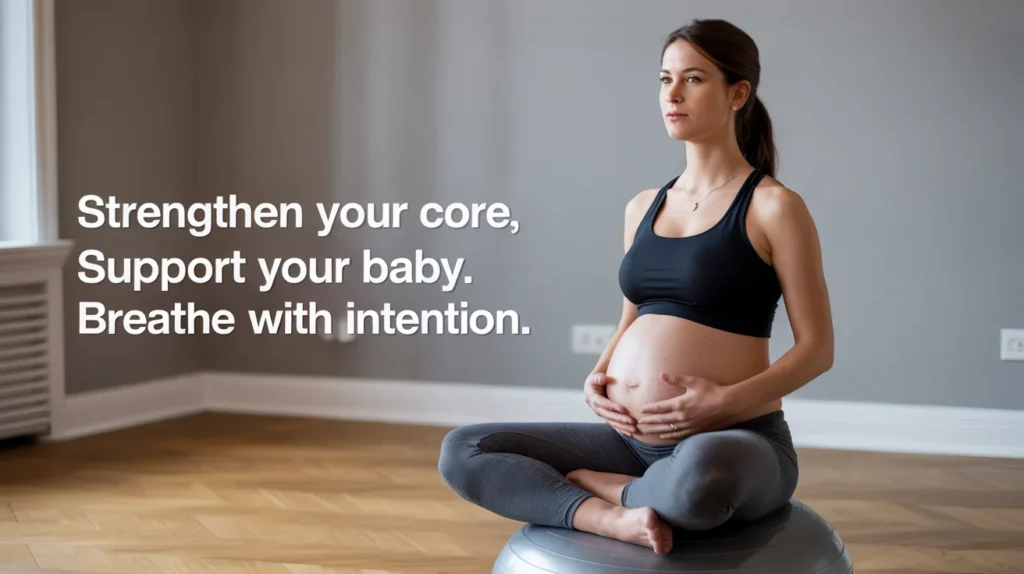
Your core and pelvic floor are working overtime during pregnancy to support your growing uterus. The 3rd Trimester is a critical time to focus on strengthening these foundational muscles. A strong pelvic floor can help support the weight of the baby, prevent urinary incontinence, and may even aid in the pushing stage of labor and postpartum recovery. Similarly, a stable core helps to alleviate the common pregnancy-related back pain.
It’s important to note that traditional core exercises like crunches and sit-ups are a no-go during pregnancy, as they can worsen diastasis recti (abdominal separation). Instead, the focus should be on deep core exercises that stabilize the trunk.
Safe Core and Pelvic Floor Exercises
- Kegels (Pelvic Floor Contractions): This is the most well-known pelvic floor exercise. To identify the right muscles, try to stop the flow of urine midstream. Those are the muscles you want to engage. Lie down or sit comfortably, and squeeze those muscles for 5-10 seconds, then relax completely for 5-10 seconds. Aim for 10-15 repetitions, 2-3 times a day.
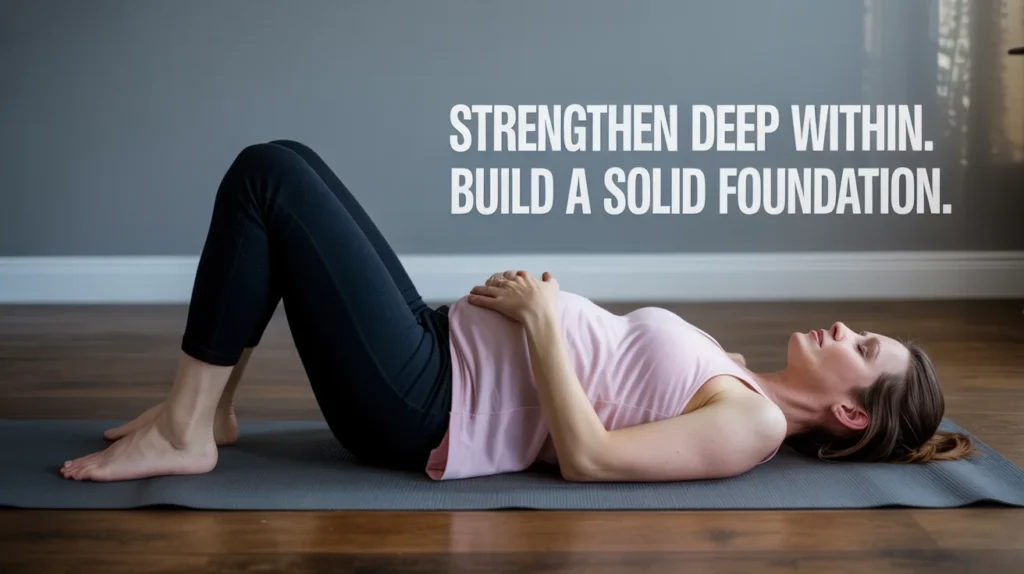
- Diaphragmatic Breathing (Belly Breathing): This exercise coordinates your breath with your deep core and pelvic floor. Lie on your back with knees bent. As you inhale deeply through your nose, allow your belly and ribcage to expand and your pelvic floor to relax. As you exhale slowly through your mouth, gently draw your navel toward your spine and perform a Kegel, lifting the pelvic floor.
- Bird-Dog: Start on all fours in a tabletop position. Engage your core to keep your back flat. Extend your right arm forward and your left leg straight back simultaneously, keeping your hips level. Hold for a moment, then return to the starting position with control. Alternate sides. This move builds stability throughout your entire core.
Tips for Busy Moms-to-Be
Integrate these exercises into your daily routine. Practice Kegels while you’re stopped at a red light, waiting in line, or during TV commercials. Spend five minutes doing diaphragmatic breathing before you get out of bed in the morning or to help you fall asleep at night. Every little bit helps build strength and connection.

3. Embrace Mobility and Stretching
As your body changes, certain muscles, like those in your hips and lower back, can become tight and sore. Incorporating regular mobility and stretching into your routine can provide immense relief. Stretching improves flexibility, reduces muscle tension, and can help you feel more comfortable in your own skin. It also encourages better posture, which is often compromised in the 3rd Trimester.
Focus on gentle, static stretches, and avoid anything that causes pain or overstretches your joints. Remember, the hormone relaxin makes you more flexible, but also more susceptible to injury if you push too far.
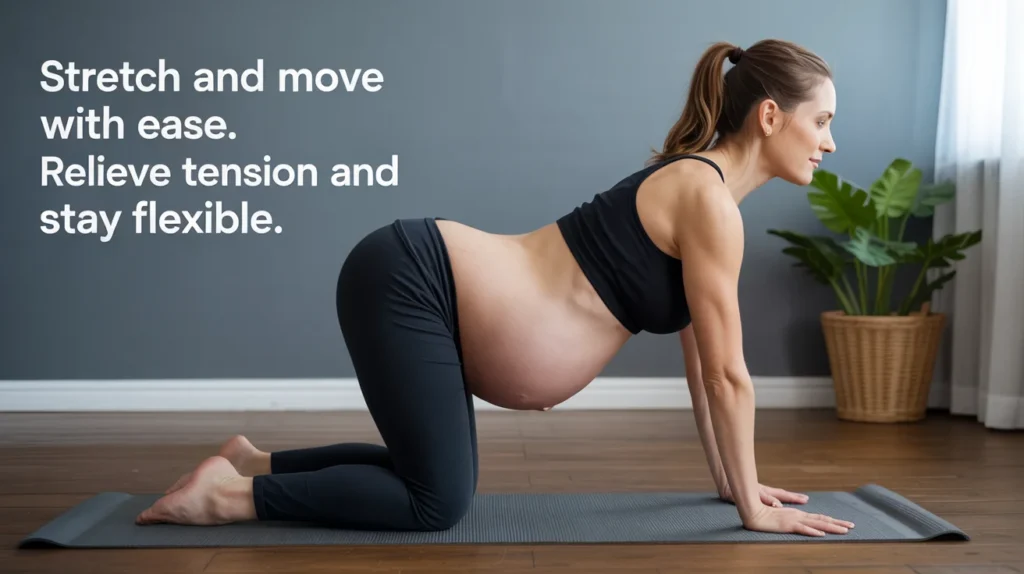
Safe Stretches for the 3rd Trimester
- Cat-Cow: This classic yoga pose is fantastic for relieving back tension. Start on all fours. As you inhale, drop your belly and look up, creating a gentle arch in your spine (Cow). As you exhale, round your spine toward the ceiling, tucking your chin to your chest (Cat). Flow between these two positions for 8-10 breaths.
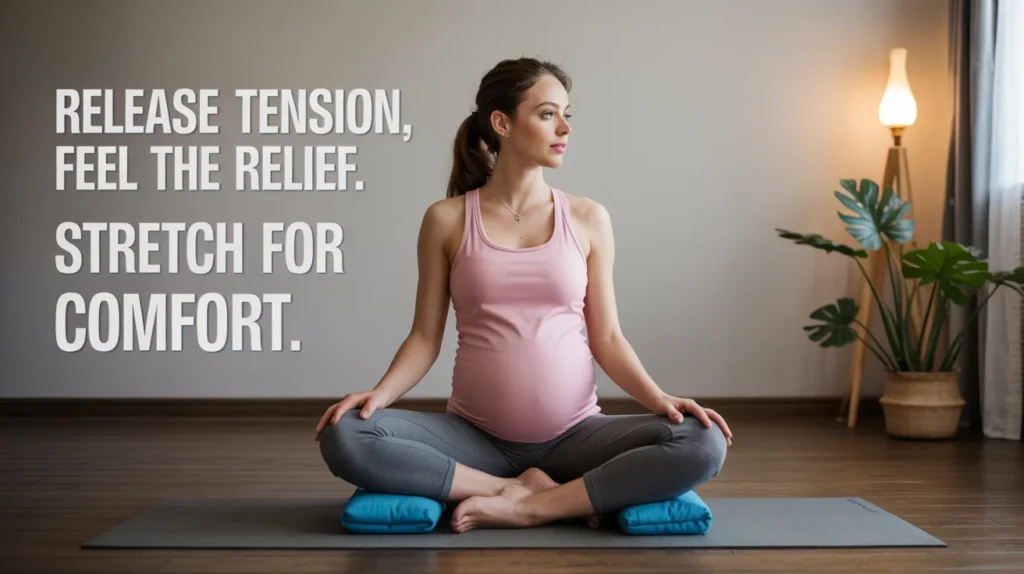
- Hip Flexor Stretch: Kneel on your right knee (use a cushion for comfort) and place your left foot on the floor in front of you, creating a 90-degree angle. Gently press your hips forward until you feel a stretch in the front of your right hip. Hold for 20-30 seconds and switch sides.
- Child’s Pose (Wide-Kneed): Kneel on the floor, open your knees wide enough to make room for your belly, and bring your big toes to touch. Sit your hips back toward your heels and fold forward, resting your forehead on the floor or a pillow. This is a wonderfully restorative pose for the lower back.
Tips for Busy Moms-to-Be
Dedicate 10 minutes before bed to a gentle stretching routine. This can help release the day’s tension and promote better sleep. You can also do simple stretches at your desk if you work a sedentary job. Stand up every hour to stretch your arms overhead and do a few gentle side bends.

4. Modify Movements for Your Changing Body
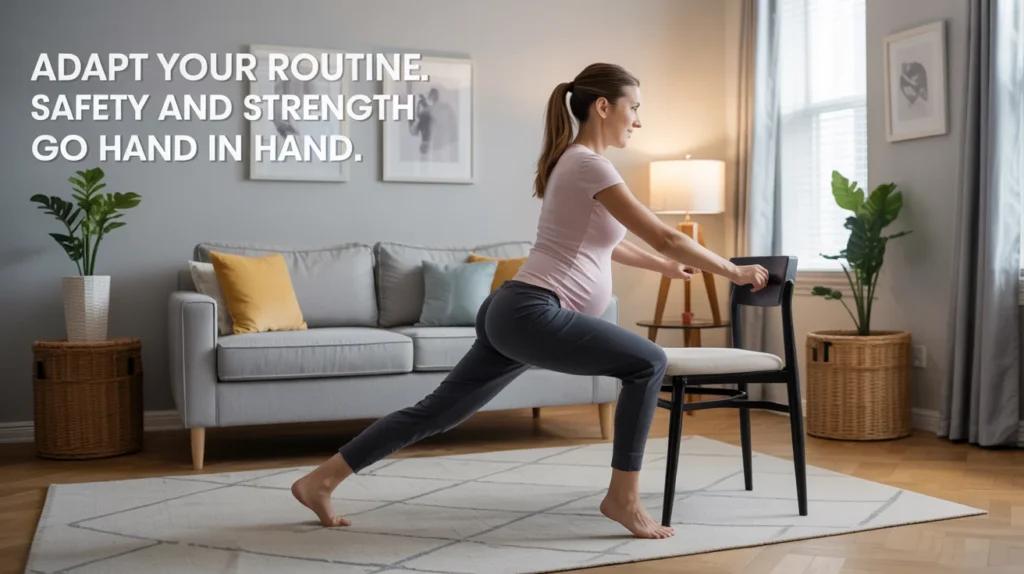
The 3rd Trimester is all about smart modifications. As your belly grows, your balance will be challenged, and certain positions will become uncomfortable or unsafe. It’s essential to adapt your exercises to accommodate your changing body, ensuring you can continue to move safely and effectively.
Never lie flat on your back for extended periods after the first trimester, as the weight of the uterus can compress a major blood vessel (the vena cava), reducing blood flow to your heart and the baby. Always listen to your body; if a movement doesn’t feel right, stop.
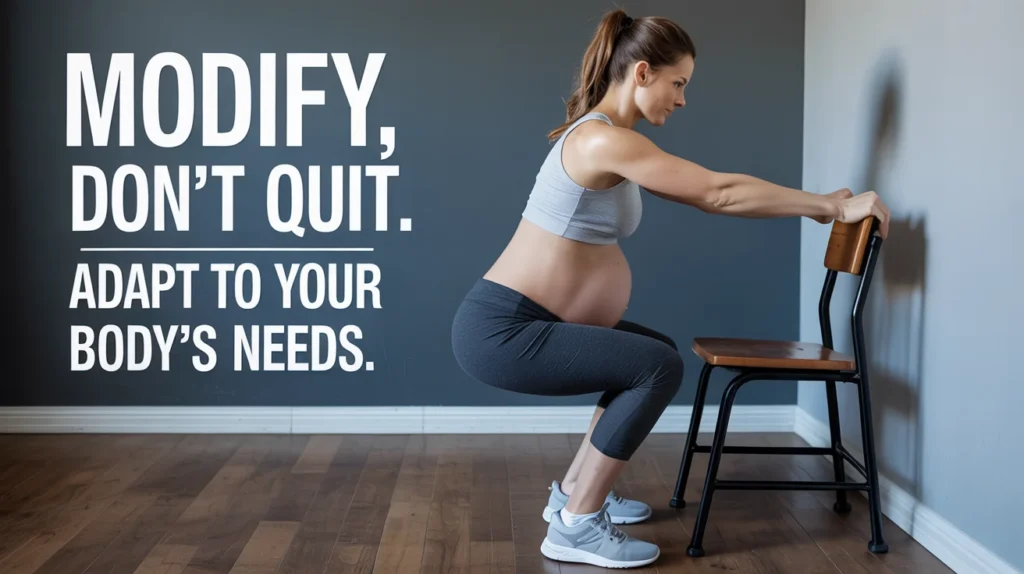
Common Modifications
- Incline Over Flat: For any exercise that would typically be done lying on your back (like chest presses or certain core moves), use an incline bench or prop yourself up with pillows to keep your head and shoulders elevated.
- Widen Your Stance: For movements like squats and deadlifts, take your feet wider than hip-width apart. This creates a more stable base and makes room for your belly, allowing you to maintain proper form.
- Use Support for Balance: Don’t hesitate to use a wall, chair, or countertop for support during single-leg exercises or squats. Your balance is compromised, and safety should always be your top priority.
Tips for Busy Moms-to-Be
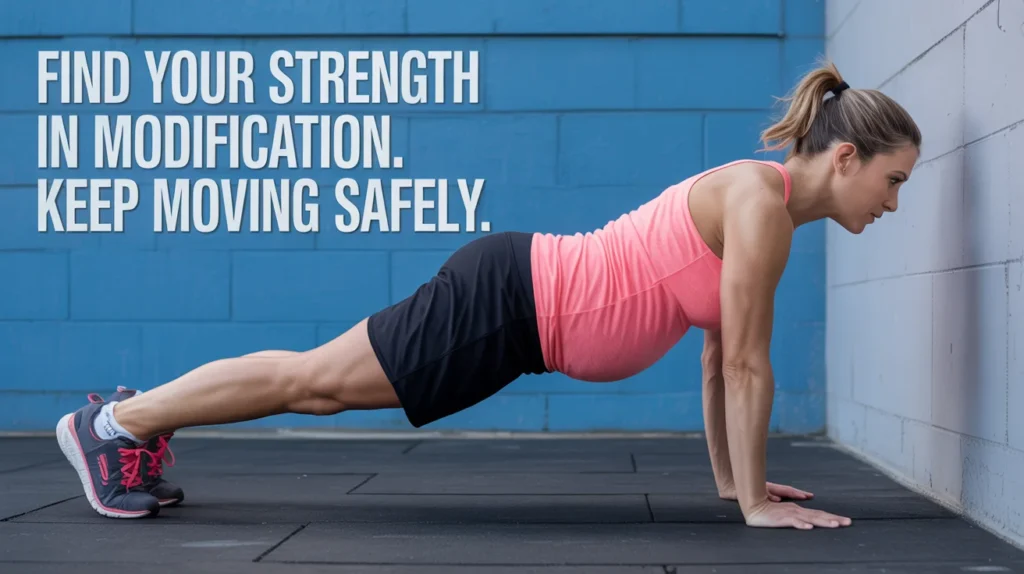
Think “modify, don’t quit.” Before you give up on an exercise you love, think about how you can adapt it. If push-ups on the floor become too difficult, do them against a wall or on an incline against a sturdy table. This mindset allows you to maintain strength and a sense of normalcy in your fitness routine.
5. Listen Intently to Your Body
This is arguably the most important tip of all. During pregnancy, your body sends you clear signals, and it’s your job to listen to them. The “no pain, no gain” mentality has no place in prenatal fitness. You are not training for a competition; you are supporting a healthy pregnancy.
Be aware of warning signs that indicate you need to stop exercising and consult your doctor. These include vaginal bleeding, dizziness, chest pain, headache, severe shortness of breath, or regular, painful contractions.

How to Tune In
- Use the “Talk Test”: You should be able to carry on a conversation while exercising. If you are too breathless to speak, you are pushing too hard.
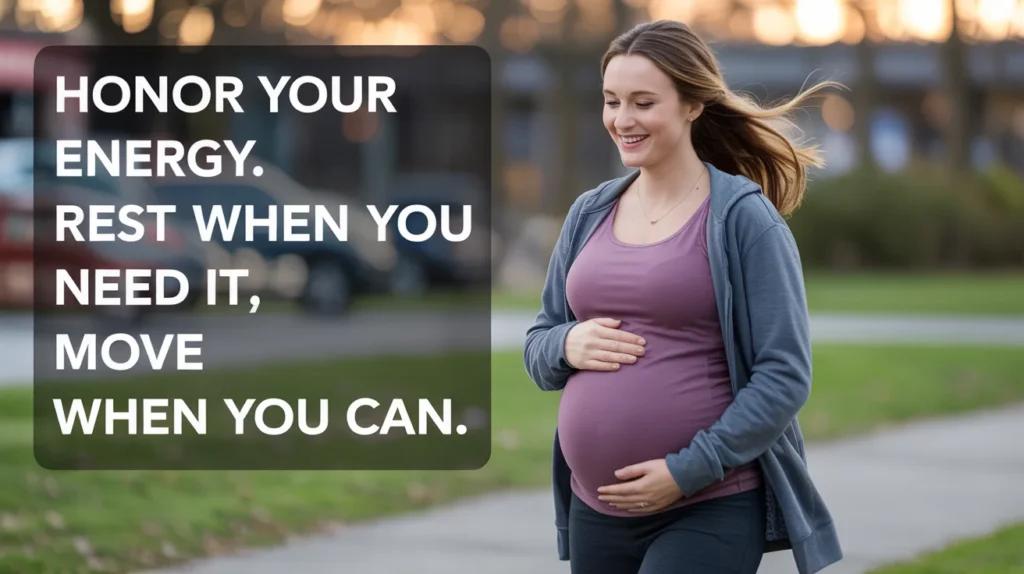
- Monitor Your Energy: Some days you will feel energetic and strong, while other days you will feel exhausted. Honor your energy levels. On low-energy days, a gentle walk or some light stretching is more than enough. Rest is just as important as activity.
- Stay Hydrated: Drink water before, during, and after your workouts. Dehydration can lead to contractions and overheating, so keep a water bottle with you at all times.
Tips for Busy Moms-to-Be
Give yourself permission to rest. In our productivity-driven culture, it’s easy to feel guilty for taking a day off. But during the 3rd Trimester, rest is productive. It’s allowing your body the time it needs to grow a healthy baby and prepare for labor.

Conclusion: Every Small Effort Counts
Exercising during your 3rd Trimester is an act of self-care that pays dividends for both you and your baby. By focusing on low-impact cardio, strengthening your core, staying mobile, and modifying movements, you can create a fitness routine that feels good and supports your body through this final stage of pregnancy.

Be proud of every effort you make, no matter how small it may seem. A 10-minute walk is a victory. A few rounds of cat-cow is a victory. Remember to be kind to yourself and honor the incredible work your body is doing.
Ready to feel your best in these final weeks? Save this article to your Pinterest board for easy reference. And most importantly, always discuss your exercise plans with your doctor or midwife to ensure they are appropriate for your specific pregnancy. You’ve got this, mama