
Introduction
We often overlook one of the most crucial parts of our body: the hips. Our hips are essential for nearly every movement, whether you’re walking, bending, or standing tall with good posture. But as we age, the hips can become tight, leading to discomfort, stiffness, and even an increased risk of falls. The good news? It doesn’t have to be this way.
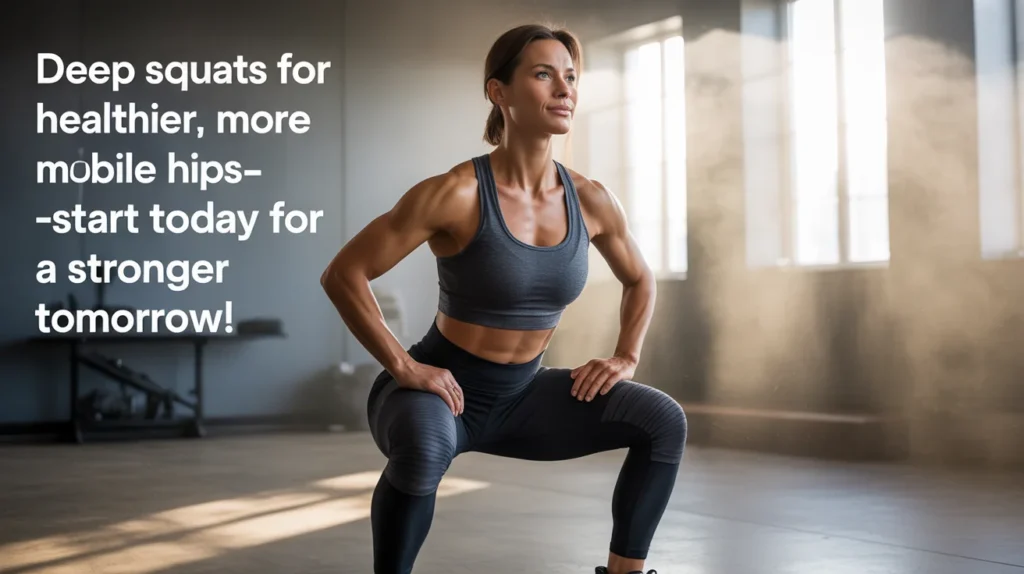
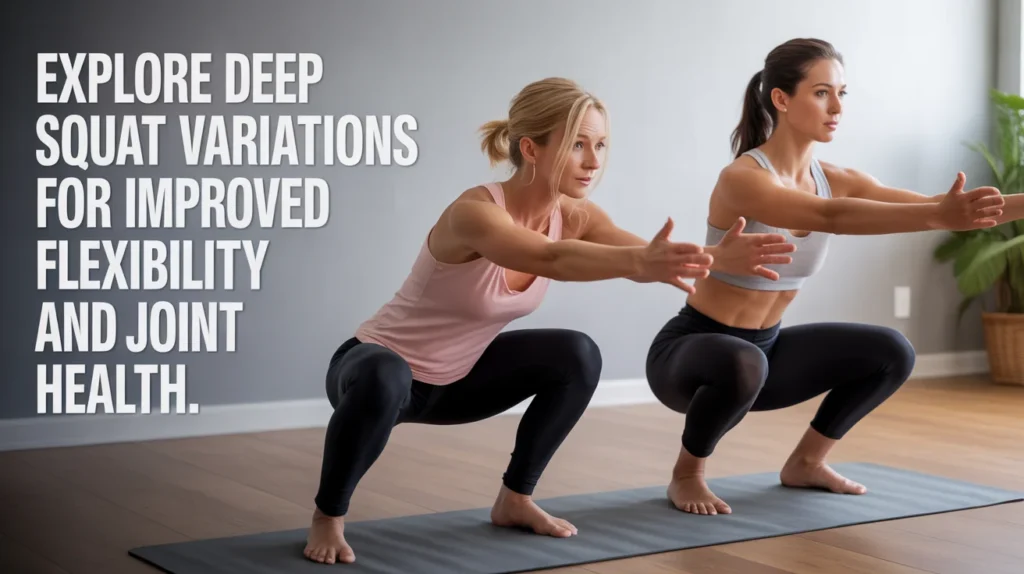
If you’ve noticed that basic movements like bending down to pick something up or getting up from a chair have become harder, deep squat variations can be your secret weapon. These simple yet effective exercises target hip mobility and overall flexibility, making everyday movements easier, reducing pain, and helping you maintain independence as you age.
Why Deep Squat Variations Are Essential for Hip Mobility
As we get older, we can experience tightness in the hip muscles and joints, which can interfere with basic tasks—everything from playing with your grandkids to just sitting down. Hip mobility is a huge factor in maintaining balance, flexibility, and strength, which are crucial for overall mobility.
What’s interesting is that in many cultures worldwide, deep squats are a natural part of daily life, from resting to eating or even socializing. This position promotes flexibility in the hips, knees, and ankles, making it an effective tool for keeping those joints healthy. Sadly, in modern Western cultures, we often trade squatting for sitting—leading to a loss in mobility and an increased risk of falls.
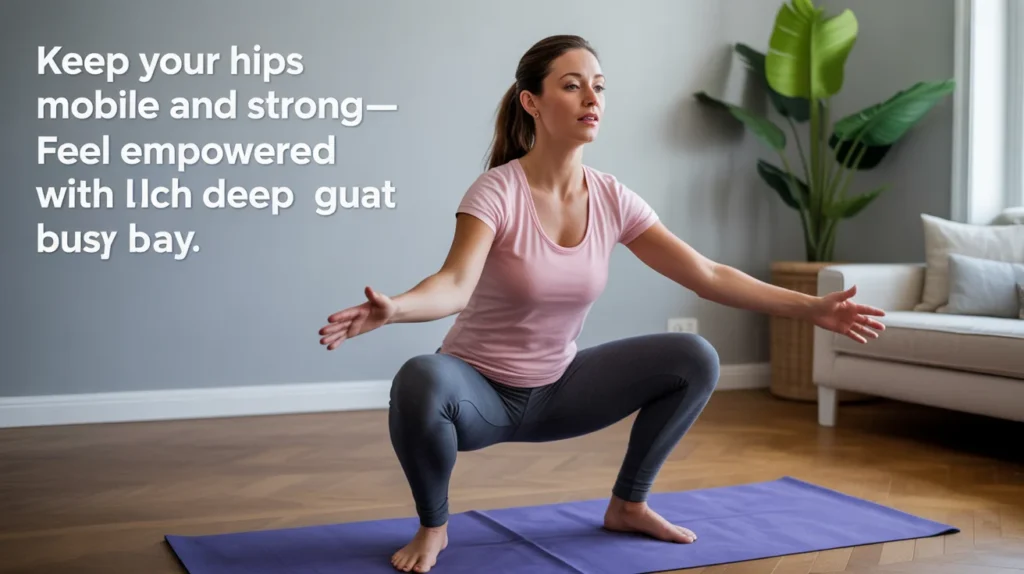
According to the CDC, falls are the leading cause of injury and death in older adults, and women are especially at risk. Around 75% of hip fractures occur in women, and a staggering 1 in 5 older adults who suffer a hip fracture die within a year due to complications.
But here’s the empowering part: incorporating deep squat variations into your routine can help prevent this decline. Not only will they keep your hips mobile, but they’ll also improve your strength, balance, and joint function—ultimately making your everyday movements smoother and less painful.
How Deep Squats Help Improve Hip Mobility
Deep squats aren’t just about stretching the hips—they also:
- Strengthen the muscles around your hips
- Improve range of motion in your hips, knees, and ankles
- Engage your core, pelvic floor, and legs for better overall posture
- Promote better balance and joint health
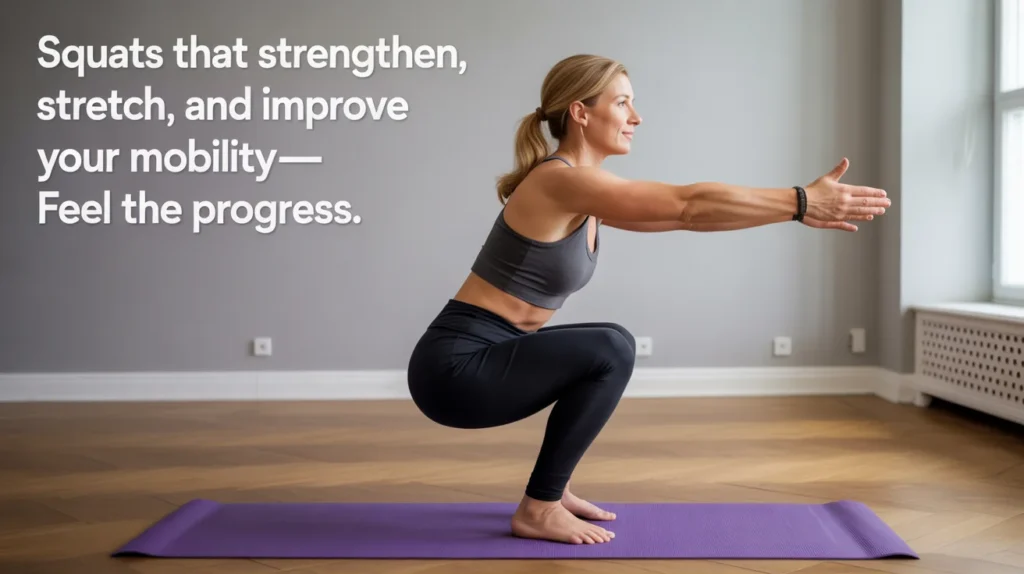
When done correctly, deep squat variations—like the yogi squat—can help you move with greater ease, whether you’re picking something up, getting up from the floor, or simply feeling less stiff throughout the day.
Common Concerns About Deep Squats
I understand that squats can feel intimidating, so let’s tackle some common concerns:
“I have knee pain—can I still do deep squats?”
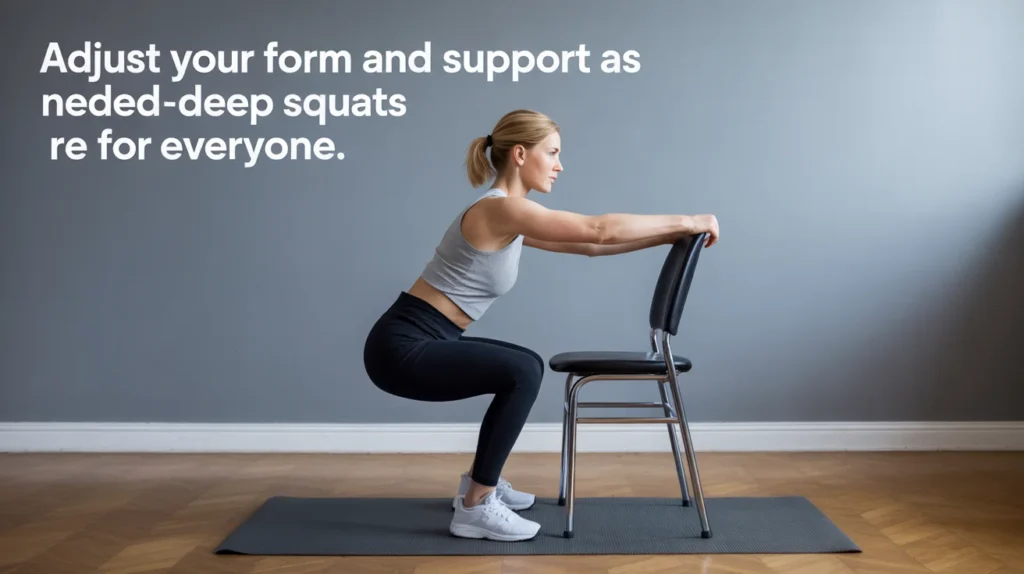
Absolutely! Knee pain is often a result of improper form, not the squat itself. You can modify the movement by using supports like a chair-assisted squat or a wall-supported squat hold. There’s no shame in modifying to build up to deeper movements!
“I’m not flexible enough for deep squats.”
That’s exactly why you should start! Flexibility improves with practice. With gradual progress, you’ll find that your flexibility improves over time.
“Aren’t deep squats bad for my joints?”
When done with proper form, deep squats can strengthen your joints, improve their function, and increase your mobility. In fact, they help protect against the very stiffness that leads to joint issues.
8 Deep Squat Variations for Improved Hip Mobility
These deep squat variations are simple, bodyweight exercises that can be done anywhere. Aim to do a few each day to improve your hip mobility. Over time, you can increase the intensity and duration to see better results.
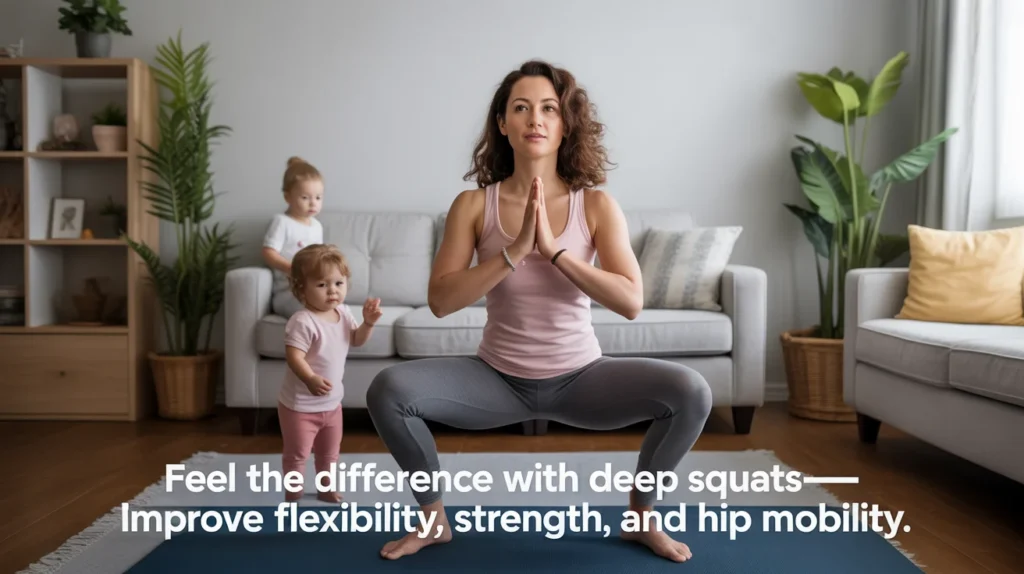
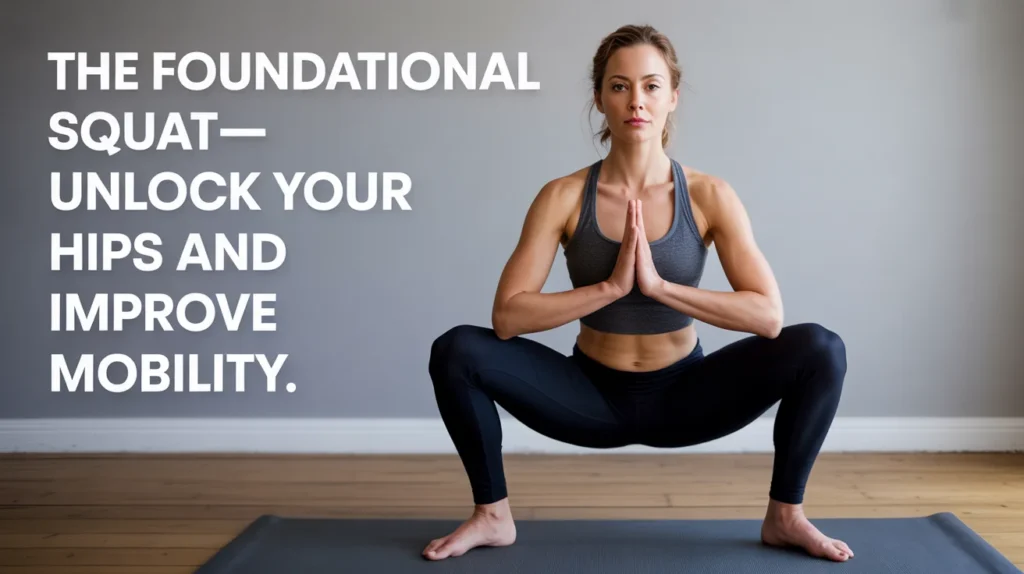
1. Basic Yogi Squat (a.k.a. Primal Squat)
This foundational deep squat promotes ankle, knee, and hip mobility. It’s also a natural resting position in many cultures.
Instructions:
- Stand with feet slightly wider than hip-width apart, toes pointing slightly outward.
- Lower your hips down, keeping your heels grounded and your chest lifted.
- Bring your hands to heart center and press elbows gently into your inner thighs to open your hips.
- Hold for 20-30 seconds.
2. Yogi Squat with Hip Rocks
This variation adds gentle movement to open the hips and loosen tension through the pelvis and lower back.
Instructions:
- Get into the basic yogi squat position.
- With your hands at heart center or resting on your thighs, shift your weight side to side, gently pressing one knee out at a time.
- Continue for 30–45 seconds, keeping your chest upright.
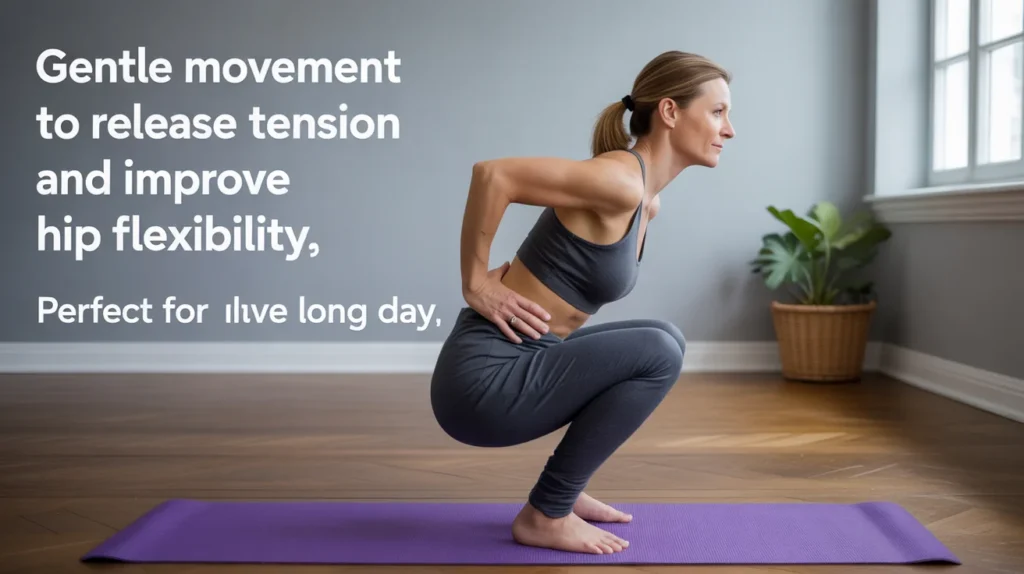
3. Deep Squat with Single Knee Taps
Build core strength and balance by adding knee taps to your deep squat. This variation engages your glutes and stabilizing muscles.
Instructions:
- Lower into the deep yogi squat.
- Tap one knee gently to the ground (or close to it). Keep your chest lifted and hips low.
- Alternate sides for 6-8 reps per leg.
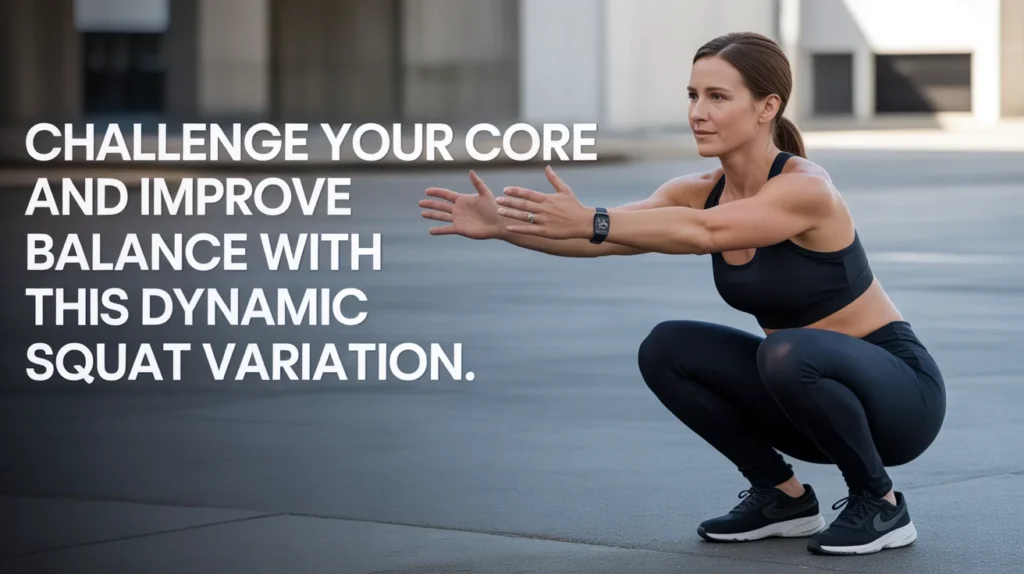
4. Deep Squat with Arm Rotation and Reach
This adds a spinal twist to your deep squat, improving spinal mobility and posture.
Instructions:
- Start in a deep squat.
- Place one hand on the floor and rotate your other arm towards the ceiling, following it with your gaze.
- Return to center and switch sides. Perform 5-6 slow rotations per side.
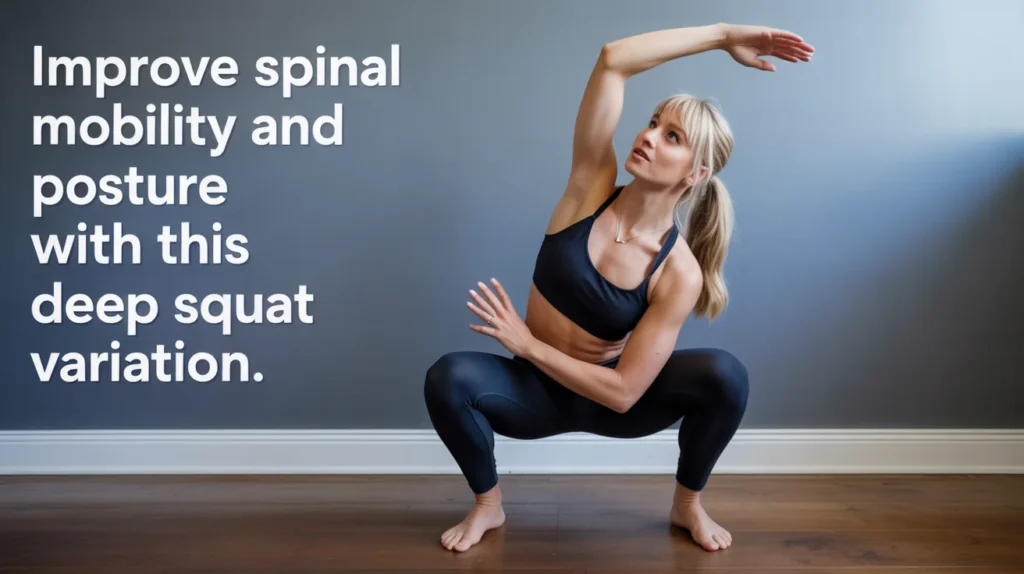
5. Deep Squat Walk-Out to Plank and Back
A dynamic movement that builds strength through the core, arms, and legs while reinforcing squat mechanics.
Instructions:
- Start in a deep squat.
- Walk your hands out to a plank position, hold for a beat, and then return your hands to your feet.
- Repeat for 5-8 reps.
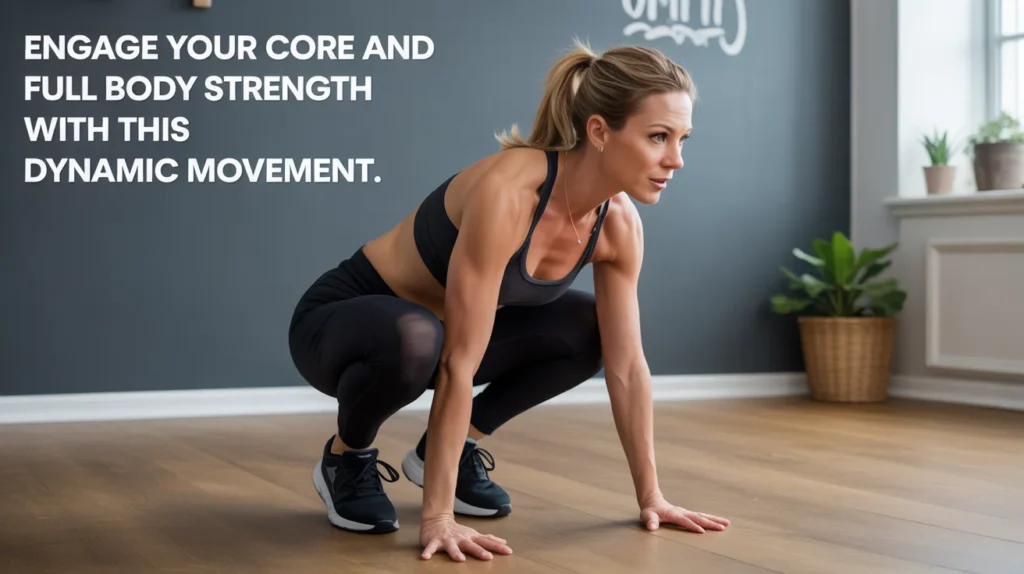
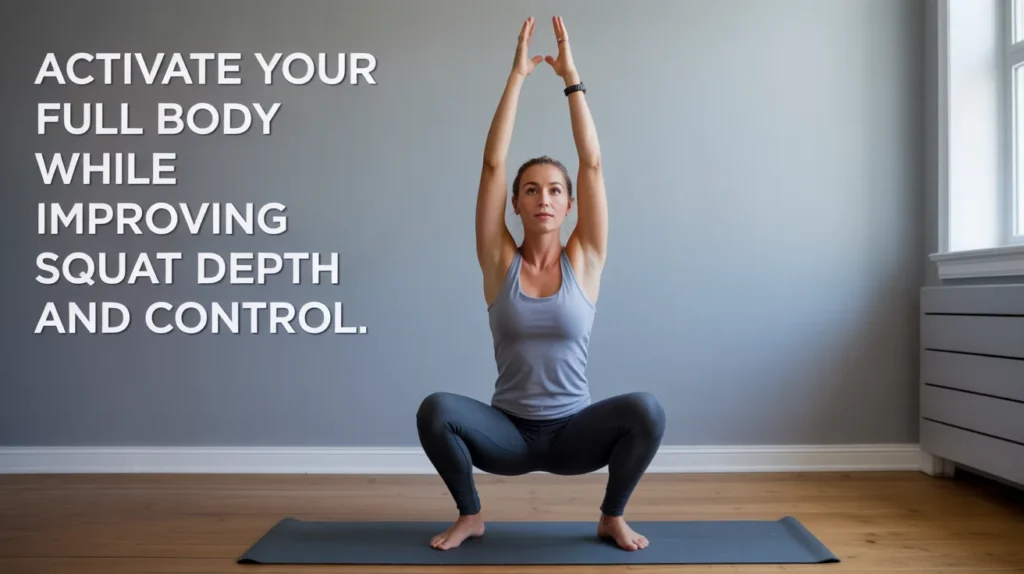
6. Deep Squat Reach to Stand
This movement focuses on full-body mobility and strength, helping with squatting depth and body control.
Instructions:
- Begin in the yogi squat.
- Reach both arms overhead as you press through your heels to stand.
- Lower back into the squat with control and repeat for 10-12 reps.
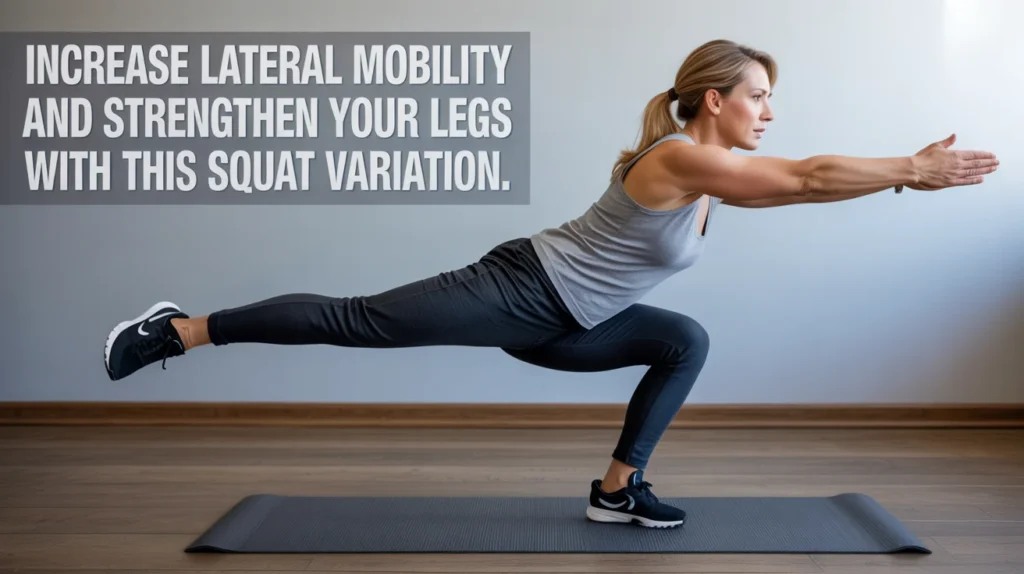
7. Cossack Squat
A side-to-side squat variation that targets the inner thighs, hamstrings, and glutes while improving lateral stability.
Instructions:
- Stand with feet wide apart and toes slightly turned out.
- Shift your weight to one leg, keeping the opposite leg straight.
- Alternate for 6-8 reps per leg.
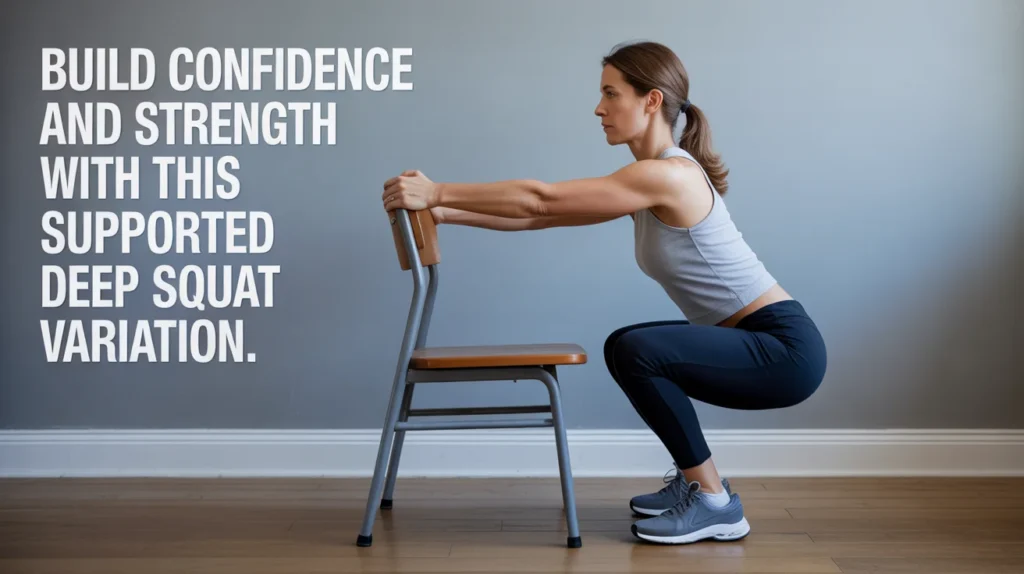
8. Chair-Assisted Deep Squat
This beginner-friendly variation provides support for those with balance issues or knee concerns.
Instructions:
- Stand in front of a sturdy chair.
- Lower into a squat, using the chair for support if necessary.
- Pause at the bottom and then return to standing. Perform 10-12 reps.
4 Key Benefits of Deep Squat Variations
Here’s why deep squat variations should be an essential part of your routine:
1. Improves Bone Density and Reduces Osteoporosis Risk
Deep squats are weight-bearing exercises that stimulate bone growth. For women over 50, these movements can help maintain stronger bones and lower the risk of fractures.
2. Strengthens the Pelvic Floor and Core Muscles
Squatting engages your pelvic floor and core, helping to improve posture and bladder control. This is especially important as we age.
3. Enhances Balance, Coordination, and Joint Health
By keeping your joints mobile and improving neuromuscular control, deep squats enhance balance and reduce the risk of falls.
4. Reduces Joint Stiffness and Increases Circulation
Squats promote blood flow to your lower body joints, keeping them lubricated and flexible, reducing stiffness, and improving overall mobility.
Safety Tips & Modifications
- Warm-up first: Start with leg swings or gentle squats before moving into deeper variations.
- Listen to your body: Discomfort is okay, but pain is not. Always adjust your range of motion if necessary.
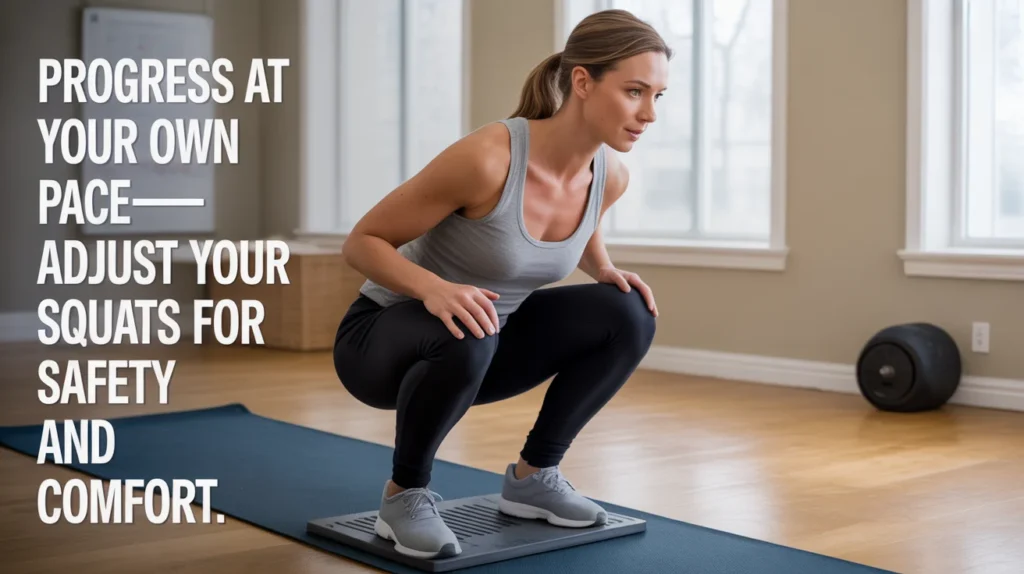
- Progress at your own pace: Start with supported squats and work your way deeper as your mobility improves.
- Consult a professional: If you have chronic joint issues, talk to a physical therapist before starting.
In Conclusion
Incorporating deep squat variations into your routine is a simple yet highly effective way to improve your hip mobility, strengthen key muscles, and maintain overall flexibility. Start small, listen to your body, and build up to deeper movements over time. Your hips—and the rest of your body—will thank you for it!