
The Decline Push-Up is a more advanced variation of the traditional push-up that focuses on strengthening your chest, arms, shoulders, and core. This move takes the basic push-up to the next level by shifting the focus to your upper body while challenging your core and balance.
If you’re ready to take your push-up game to new heights and build more upper body strength, mastering the Decline Push-Up is an excellent next step. In this guide, we’ll walk you through how to perform the decline push-up, its benefits, and tips for proper form.

What is the Decline Push-Up?
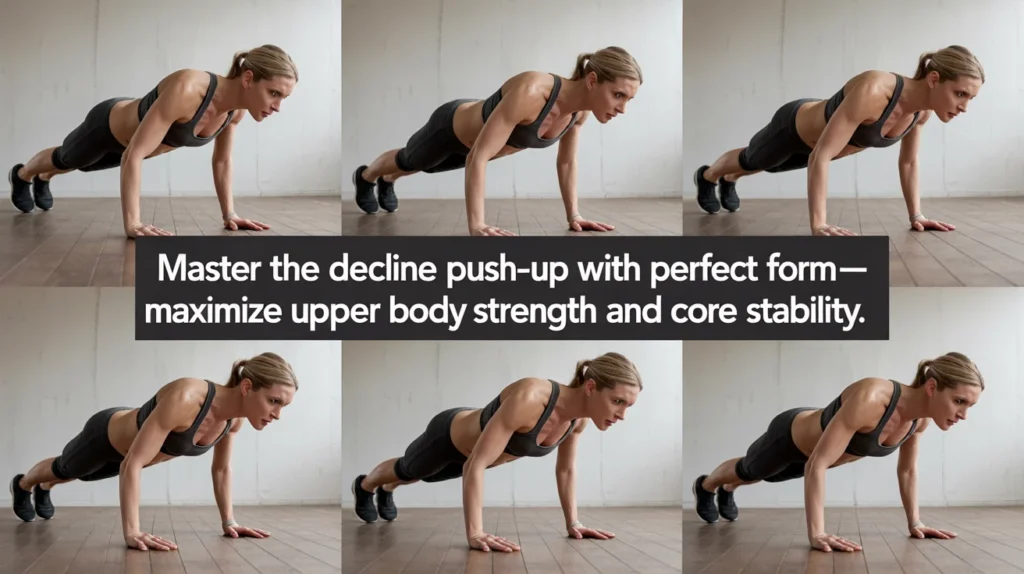
The Decline Push-Up is a modified version of the traditional push-up where your feet are elevated on a surface like a bench, step, or platform, and your hands are placed on the floor. The decline angle increases the intensity of the exercise by shifting more weight toward your upper body, targeting your chest, shoulders, triceps, and core. This variation not only builds upper body strength but also requires greater stability and balance.
The primary difference between a regular push-up and the decline push-up is the angle at which you perform the movement. By elevating your feet, gravity works against you more, making the exercise more challenging and emphasizing the upper chest and shoulders.

How to Perform the Decline Push-Up with Proper Form
Form is essential for maximizing the benefits of the Decline Push-Up and preventing injury. Here’s how to do it properly:
1. Set Up the Decline Position
- Begin by placing your feet on an elevated surface such as a bench, step, or sturdy chair. The higher the surface, the more challenging the exercise will be.
- Your feet should be placed firmly on the surface, with your legs straight and hips squared.
- Place your hands on the floor, directly below your shoulders, with your fingers spread wide for better stability.
2. Maintain a Straight Line
- Your body should form a straight line from your head to your heels. Engage your core, squeeze your glutes, and keep your back flat to avoid sagging in your lower back or arching your upper back.
- Avoid letting your head dip or your hips rise; the goal is to keep your body in a straight line throughout the entire movement.
3. Lower Your Body into the Push-Up
- Slowly bend your elbows to lower your chest towards the floor. Keep your elbows at a 45-degree angle relative to your body, not flaring them out too far.
- Keep your head aligned with your spine, looking slightly ahead of you (not down), to maintain proper neck alignment.
4. Push Back Up
- Once your chest is close to the floor, push through your palms to straighten your arms and return to the starting position.
- Focus on controlling the movement, both on the way down and on the way back up. Avoid letting gravity do the work.
5. Repeat the Movement
- Perform 10-15 repetitions, depending on your fitness level, and aim for 2-3 sets.
- Keep your core engaged throughout to maintain stability and prevent your body from sagging.
Common Mistakes to Avoid in the Decline Push-Up
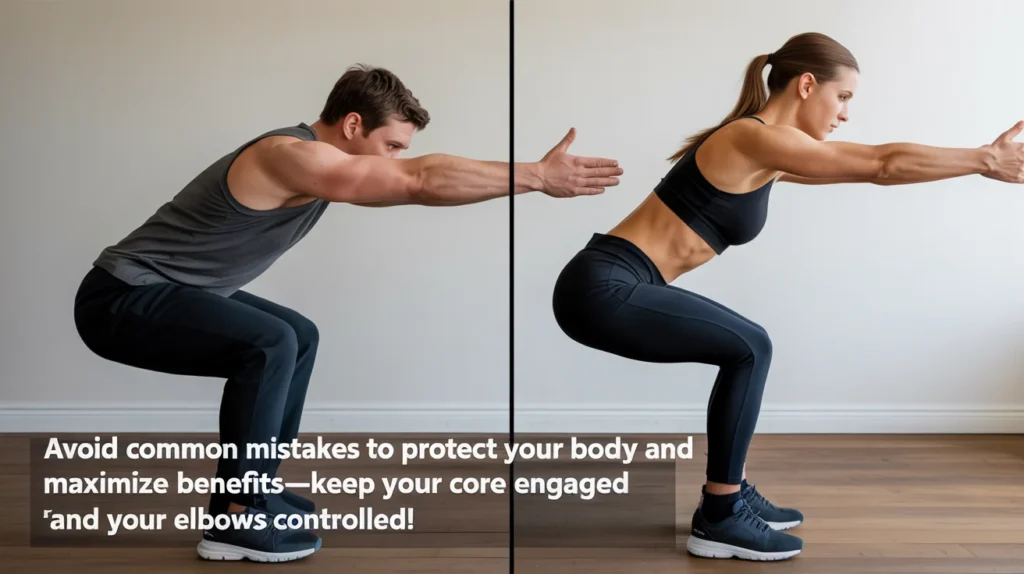
While the Decline Push-Up is an excellent strength-building exercise, it can be challenging to perform correctly. Avoid these common mistakes to get the most out of the movement:
1. Letting Your Body Sag
- Sagging your back or allowing your hips to drop compromises your form and can lead to strain on your lower back.
- Solution: Engage your core and glutes to keep your body in a straight line throughout the entire movement.
2. Flaring Your Elbows
- Flaring your elbows out too wide puts unnecessary strain on your shoulders and decreases the effectiveness of the exercise.
- Solution: Keep your elbows at a 45-degree angle to your body as you lower down, maintaining control throughout.
3. Using Momentum
- Don’t use momentum to push your body back up. Relying on momentum instead of muscle control reduces the intensity of the workout.
- Solution: Focus on slow, controlled movements, especially during the lowering phase, to fully engage the target muscles.
4. Elevating the Feet Too High
- Placing your feet too high (on an overly elevated surface) can make the movement too difficult and may compromise your form.
- Solution: Start with a low step or bench, and gradually increase the height as your strength improves.
Benefits of the Decline Push-Up
The Decline Push-Up is a fantastic exercise that offers numerous benefits for your upper body, core, and overall functional fitness. Here are the key benefits:
1. Builds Upper Body Strength
- The Decline Push-Up focuses on the upper chest, shoulders, and triceps, making it a powerful upper-body exercise. By shifting the body weight towards the upper body, you increase the intensity of the push-up, which helps build strength in the pectorals, deltoids, and triceps.
2. Enhances Core Stability
- To maintain proper form during the Decline Push-Up, your core must remain engaged. This strengthens your abdominals, lower back, and obliques, improving overall stability and balance.
3. Improves Posture
- Regularly performing Decline Push-Ups helps strengthen the muscles of the upper body and core, which are crucial for maintaining good posture and preventing slouching.
4. Increases Balance and Coordination
- Elevating your feet and performing the push-up forces your body to balance on your hands, increasing coordination and challenging your stability. This improves your overall balance and functional movement.
5. Advanced Push-Up Variation
- The Decline Push-Up is a great progression for those who have mastered the regular push-up. It challenges your upper body in new ways, helping to prevent workout plateaus.

How to Incorporate the Decline Push-Up Into Your Routine
The Decline Push-Up can be included in various workout routines. Here are a few suggestions:
1. Upper Body Strength Circuit
- Incorporate the Decline Push-Up into a circuit with other upper-body exercises such as shoulder presses, dips, or planks for a complete upper-body workout.
2. Full-Body Workouts
- Add the Decline Push-Up to your full-body workout to target the chest, arms, shoulders, and core while challenging your stability.
3. Push-Up Progression
- If you’re working on mastering regular push-ups, the Decline Push-Up is a great way to progress. Perform the Decline Push-Up after regular push-ups to increase intensity and challenge your muscles further.

Key Takeaways
- The Decline Push-Up targets your upper body, including the chest, shoulders, and triceps, while also engaging your core and balance.
- Focus on maintaining a straight body line and controlled movements to maximize the benefits of the exercise.
- Incorporate the Decline Push-Up into your routine as a way to progress from regular push-ups and continue building upper body strength.

Final Thoughts
The Decline Push-Up is an advanced variation of the traditional push-up that offers a wealth of benefits, from building upper body strength to improving core stability and balance. By mastering the Decline Push-Up, you’ll push your strength training to the next level and continue making progress toward your fitness goals.
Start incorporating the Decline Push-Up into your routine today, and enjoy the rewards of a stronger, more stable body!