Introduction
Finding time for fitness can feel like a huge challenge when you’re juggling kids, work, and a household. You need something effective, quick, and maybe even a little fun. This is where the simple, yet powerful, Jumping Rope comes in. It’s not just a playground toy; it’s an incredible tool for a full-body workout that you can do almost anywhere.
This guide will walk you through everything you need to know about the best jump rope workouts for beginners, helping you start your fitness journey with confidence. We’ll cover the basics, from choosing the right rope to mastering your form, and provide simple routines that fit into your busy schedule. Get ready to discover a time-saving workout that delivers amazing results.

Key Takeaways
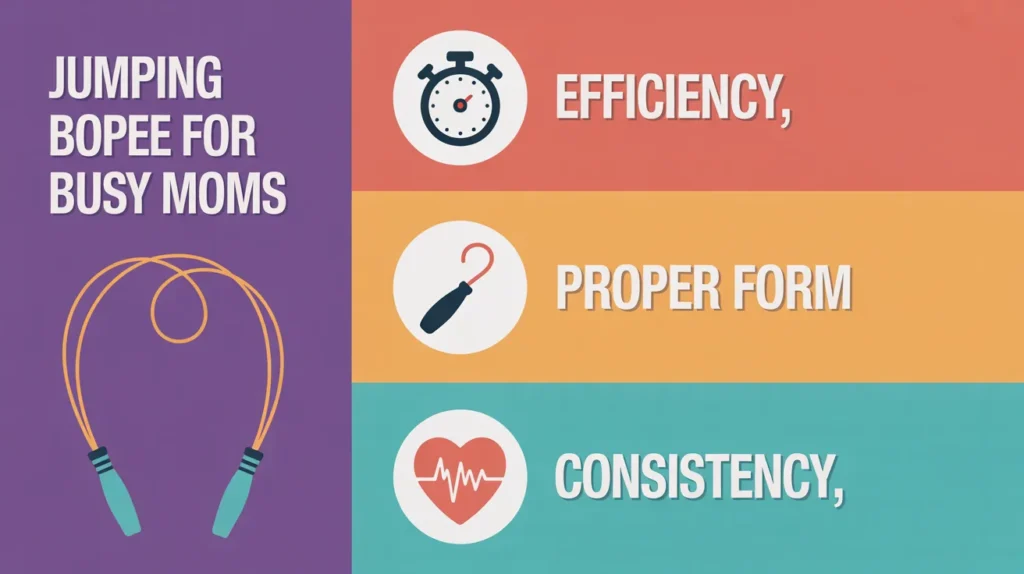
- Jumping rope is efficient: It offers a high-calorie burn and full-body workout in a short amount of time, making it perfect for busy moms.
- Proper form is crucial: Mastering the basics of posture, grip, and footwork prevents injury and makes your workouts more effective.
- Start slow: Begin with short intervals and basic moves before progressing to more advanced techniques to build endurance safely.
- The right equipment matters: Choosing a beginner-friendly rope, like a beaded or PVC rope, can make learning much easier.
- Consistency is key: Even 10-15 minutes of rope jumping a few times a week can significantly improve your cardiovascular health and muscle tone.
Why Jumping Rope Is a Perfect Mom-Friendly Workout
For busy moms, efficiency is everything. A jump rope workout provides a fantastic calorie burn in a fraction of the time compared to many other forms of cardio. You can torch a significant number of calories in just 15 minutes, making it a perfect solution for those days when you only have a small window of opportunity. It’s also incredibly portable.
You can toss a jump rope in your bag and take it anywhere, whether you’re in your living room, the backyard while the kids play, or even on vacation. This accessibility removes a common barrier to consistent exercise. Beyond the convenience, it’s a full-body workout that engages your legs, core, and arms, helping you build strength and tone muscle all at once. This makes it one of the most effective and time-saving workouts available.

Choosing Your First Jump Rope
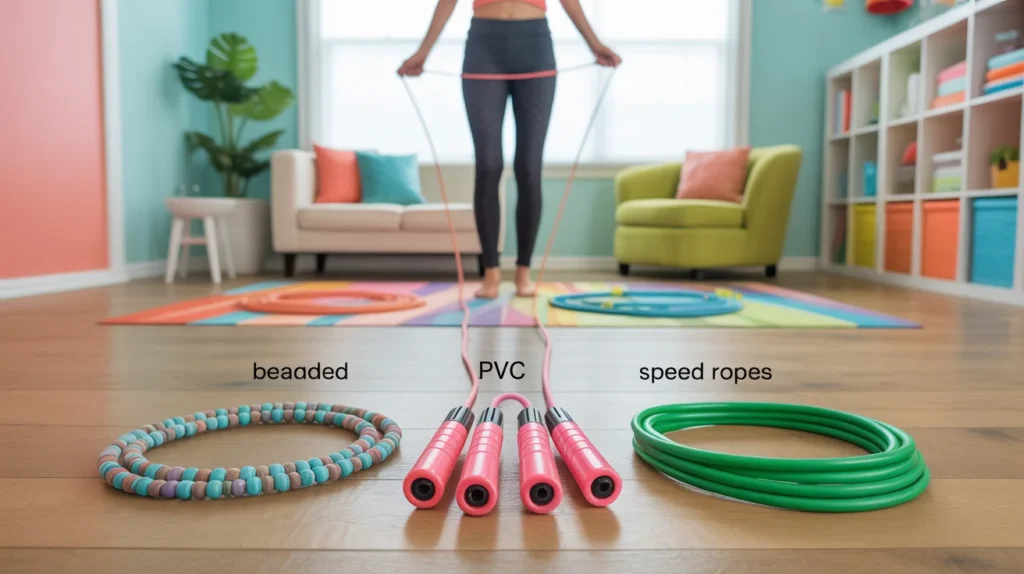
Stepping into the world of jumping rope can be overwhelming with all the options available. As a beginner, your goal should be to find a rope that helps you learn rhythm and timing, not one designed for speed or advanced tricks. The two best options for beginners are typically beaded ropes and PVC plastic ropes. Beaded ropes have plastic segments over the cord, which provides a bit more weight and auditory feedback as the beads hit the ground.
This sound helps you develop a steady cadence. PVC ropes are lightweight, affordable, and durable, making them another great choice. They are slightly faster than beaded ropes but still offer enough feel for a beginner to control their pace. Avoid starting with speed ropes (thin wire cables) or heavy ropes, as these require more skill and can be frustrating when you’re just learning proper form.
Types of Jump Ropes for Beginners
| Rope Type | Pros | Cons | Best For |
|---|---|---|---|
| Beaded Rope | Great auditory feedback, durable, doesn’t tangle easily. | Can be slower, slightly bulkier to carry. | Learning rhythm and basic footwork. |
| PVC Rope | Lightweight, affordable, versatile for indoor/outdoor use. | Can tangle, less feedback than beaded ropes. | General fitness and progressing past basics. |
| Speed Rope | Very fast for advanced moves like double-unders. | Difficult for beginners, provides little feedback, painful when you miss. | Advanced athletes and speed training. |
| Heavy Rope | Builds upper body strength and power. | Requires significant strength, high risk of fatigue and injury for beginners. | Strength conditioning and experienced users. |
Mastering Your Form: The Foundation of Success
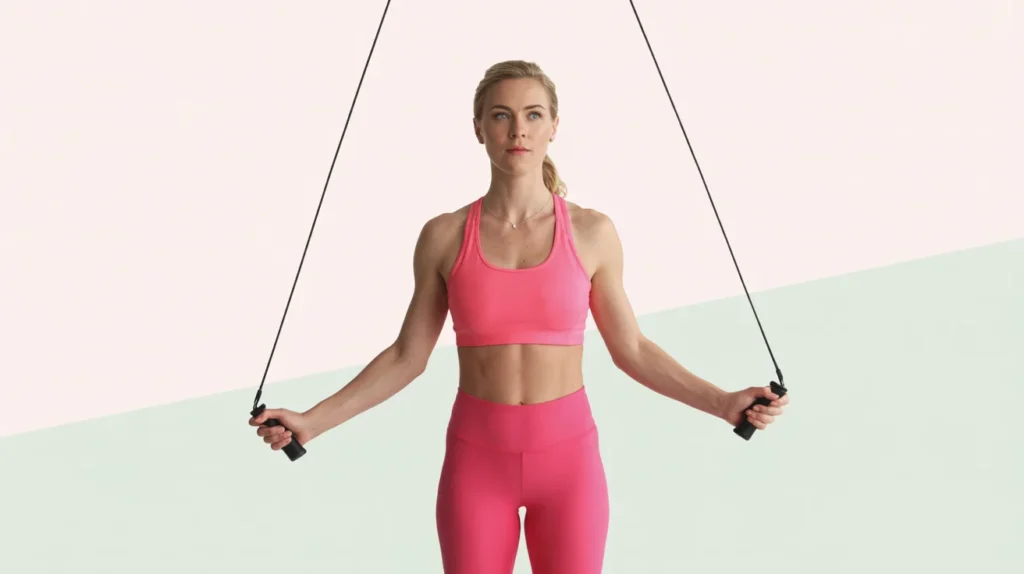
Before you even attempt your first jump, it’s vital to get your form right. Proper technique not only makes jumping easier but also prevents common injuries to your shins, ankles, and knees. Start by standing tall with your shoulders pulled back and your core engaged. Your elbows should be tucked close to your sides, bent at a little more than a 90-degree angle. The rotation of the jump rope should come from your wrists, not your shoulders or arms.
Making large circles with your arms is a common beginner mistake that wastes energy and disrupts your rhythm. For your feet, the bounce should be small, just an inch or two off the ground. Land softly on the balls of your feet, with your knees slightly bent to absorb the impact. This low-impact approach is much gentler on your joints.
The Essential Warm-Up Routine
Never skip your warm-up. Jumping into a workout with cold muscles is a recipe for injury. A good warm-up increases blood flow to your muscles and prepares your joints for the activity ahead, making your workout safer and more effective. Spend about five minutes getting your body ready. Start with some light dynamic stretches that mimic the movements you’ll be doing.
This could include arm circles (both forward and backward), torso twists, and leg swings. Follow this with a few minutes of light cardio to gradually elevate your heart rate. Activities like jogging in place, high knees, or butt kicks work perfectly. You can even practice turning the rope beside your body without jumping over it to get used to the wrist motion. Taking these few extra minutes ensures your body is primed and ready to go.

Your First Jump Rope Workout: The Basic Bounce
This is where it all begins. The basic bounce is the fundamental move of jumping rope, and mastering it is your first goal. The workout is simple and focuses on building endurance through short intervals. Here’s a routine to get you started:
- Jump for 30 seconds: Focus on maintaining a steady rhythm and good form.
- Rest for 60 seconds: Use this time to catch your breath. You can walk in place.
- Repeat this cycle 5-8 times.
The total workout time is under 15 minutes, making it easy to fit into your day. As you get more comfortable, you can gradually increase your jump time to 45 seconds and then a full minute, while reducing your rest time. Don’t be discouraged if you trip up a lot at first—it’s completely normal. Just reset and start again. Remember, the goal is consistency, not perfection. This beginner-friendly interval cardio will build a strong foundation for more complex moves later on.
Progressing to the Alternating Foot Step
Once you feel confident with the basic two-foot bounce, the next step is the alternating foot step, which resembles running in place. This move is excellent for improving your coordination and is a staple in many jump rope workouts. To do it, you’ll simply shift your weight from one foot to the other with each turn of the rope, lifting one foot and then the other as the rope passes underneath. It feels like a light jog.
A great way to build this skill is to incorporate it into your interval training. For example, you could alternate between 30 seconds of the basic bounce and 30 seconds of the alternating foot step, followed by 60 seconds of rest. This cross-training between moves keeps your mind engaged and challenges your body in new ways.

Incorporating Rest Days for Recovery
While you might be excited to jump every day, rest is just as important as the workout itself. Your muscles need time to repair and rebuild, which is how they get stronger. Overtraining can lead to burnout, fatigue, and injury, setting you back on your fitness journey. For beginners, it’s wise to start with jumping rope 2-3 times per week on non-consecutive days.
This gives your body at least one full day to recover between sessions. On your rest days, you can still stay active with lower-intensity activities like walking, stretching, or yoga. Listening to your body is key. If you’re feeling unusually sore or tired, don’t be afraid to take an extra rest day. Proper recovery ensures you can come back to your next workout feeling strong and energized.
Listening to Your Body: Postpartum Considerations
For new moms, getting back into fitness requires extra care and patience. It’s crucial to get clearance from your doctor before beginning any new exercise program, including using a jump rope. Postpartum bodies have gone through significant changes, and your core and pelvic floor need time to heal and regain strength.
Jumping is a high-impact activity, so it’s important to ensure your body is ready for it to avoid issues like incontinence or pelvic organ prolapse. When you do start, begin very slowly. Focus on low-impact modifications and listen carefully to your body’s signals. If you feel any pain or discomfort, stop immediately. Consider working with a physical therapist who specializes in postpartum recovery to ensure you are strengthening your core and pelvic floor correctly before adding impact.
The Perfect Cool-Down to Prevent Soreness
Just as a warm-up prepares your body for exercise, a cool-down helps it transition back to a resting state. A proper cool-down can help reduce muscle soreness, improve flexibility, and regulate your heart rate and blood pressure gradually. After your last jump interval, don’t just stop moving. Spend 5-10 minutes bringing your body back down. Start by walking around for a couple of minutes to let your heart rate decrease slowly.
Then, move into some static stretching, holding each stretch for 20-30 seconds. Focus on the muscles you used most: your calves, hamstrings, quadriceps, and shoulders. According to the American College of Sports Medicine, stretching is most effective when muscles are warm, making the post-workout period the ideal time. This simple routine will leave you feeling better the next day.
Making Fitness a Family Affair
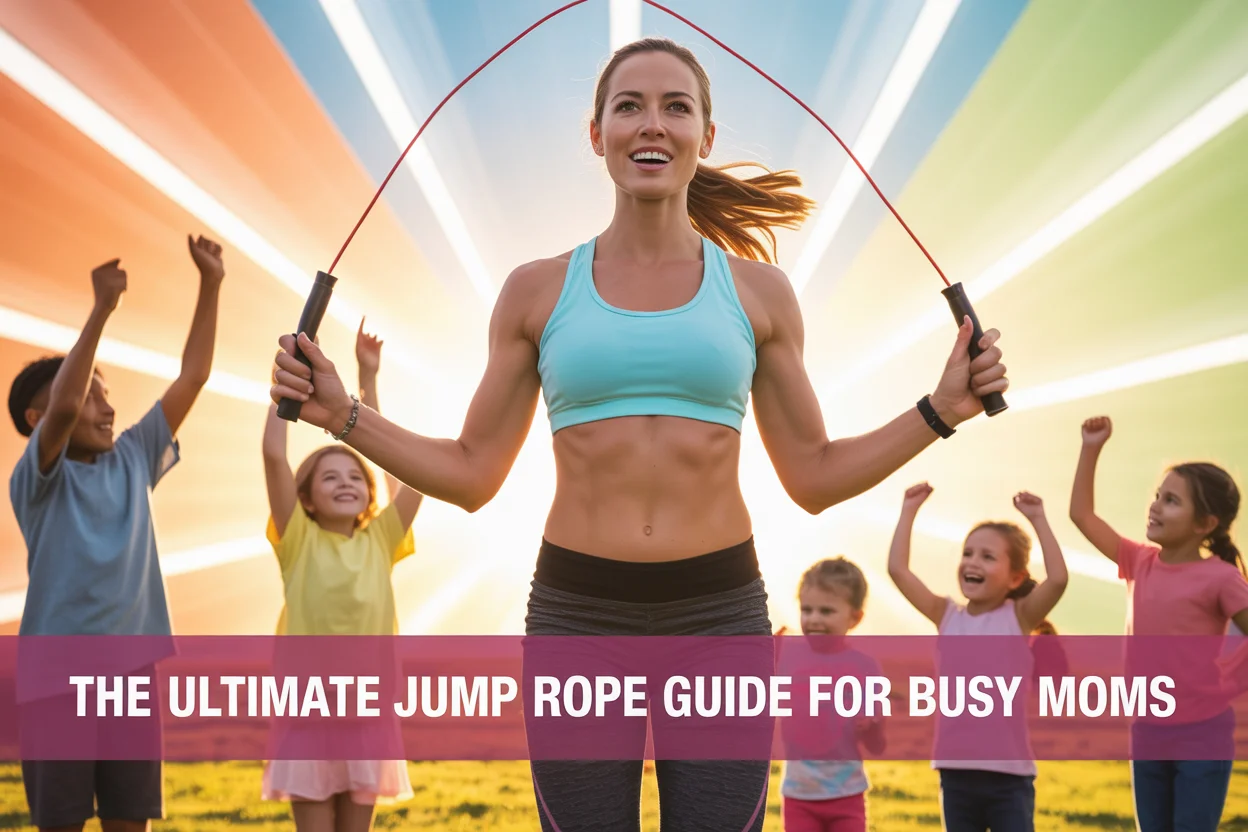
One of the best ways to stay consistent with your fitness routine is to make it fun and inclusive for the whole family. Jumping rope is an activity that people of all ages can enjoy. You can turn your workout into playtime with the kids. Challenge them to see who can do the most consecutive jumps or teach them simple tricks.
This not only models a healthy, active lifestyle for your children but also turns exercise into quality family time. For younger kids, you can use a long rope and have two people turn it while others take turns jumping in. This classic playground game is a great way to get everyone moving. Integrating fitness into family activities makes it feel less like a chore and more like a natural part of your daily life.
Tracking Your Progress and Staying Motivated
Staying motivated is often the hardest part of any fitness journey. Tracking your progress is a powerful tool to see how far you’ve come and keep your spirits high. You can do this in several ways. Keep a simple workout journal where you log the date, the duration of your workout, and how many jumps or intervals you completed. You can also make notes on how you felt.
Looking back at your entries from a few weeks prior can be incredibly encouraging when you see your improvements. Another method is to set small, achievable goals. For example, your first goal might be to jump for one minute straight without stopping. Once you hit that, you can set a new goal, like learning the alternating foot step. Celebrating these small victories along the way will keep you engaged and excited for your next workout.
Conclusion
Starting a fitness routine with a jump rope is a smart, effective, and fun choice for any mom looking to prioritize her health without sacrificing precious time. By starting with the basics—choosing the right rope, mastering your form, and beginning with simple workouts—you can build a strong and sustainable fitness habit.
Remember to warm up, cool down, and listen to your body, especially if you are in the postpartum period. As you progress, you can explore new moves and increase the intensity, but the foundation you build now is what matters most. Embrace the journey, celebrate your small wins, and enjoy the incredible physical and mental benefits that come from this simple yet powerful workout tool. You’ve got this!

Frequently Asked Questions (FAQ)
1. How long should a beginner jump rope workout be?
For a complete beginner, a 10-15 minute session is plenty. This includes a 5-minute warm-up, 5-8 minutes of jump intervals, and a 5-minute cool-down. The key is consistency, not duration.
2. Is jumping rope bad for your knees?
When done with proper form, jumping rope is a lower-impact activity than running. By staying on the balls of your feet, keeping jumps low, and bending your knees to absorb the landing, you minimize stress on your joints. The U.S. Department of Health and Human Services’ Physical Activity Guidelines for Americans highlights that bone-strengthening activities like jumping are beneficial for health.
3. How often should I practice to see results?
Aim for 3 to 4 sessions per week on non-consecutive days. This consistency will help you improve your cardiovascular fitness, muscle tone, and coordination. You can start seeing and feeling results within a few weeks.
4. I keep tripping on the rope. What am I doing wrong?
This is very common for beginners! It’s usually due to one of three things: your rope is the wrong length, you’re making your arm circles too big, or your jumps are too high. Check your rope length (it should reach your armpits when you stand on the middle), focus on rotating from the wrists, and keep your bounces small.
5. Can I jump rope indoors?
Absolutely! Just make sure you have enough space vertically and horizontally so the rope won’t hit the ceiling, furniture, or walls. A smooth surface like a hardwood floor or a workout mat is ideal.
meta title:Best Jump Rope Workouts For Beginners: A Mom’s Guide,meta description:Discover the best jump rope workouts for beginners! This guide for busy moms covers everything from choosing a rope to easy, time-saving routines.,/blog/best-jump-rope-workouts-for-beginners,Best Jump Rope Workouts For Beginners, mom with a jump rope in a backyard,Fitness