Introduction
Finding time for fitness can feel like a marathon when you’re a mom. Between school runs, work, and managing the household, long gym sessions often fall to the bottom of the list. What if you could get a powerful cardio and strength workout in just 20 minutes at home? Enter plyometrics. This style of exercise uses explosive movements to build strength, burn calories, and improve your overall fitness in a short amount of time.
It’s a dynamic and efficient way to train that can be adapted for different fitness levels. Forget the idea that this is only for elite athletes; with the right approach, busy moms can unlock the incredible benefits of these workouts. This guide will walk you through everything you need to know to get started safely and effectively, right from your living room.

What Exactly Are Plyometrics?
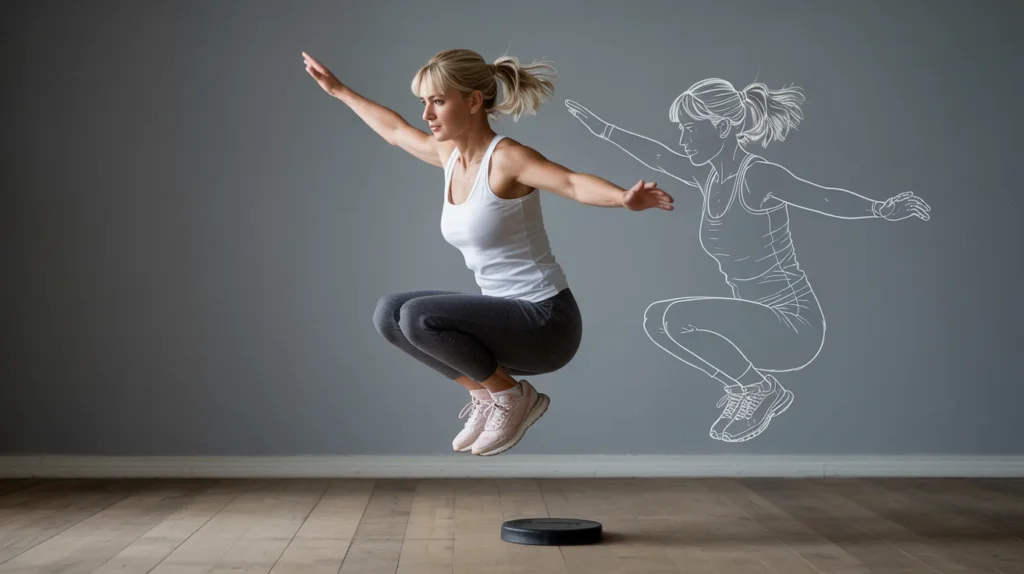
You might know it by its more common name: jump training. Plyometrics are exercises where your muscles exert maximum force in short intervals. Think about jumping, skipping, and hopping. The core of this training is the stretch-shortening cycle. When you land from a jump, your muscles stretch (like a rubber band) and then immediately shorten (springing back) for the next explosive movement.
This rapid cycle trains your muscles to produce more power in less time. It’s not just about jumping high; it’s about improving the speed and force of your muscular contractions. This makes everyday mom life easier, whether you’re lifting a toddler, carrying groceries, or chasing a runaway ball in the backyard. These workouts are intense, but that intensity is what delivers such impressive results quickly.

The Unique Benefits for Moms
Why should a busy mom consider adding jumps and hops to her routine? The benefits are perfectly suited for the demands of motherhood. First, it’s a major calorie torcher. The high intensity of plyometrics revs up your metabolism, helping you burn more calories in less time compared to steady-state cardio like jogging. Second, it builds functional strength.
These exercises strengthen your legs, glutes, and core, which are essential for lifting children and performing daily tasks without strain. Third, it’s fantastic for bone health. High-impact activities signal your body to build stronger, denser bones, which is crucial for preventing osteoporosis later in life. Finally, it boosts your agility and balance, making you quicker on your feet and less prone to stumbles when you’re navigating a floor full of toys.
Who Should Be Cautious with Plyometrics?
While powerful, these explosive workouts are not for everyone, especially right after childbirth. If you are newly postpartum, it is vital to consult your doctor or a pelvic floor physical therapist before attempting any high-impact exercise. Your body needs time to heal, particularly your core and pelvic floor muscles. Jumping too soon can risk injury or worsen conditions like diastasis recti or pelvic organ prolapse.
Generally, it’s wise to wait at least 3-6 months postpartum and ensure you have a solid foundation of core strength. Anyone with pre-existing joint issues in their knees, ankles, or hips should also get medical clearance. Listening to your body is the most important rule. If you feel any sharp pain, especially in your joints or pelvic region, stop immediately.

Safety First: The Golden Rules of Form
Proper form is non-negotiable to prevent injury and get the most out of your workout. The most critical part is how you land. Always land softly, like a cat, on the balls of your feet and then roll back to your heels. Your knees should be bent and aligned over your second toe, never collapsing inward. Think of absorbing the impact through your muscles, not jarring your joints.
A proper warm-up is also essential. Spend 5-10 minutes doing dynamic stretches like leg swings, arm circles, and light cardio to prepare your muscles. The surface you work out on matters, too. A wood floor, firm mat, or grass is much better than hard concrete. Finally, wear supportive athletic shoes that provide good cushioning and stability.
Simple At-Home Plyometric Moves for Beginners
You don’t need a gym to start. Here are a few foundational moves you can do at home, with modifications to control the intensity.
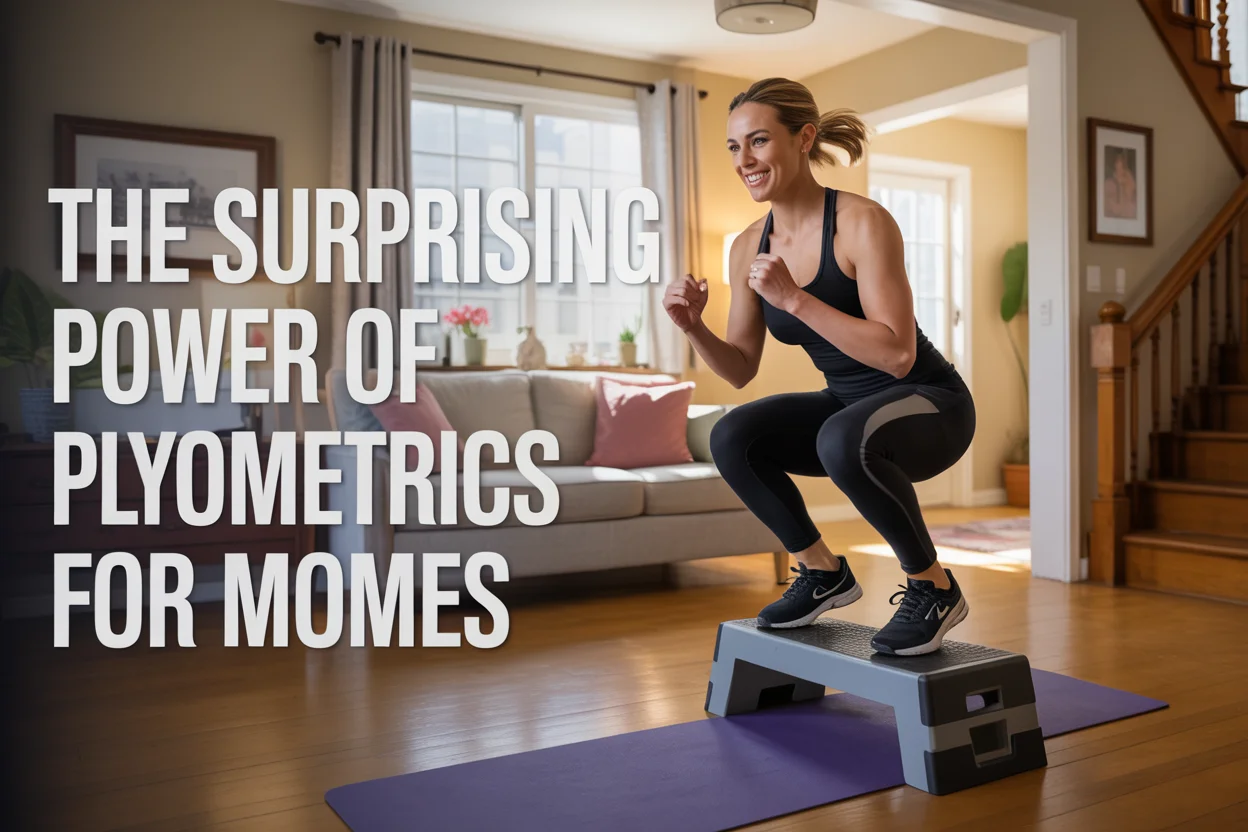
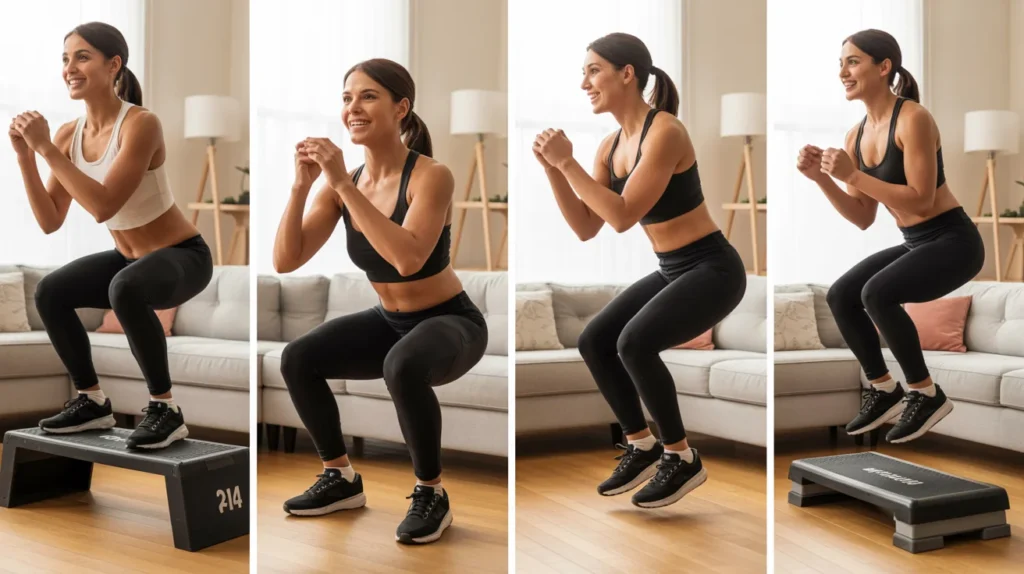
- Box Jumps (on a stair): Stand facing a low, sturdy step. Squat slightly and jump up onto the step, landing softly. Modification: Step up quickly one foot at a time instead of jumping.
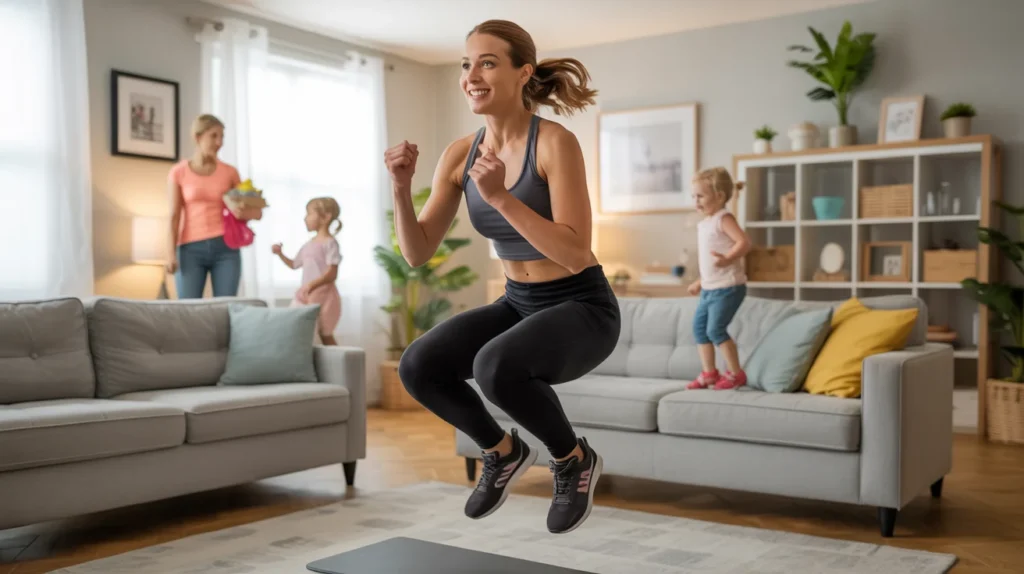
- Squat Jumps: Start in a squat position. Explosively jump straight up, reaching your arms overhead. Land softly back in a squat. Modification: Perform a bodyweight squat and rise up onto your tiptoes, skipping the jump.
- Jumping Jacks: The classic cardio move. It’s a simple form of plyometrics that gets your heart rate up. Modification: Do stepping jacks, tapping one foot out to the side at a time without the jump.
- Skaters: Hop from side to side, landing on one foot while the other leg swings behind you. Modification: Instead of hopping, take a large step to the side into a lateral lunge.
Your 20-Minute Beginner Home Routine
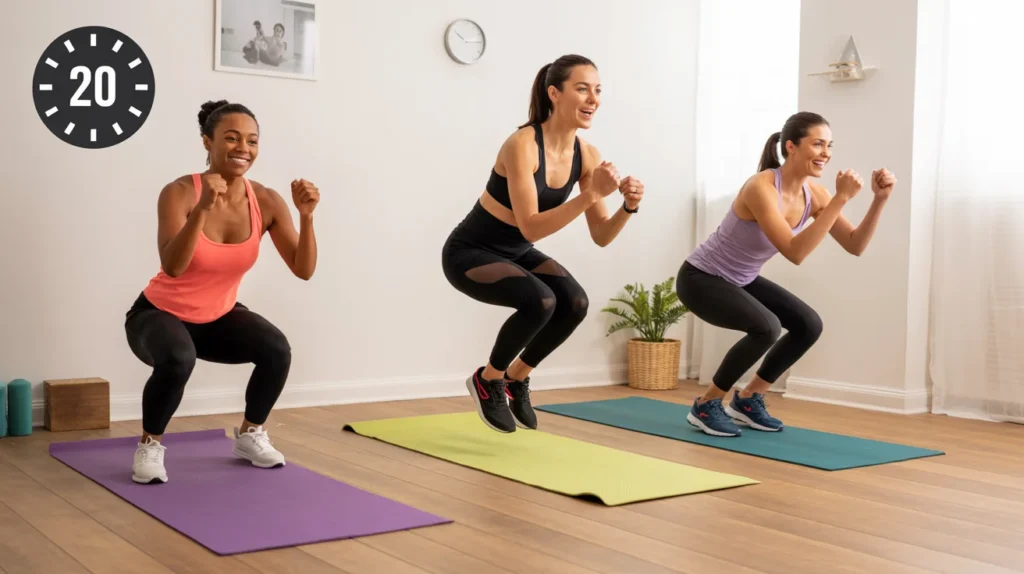
Ready to give it a try? Here is a simple, effective routine you can do at home. Perform a 5-minute warm-up first. For the main circuit, do each exercise for 30 seconds, followed by 30 seconds of rest. Complete the entire circuit 3 times.
- Jumping Jacks: Get the body warm and heart rate up.
- Squat Jumps (or modification): Focus on that soft landing.
- Alternating Lunges (stepping, not jumping): This acts as an active recovery while still working your legs.
- Skaters (or modification): Work on lateral movement and balance.
- High Knees: Run in place, bringing your knees up toward your chest.
After completing three rounds, finish with a 5-minute cool-down. This simple structure provides a fantastic workout that combines bursts of high intensity with brief recovery periods, making it an efficient use of your precious time.
How to Schedule and Progress Your Workouts
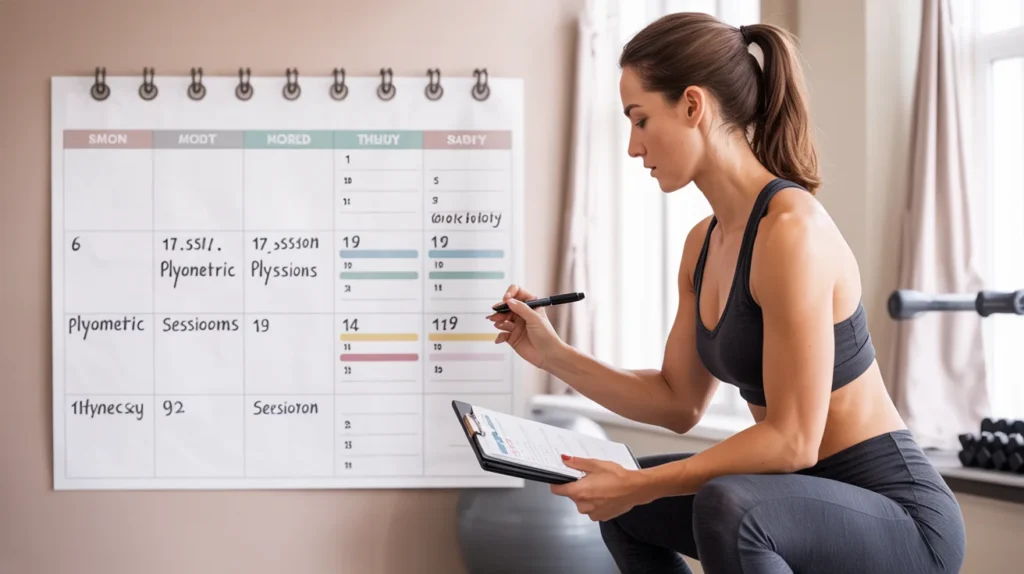
Because plyometrics are high-intensity, your body needs time to recover. Start with just one or two sessions per week, with at least 48 hours of rest in between. Never do these workouts on back-to-back days. As you get stronger over 8 weeks, you can start to increase the challenge. You can progress by:
- Increasing the work interval: Move from 30 seconds of work to 40 seconds.
- Decreasing the rest: Shorten your rest period from 30 seconds to 20 seconds.
- Adding more reps: Try to complete more jumps within your work interval.
- Trying harder variations: Move from a step-up to a low box jump.
Listen to your body. Progress should be gradual. According to the American Council on Exercise (ACE), mastering the landing mechanics is key before you increase the intensity.
Do I Need Fancy Equipment?
One of the best things about plyometrics for moms is that you need very little equipment. Your own body weight provides plenty of resistance. The most important piece of gear is a good pair of cross-training shoes with solid support and cushioning. A soft surface, like a workout mat, is also helpful for protecting your joints.
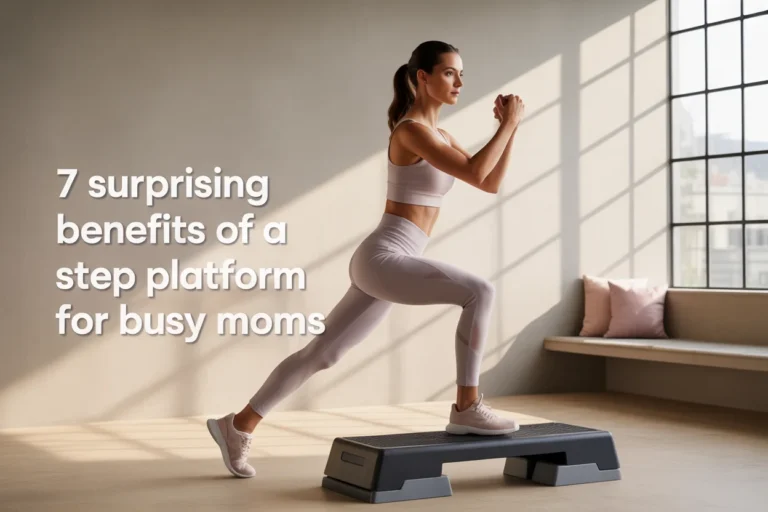
If you want to add variety, a low, sturdy box or a step stool can be used for box jumps and step-ups. You can also incorporate a jump rope, which is a budget-friendly tool for a killer cardio workout. You absolutely do not need an expensive gym membership to build a powerful and effective routine.

Plyometrics vs. Other Workouts for Moms
How does jump training stack up against other popular forms of exercise? Here’s a quick comparison.
| Feature | Plyometrics | Steady-State Cardio (e.g., Jogging) | Strength-Only Training (e.g., Lifting Weights) |
|---|---|---|---|
| Time Commitment | Very low (15–25 mins) for a full workout. | Moderate to high (30–60 mins) to be effective. | Moderate (30–45 mins). |
| Benefits | Builds power, cardio fitness, strength, and bone density. | Primarily builds cardiovascular endurance. | Primarily builds muscle mass and strength. |
| Best For | Busy moms needing a fast, high-impact, calorie-burning workout. | Moms looking for a lower-intensity, stress-reducing activity. | Moms focused on building pure strength and muscle definition. |

Staying Motivated and Making It Fun
The best workout is the one you actually do. To stay consistent, try to find the joy in it. Put on your favorite high-energy music playlist. If you have older kids, you can even turn it into a game. Challenge them to see who can do more jumping jacks or hop on one foot longer.
Celebrating small wins, like completing your two workouts for the week or mastering a new move, can also keep your motivation high. Remember your “why.” Are you doing this to have more energy to play with your kids, to feel stronger in your own body, or to carve out a few moments of the day just for you? Connecting to that purpose makes it easier to show up.

The Importance of a Cool-Down
Just as a warm-up is crucial, a cool-down is essential for helping your body recover. After your last interval, don’t just stop. Spend 5-10 minutes bringing your heart rate down gradually. Walk around the room, then move into some static stretches. Focus on the muscles you just worked hard: your quads, hamstrings, glutes, and calves.
Hold each stretch for 20-30 seconds without bouncing. A proper cool-down can help reduce muscle soreness and improve flexibility. The Centers for Disease Control and Prevention (CDC) emphasizes physical activity guidelines that include muscle-strengthening activities, and a proper cool-down ensures you can continue to meet these goals safely.

Key Takeaways
If you’re short on time but want big results, plyometrics might be your perfect fitness match.
- It’s Efficient: Get a cardio and strength workout in 20 minutes.
- It’s Effective: Builds power, burns major calories, and strengthens bones.
- It’s Accessible: Can be done at home with minimal to no equipment.
- Safety is Paramount: Always warm up, focus on soft landings, and consult a doctor if you are postpartum or have joint concerns.
- Start Slow: Begin with 1-2 sessions a week and gradually increase the intensity as you get stronger.
Frequently Asked Questions
Can I do plyometrics if I have bad knees?
If you have chronic knee pain or a past injury, you must consult your doctor first. If cleared, you should start with the lowest-impact modifications, such as stepping instead of jumping, and focus intensely on strengthening the muscles around the knee. Proper form is critical to avoid putting stress on the joint.
How soon after having a baby can I start plyometrics?
There is no single answer, as every postpartum recovery is different. Most experts, including pelvic floor specialists, recommend waiting at least 3-6 months and being cleared by your healthcare provider. You should be free of any pelvic floor symptoms (like leaking or pressure) and have a good base of core strength before attempting any jumping.
Will plyometrics make me bulky?
No. The goal of plyometrics is to build power and endurance, not bulk. The movements are fast and athletic. They will help you build lean, strong muscle that gives you a toned and defined look, not a bulky one.
A Powerful Choice for a Powerful Mom
Incorporating plyometrics into your fitness routine can feel empowering. These workouts are challenging, but they prove just how strong and capable your body is. By starting slowly, mastering the form, and listening to your body, you can tap into a new level of fitness that fits perfectly into your busy life. You don’t need hours at the gym to be strong, healthy, and full of energy. Sometimes, all you need is 20 minutes and the space to jump.