
1. Introduction
As a busy mom, it can be hard to find time for long workouts, but incorporating high-intensity, full-body exercises like Squat Jumps into your routine can give you an incredible workout in just a few minutes. Squat Jumps are an explosive movement that targets your legs, core, and glutes while also providing a cardio boost. Not only do they help strengthen and tone your lower body, but they also improve your endurance, flexibility, and metabolism.
Whether you’re looking to burn fat, improve athletic performance, or just spice up your fitness routine, Squat Jumps are a quick and effective move to add to your workout—especially for busy moms on the go!
2. What Are Squat Jumps?
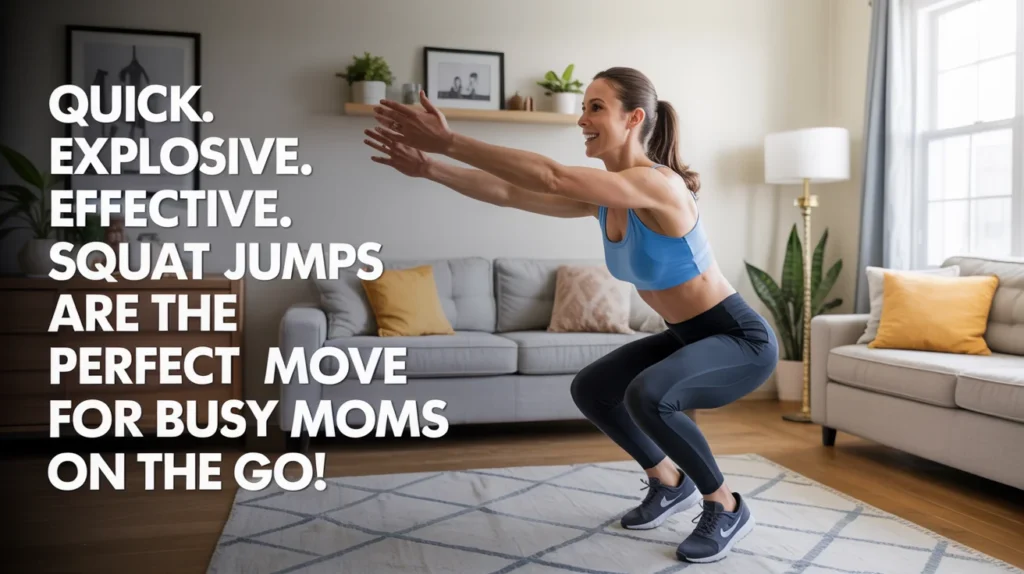
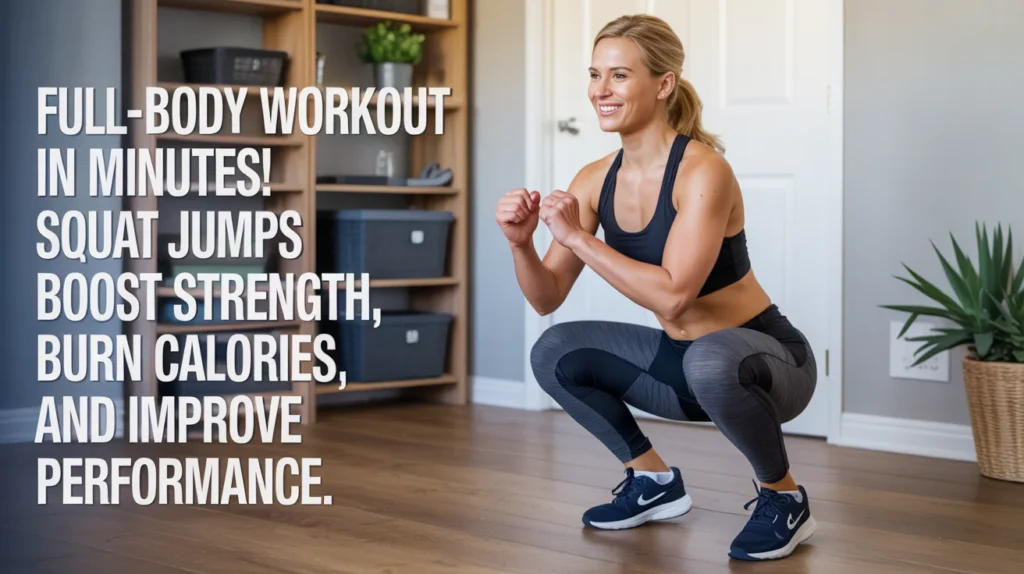
These are a plyometric exercise that combines a traditional squat with an explosive jump. Starting in a squat position, you use the power in your legs to jump upwards, then land back into a squat position. This dynamic movement engages your glutes, quads, hamstrings, and calves, while also firing up your core for balance and stability.
For moms, Squat Jumps are a great way to increase lower-body strength, boost cardiovascular health, and add intensity to a workout without needing any equipment. They’re particularly beneficial for building the strength needed for everyday activities like lifting, running after kids, or carrying groceries.
3. How to Do Squat Jumps: Step-by-Step Guide
Ready to try Squat Jumps? Here’s how to perform them correctly:
- Starting Position: Begin by standing with your feet about shoulder-width apart. Keep your toes slightly turned outward, and ensure your weight is distributed evenly on your feet. Engage your core and maintain a straight back throughout the exercise.
- Lower Into a Squat: Lower your body into a squat position by bending your knees and pushing your hips back, as if you’re sitting into a chair. Keep your chest lifted and make sure your knees don’t go past your toes. Your thighs should be parallel to the floor or slightly lower for maximum effectiveness.
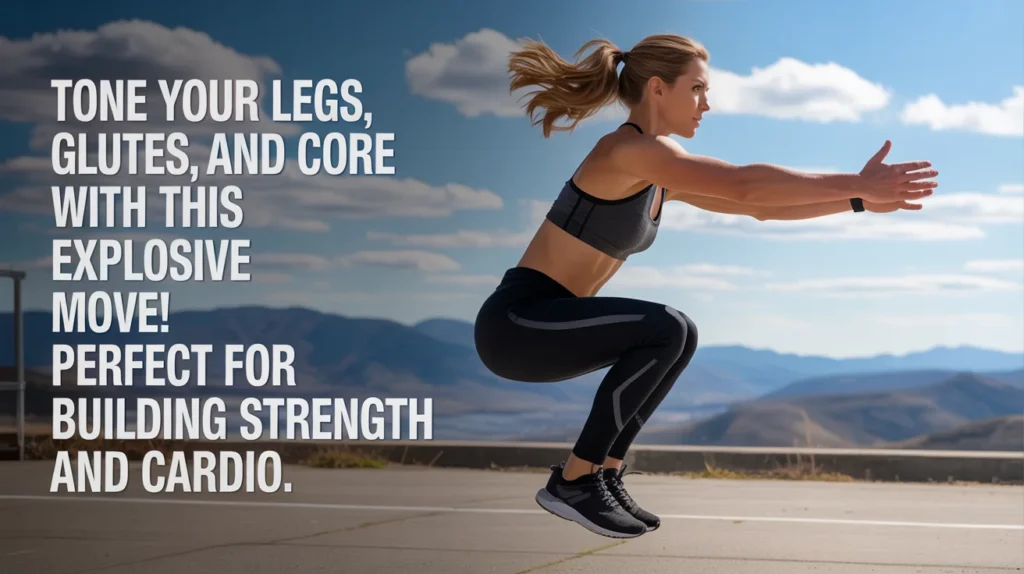
- Jump Up: From the squat position, explode upward by pushing through your heels and jumping as high as you can. Keep your arms bent and use them to help propel yourself up.
- Land Softly: As you land, make sure to land softly with your knees slightly bent to absorb the impact. Immediately lower back into a squat position to prepare for the next jump. Maintain control during the landing to avoid straining your knees or back.
- Repeat: Perform 10-15 reps per set, aiming for 2-3 sets. As you build strength and endurance, you can increase the number of reps or sets.
Tip: Start slow and focus on your form before trying to increase speed or intensity. Proper form ensures you’re targeting the right muscles and reducing the risk of injury.

4. Common Mistakes to Avoid
While these are an excellent exercise, it’s important to avoid these common mistakes:
- Letting Your Knees Collapse Inward: When you squat, make sure your knees track over your toes and do not collapse inward. This could strain your knees and cause injury.
- Jumping Too High: You don’t need to jump super high—focus on controlled, explosive movement. Jumping too high can lead to poor landing mechanics and increase the risk of injury.
- Not Landing Softly: Always land softly and bend your knees when you land. Landing with stiff legs can put stress on your joints, particularly your knees and lower back.
- Lifting Heels During the Squat: Keep your heels grounded when you squat. If your heels lift, you might not be engaging your glutes and hamstrings effectively.

5. Benefits of Squat Jumps for Moms
Squat Jumps are an amazing exercise for moms due to the many benefits they offer:
- Full-Body Workout: Squat Jumps work multiple muscle groups—glutes, quads, hamstrings, calves, and core—making it a full-body exercise that strengthens your lower body and improves overall coordination.
- Burns Calories: Because Squat Jumps are a high-intensity, explosive movement, they help increase your heart rate, burning more calories and improving cardiovascular health. This makes them great for fat loss.
- Improves Lower Body Strength: As moms, we often do a lot of bending, lifting, and carrying. Squat Jumps help build the strength in your legs, glutes, and core to handle those everyday tasks more efficiently.
- Boosts Athletic Performance: The explosive nature of Squat Jumps mimics the fast-twitch muscle movements used in sports, making them great for improving agility, power, and athletic performance.
- Time-Efficient: Squat Jumps don’t require much time or equipment, so they’re perfect for busy moms who need a quick yet effective workout.
- Improves Bone Density: As a weight-bearing exercise, Squat Jumps help increase bone density, which is especially important for women as we age.
6. How to Make Squat Jumps More Challenging
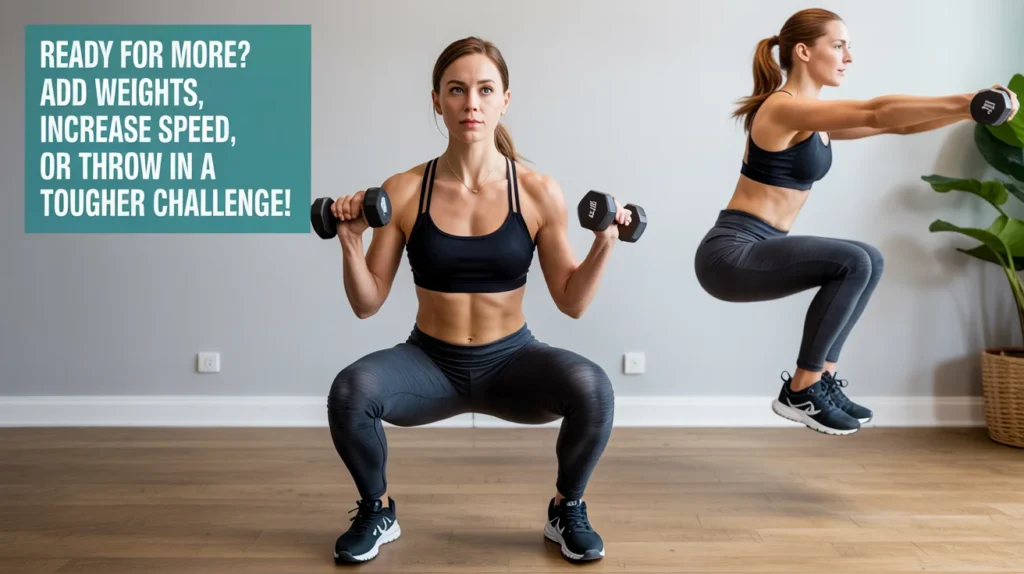
Once you’re comfortable with Squat Jumps, you can increase the intensity by:
- Adding Resistance: Hold a pair of dumbbells or a kettlebell in front of you as you jump. This will add resistance to the movement and make it more challenging.
- Increasing Speed: Perform the jumps more quickly for a higher intensity workout. You can also turn them into a high-intensity interval training (HIIT) exercise.
- Adding a Pause: After each jump, hold the squat position for 2-3 seconds before jumping again. This increases the time under tension for your muscles.
- Jumping with a 180-Degree Turn: Add a twist to the exercise by jumping and turning 180 degrees, landing back into a squat. This increases core activation and adds a coordination challenge.
7. How Often Should You Do Squat Jumps?
If you’re just starting out, aim to include Squat Jumps in your workout 2-3 times a week. Begin with 2-3 sets of 10-15 reps and gradually increase the intensity as you get stronger. Make sure to give your legs a day of rest between squat jump sessions to allow your muscles to recover.

8. Incorporating Squat Jumps into Your Routine
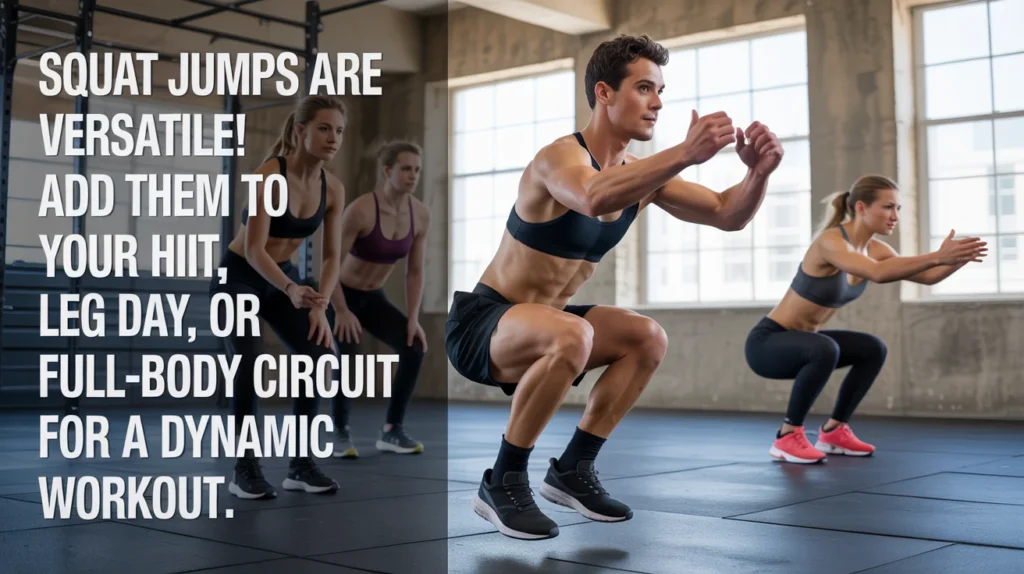
The Squat Jump is versatile and can be added to various workout styles:
- Leg Day Routine: Pair Squat Jumps with other leg exercises like lunges, calf raises, and glute bridges to create a comprehensive lower body workout.
- HIIT Workout: Incorporate Squat Jumps into a HIIT circuit for a high-intensity workout that combines strength and cardio. You can alternate between squat jumps, push-ups, and planks for a well-rounded session.
- Full-Body Circuit: Add Squat Jumps to a full-body workout that targets your arms, legs, and core. Combine it with exercises like push-ups, burpees, and mountain climbers for an all-around fitness session.
9. The Importance of Form and Breathing
To get the best results and avoid injury, always prioritize good form when performing Squat Jumps. Keep your chest lifted, engage your core, and make sure to land softly. Focus on breathing—exhale as you jump, and inhale as you land and prepare for the next jump.

10. Conclusion: Boost Your Strength with Squat Jumps
Squat Jumps are a powerful, time-efficient exercise that can help moms build strength, burn fat, and improve overall fitness. Whether you’re looking to tone your legs, increase your cardio endurance, or simply make the most of your workout time, Squat Jumps are a perfect addition to your routine.
Start with proper form, gradually increase intensity, and have fun with the explosive movement. With consistency, you’ll see great results in no time!

Key Takeaways:
- Squat Jumps are a full-body workout that targets the legs, glutes, and core while boosting cardiovascular health.
- They help improve strength, burn calories, and enhance athletic performance.
- Incorporate them into your routine 2-3 times a week, and gradually increase intensity for better results.
FAQ:
- Can Squat Jumps help with fat loss?
Yes, Squat Jumps are a high-intensity exercise that burns calories, making them great for fat loss and boosting metabolism. - Are Squat Jumps safe for beginners?
If you’re new to exercise, start slow and focus on your form. As you build strength and stamina, you can increase intensity. - How many Squat Jumps should I do in one session?
Start with 2-3 sets of 10-15 reps per set. As you get stronger, gradually increase the number of reps or sets.