
Intorduction
Staying active and strong becomes even more important as we move through different stages of life. For moms over 50, incorporating strength training into a routine is not just about building muscle; it’s about enhancing overall health, maintaining independence, and feeling vibrant every day.
Strength training helps combat age-related muscle loss, improves bone density, and boosts metabolism. It can also improve your balance, reduce the risk of falls, and give you the energy to keep up with grandkids, hobbies, and all of life’s adventures.

This guide is designed specifically for you. We will explore simple yet powerful strength training moves that can be done with minimal equipment. You’ll learn the proper form, understand the benefits, and get tips on how to start safely. It’s time to invest in your long-term health and discover the incredible benefits of a stronger you.
Key Takeaways
- Strength training is essential for moms over 50 to combat muscle loss, increase bone density, and boost metabolism.
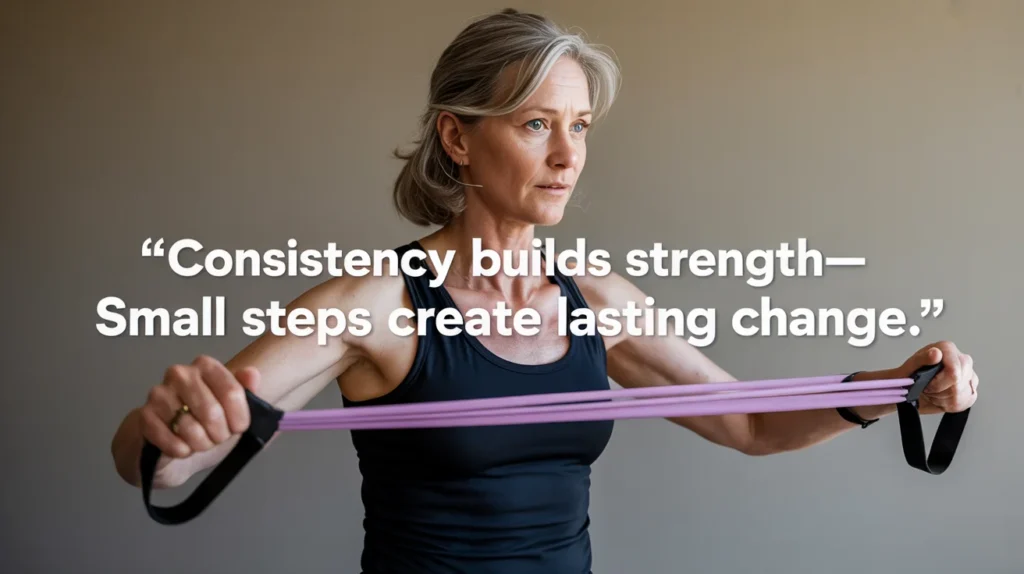
- Consistency is more important than intensity. Start slowly with manageable exercises and gradually increase the difficulty.
- Proper form is crucial to prevent injuries and maximize the effectiveness of each movement.
- A well-rounded routine should include exercises that target all major muscle groups: legs, back, chest, shoulders, and core.
Why Strength Training is a Game-Changer After 50
As we age, our bodies naturally begin to lose muscle mass, a condition known as sarcopenia. This process can start as early as our 30s and accelerates after 50. The good news is that you can fight back with strength training.
Regular resistance exercise signals your body to build and maintain muscle tissue, which is vital for so many reasons. Strong muscles support your joints, making everyday activities like carrying groceries, climbing stairs, and gardening much easier. For moms over 50, this means more freedom and less risk of injury.

Beyond muscle, strength training is one of the best things you can do for your bones. After menopause, a decrease in estrogen can lead to a rapid loss of bone density, increasing the risk of osteoporosis. Weight-bearing exercises place healthy stress on your bones, stimulating them to grow stronger and denser.
Think of it as making a deposit into your “bone bank” for the future. A consistent routine can significantly lower your fracture risk and help you stay active and independent for years to come.
Getting Started: Safety and Best Practices
Before you jump into any new fitness routine, it’s wise to consult with your doctor, especially if you have pre-existing health conditions. Once you get the green light, the key is to start slow. Your body needs time to adapt. Begin with lighter weights or even just your body weight.
Focus on mastering the correct form for each exercise before you think about adding more resistance. Poor form is a leading cause of injury. Consider watching videos of each move or even working with a personal trainer for a few sessions to ensure you’re doing them correctly. Listen to your body—a little muscle soreness is normal, but sharp pain is a signal to stop.

Essential Equipment: Bodyweight vs. Weights
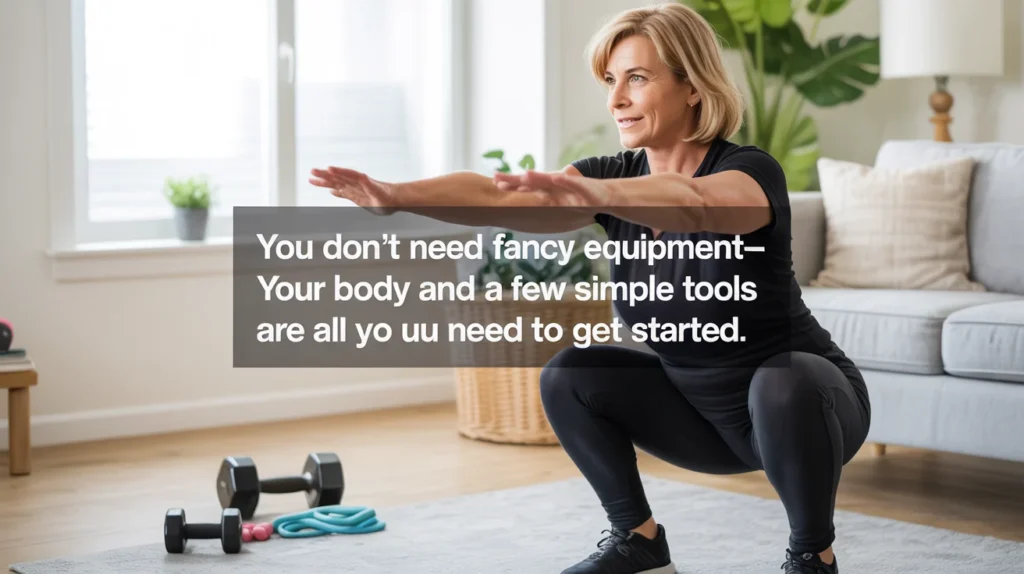
You don’t need a fancy gym membership or expensive equipment to get started. Many effective strength exercises use your own body weight as resistance. However, investing in a few simple tools can add variety and challenge to your workouts as you get stronger.
| Equipment | Pros | Cons |
|---|---|---|
| Bodyweight | Free, can be done anywhere, low risk of injury. | Limited progression, may be too easy over time. |
| Dumbbells | Versatile, allows for progression, targets specific muscles. | Requires investment, takes up space. |
| Resistance Bands | Inexpensive, portable, provides constant tension. | Can snap, may not offer enough resistance for all moves. |
11 Modern & Unique Strength Moves for Moms Over 50
If you’re ready for a workout that’s both fresh and effective, try these newer strength moves designed for moms over 50. They blend functional fitness, balance, and mobility to keep your routine engaging and rewarding. Aim for 2-3 sets of 10-12 reps per move unless otherwise noted.
1. Sit-to-Stance Flow
Forget standard squats—this move uses a chair for a dynamic sit-and-stand, building strength and real-life mobility.
How to do it: Sit tall at the edge of a sturdy chair, arms crossed over your chest. Lean forward slightly, power through your heels, and rise to standing. Lower down slowly with control, lightly tapping the chair before repeating.

2. Resistance Band Halos
Get your shoulders and upper back working (plus a little core!) using a resistance band in this circular, joint-friendly movement.
How to do it: Stand tall, holding a resistance band taut in front of you. Slowly circle your hands around your head, keeping tension on the band and a steady core, then reverse the motion. Don’t rush—focus on smooth, controlled movement.

3. Suitcase Carry
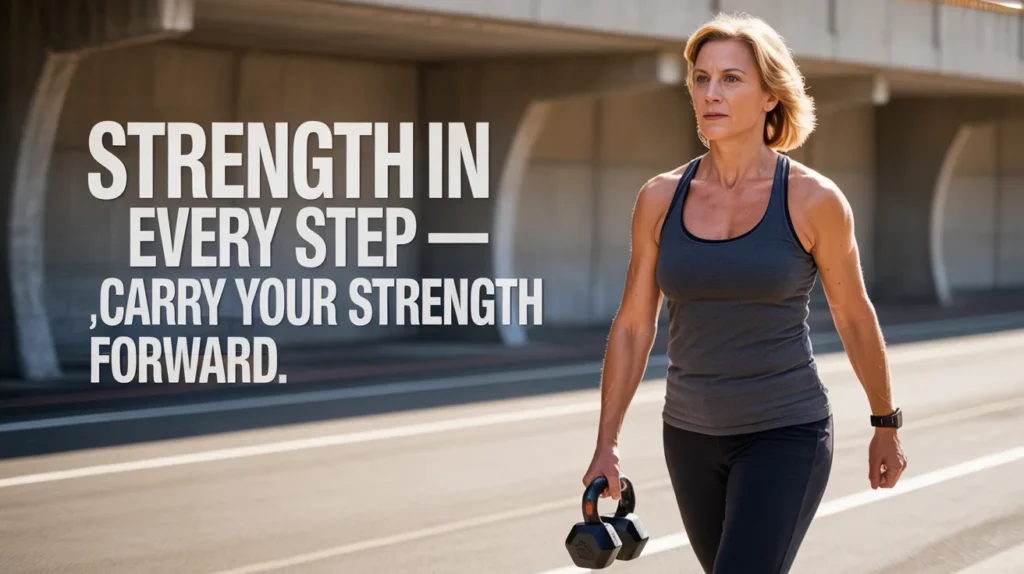
Take the classic farmer’s walk up a notch by carrying only one weight! This “anti-side-bend” works your grip, shoulder, and core muscles in surprising ways.
How to do it: Grab a heavy dumbbell or kettlebell in one hand. Stand tall, shoulders relaxed. Walk 30 steps, keeping your torso upright and resisting the urge to lean. Switch hands and repeat.
4. Wall Sit with Toe Taps
Turn the old school wall sit into a balance (and brain!) challenge with this simple upgrade.
How to do it: Slide your back down a wall until your knees are bent at 90 degrees. Hold this position. While staying low, alternate tapping your right and left toes forward, keeping the movement slow and steady.

5. Chaos Ball Chest Press
A stability ball and a lightweight sand-filled ball (or leak-proof soft ball) help you engage stabilizer muscles that standard presses miss.
How to do it: Sit and roll down onto a stability ball so your upper back is supported, feet flat. Hold a small soft or sand-filled ball with both hands at your chest. Press it upward smoothly, then bring it back down—you’ll notice how the unstable ball wakes up your shoulders!

6. TRX Low Row
Suspension trainers like the TRX are game-changers. This move targets your back, arms, and core—no heavy weights needed.
How to do it: Grab the TRX handles, lean back until your arms are straight, and your body forms a diagonal line. Pull your chest up to your hands by bending your elbows, keeping your body aligned. Slowly lower down.

7. Monster Walks
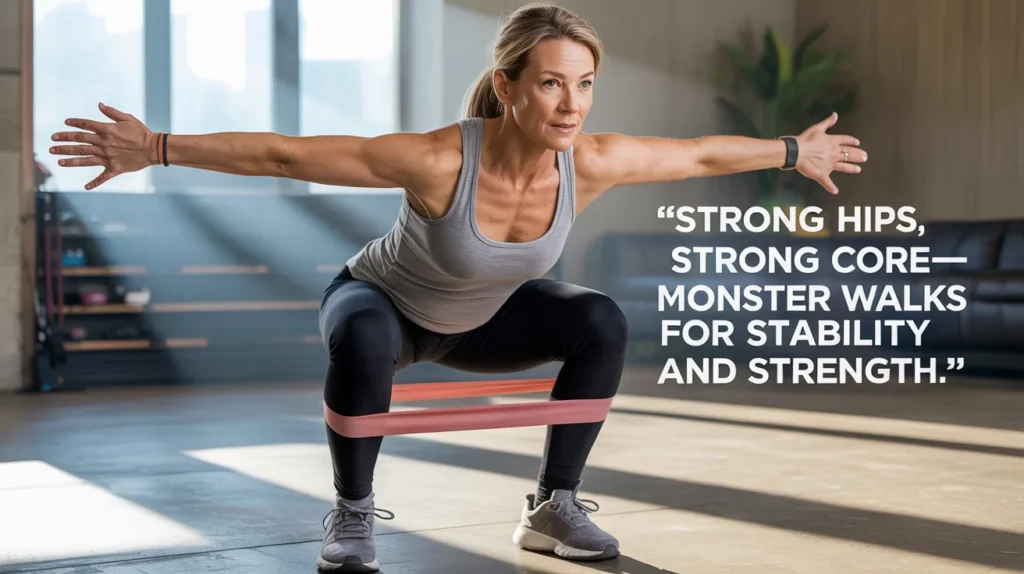
Strengthen your hips and glutes (key for stability) with this fun, funky move using a resistance band.
How to do it: Place a looped resistance band just above your knees. With feet hip-width apart, squat slightly and take big steps to the side, keeping tension on the band. Move right 10 times, then left.
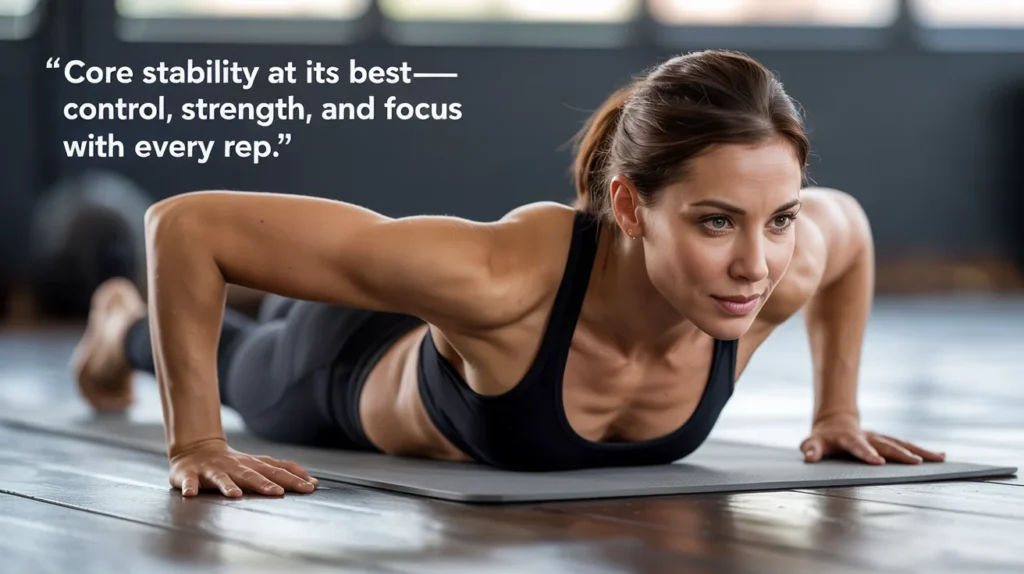
8. Dead Bug Core Crusher
Unlike a normal crunch, the dead bug keeps your spine safe while giving your deep core muscles a total workout.
How to do it: Lie on your back, arms extended to the ceiling, knees bent at 90 degrees. Slowly lower your right arm and left leg toward the floor, keeping your lower back pressed down. Bring them back up. Alternate sides.
9. Lateral Step-Downs
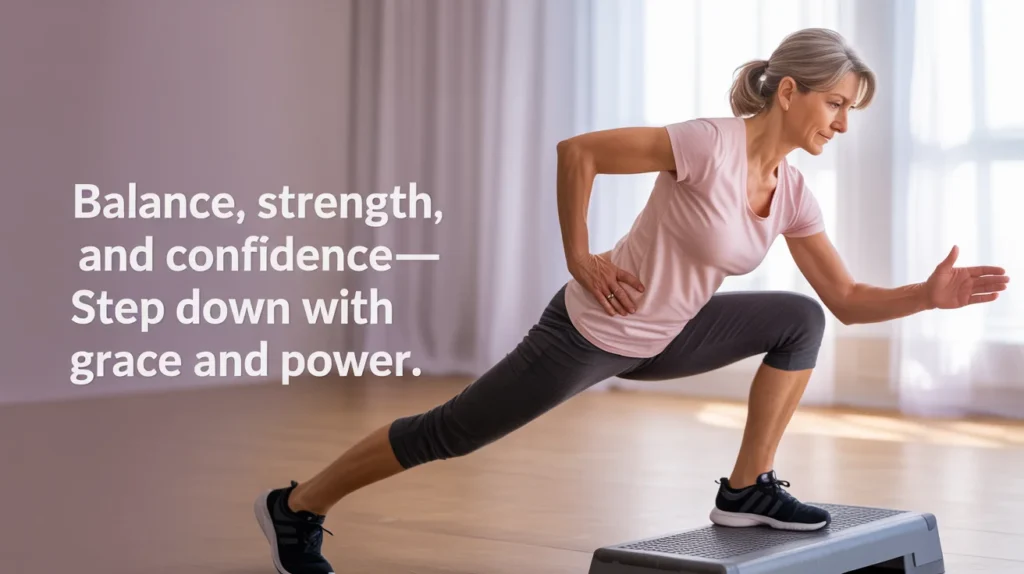
Up your leg game and improve balance, using only a low step or stair.
How to do it: Stand on a step with one leg. Keeping shoulders level, slowly lower your opposite heel to tap the floor, then rise back up. Switch legs after 10 reps.
10. Open Book Twist
Boost mobility and gently wake up your upper back for better posture and daily ease.
How to do it: Lie on your side with knees bent and your arms stacked in front. Slowly sweep your top arm across your chest, opening it wide while rotating your upper body. Let your gaze follow your hand. Return and repeat. Switch sides after 10 reps.

11. Tall Kneeling Press
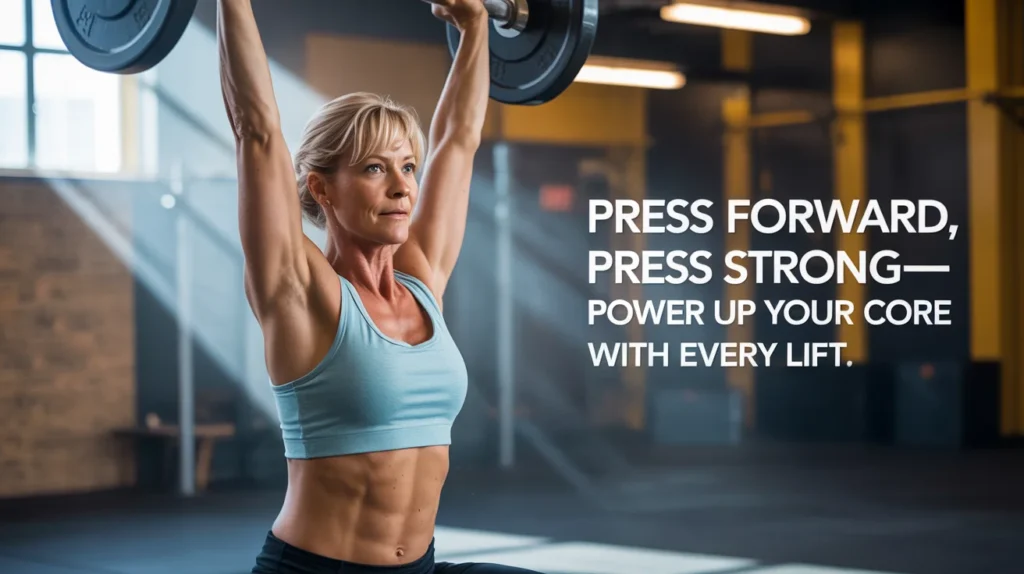
This fresh take on an overhead press wakes up your core and improves posture, all while keeping your lower back protected.
How to do it: Kneel with both knees on the floor (padding optional), holding a light dumbbell in each hand at your shoulders. Engage your core, squeeze your glutes, and press the weights overhead. Lower them with control and repeat.
Creating Your Weekly Routine
Consistency is the secret to seeing results. A good starting point for moms over 50 is to aim for two to three strength training sessions per week on non-consecutive days. This gives your muscles time to recover and rebuild, which is when they actually get stronger. You can perform a full-body workout each session, doing one or two exercises for each major muscle group.
Listen to your body and don’t be afraid to take an extra rest day if you need it. The journey of fitness for moms over 50 is a marathon, not a sprint. A well-structured plan helps maintain motivation and ensures you are working your body in a balanced way. As you progress, you might consider splitting your workouts to focus on the upper body one day and the lower body another.

Conclusion
Building strength after 50 is one of the most empowering and beneficial things you can do for your health. These 11 moves provide a solid foundation for a stronger, more vibrant you. Remember to start slowly, prioritize proper form, and stay consistent.
By integrating these exercises into your life, you are not just building muscle; you are investing in your long-term independence, energy, and quality of life. The strength you build in the gym will translate into more confidence and capability in everything you do. The community of strong moms over 50 is growing every day, and now you have the tools to join them.

Frequently Asked Questions (FAQ)
Q1: How often should a woman over 50 do strength training?
It is recommended that moms over 50 and women in this age group aim for at least two full-body strength training sessions per week on non-consecutive days to allow for muscle recovery.
Q2: Will strength training make me bulky?
No, this is a common myth. Women do not have the same hormonal profile (specifically, the high levels of testosterone) as men to build large, bulky muscles. Instead, strength training will help you develop a lean, toned, and strong physique.
Q3: What if I have joint pain?
If you have joint pain, it’s especially important to consult with a doctor or physical therapist. They can recommend modifications or specific exercises that are safe for you. Many strength exercises, when done with proper form, can actually help reduce joint pain by strengthening the supporting muscles.
Q4: How long will it take to see results?
You may start to feel stronger and more energetic within a few weeks. Visible changes in muscle tone typically take a bit longer, usually around 6 to 8 weeks of consistent effort. Remember that progress is about more than just appearance; focus on how you feel.