Intro: The Ultimate Full-Body Strength Workout Moms Swear By
Being a mom is a full-time job that requires superhuman strength and endurance. From carrying toddlers to hauling groceries, your body is constantly working. Finding time for yourself, let alone a consistent fitness routine, can feel impossible. But what if you could build practical, functional strength with just a few effective exercises?
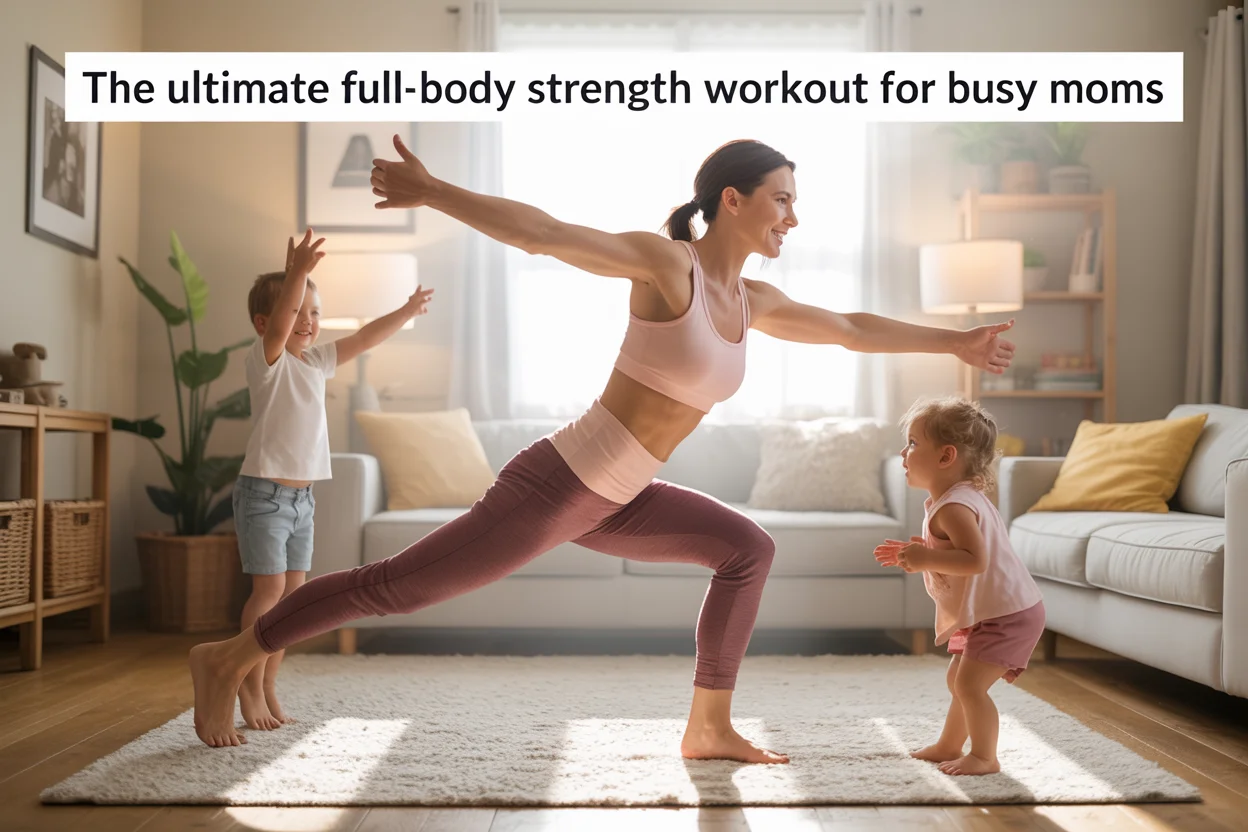
This guide introduces a powerful yet simple Full-Body Strength Workout designed specifically for the demands of motherhood. It’s built around three core movements: the row, the sit-up, and the farmer’s carry. These exercises are not about aesthetics; they are about building real-world strength to make your daily life easier and help you feel your best.

This routine is efficient, targeting multiple muscle groups at once to give you the most benefit in the shortest amount of time. You don’t need a fancy gym membership or hours to spare. Let’s explore how you can integrate this powerful workout into your busy schedule.
Why Strength Training is Essential for Moms
Strength training is more than just lifting weights; it’s a crucial tool for long-term health and wellness, especially for mothers. The physical demands of motherhood, from pregnancy and childbirth to lifting and carrying children, place significant stress on the body. A consistent Full-Body Strength Workout helps counteract these stresses.
It strengthens your core, which is vital for stabilizing your spine and improving posture—often compromised from carrying little ones. It also increases bone density, which is particularly important as women are more susceptible to osteoporosis later in life.

According to the Centers for Disease Control and Prevention (CDC), muscle-strengthening activities are a critical component of physical wellness for adults. Beyond the physical benefits, exercise is a proven mood booster. The endorphins released during a workout can help manage stress, reduce symptoms of anxiety, and improve overall mental clarity. Carving out this time for yourself is a powerful form of self-care.
Key Takeaways
- Boosts Metabolism: Building lean muscle helps your body burn more calories, even at rest.
- Improves Bone Health: Strength training increases bone density and reduces the risk of osteoporosis.
- Enhances Mental Well-being: Regular exercise is a powerful tool for managing stress and improving mood.
- Increases Functional Strength: Makes everyday tasks like lifting children and carrying groceries feel easier.
The “Big Three” Exercises for a Complete Workout
This routine focuses on three compound exercises that work your entire body. They are simple to learn, require minimal equipment, and deliver maximum results. The goal is efficiency and effectiveness.
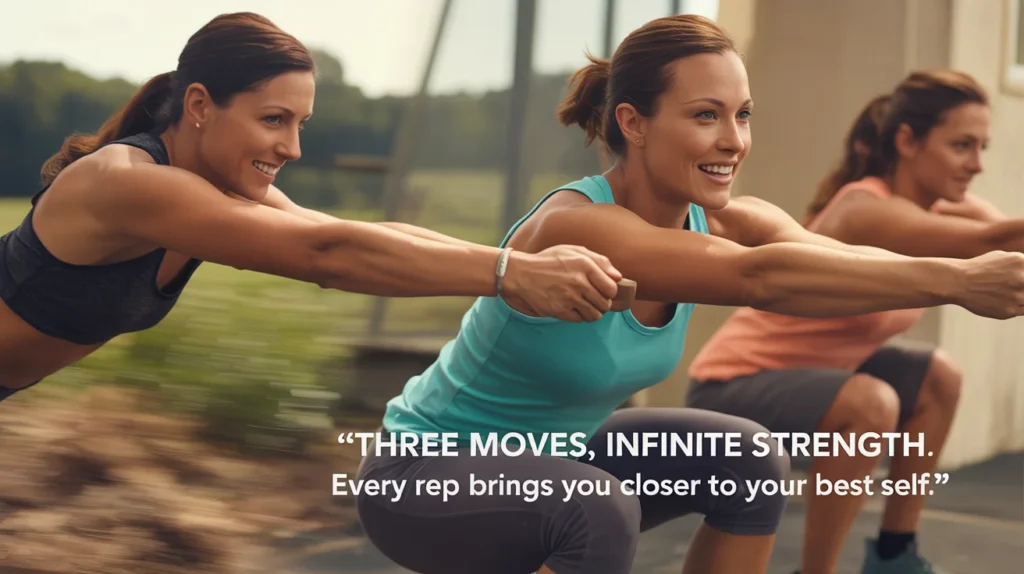
1. The Row: Building a Stronger Back and Arms
The row is a fundamental pulling movement that targets your entire back, shoulders, and biceps. A strong back is your best defense against the aches and pains that come from bending over a crib, picking up toys, and carrying a child on your hip.
How to Perform a Dumbbell Row
You can do this with a dumbbell, a kettlebell, or even a resistance band.
- Place your left knee and left hand on a sturdy bench or chair. Your back should be flat and parallel to the floor.
- Hold a dumbbell in your right hand with your arm extended toward the ground.
- Keeping your core engaged, pull the dumbbell up toward your chest, squeezing your shoulder blade. Your elbow should point toward the ceiling.
- Lower the weight slowly and with control.
- Complete all reps on one side before switching to the other.
Focus on the mind-muscle connection. Really feel your back muscles working to pull the weight up.

2. The Sit-Up: Forging a Powerful Core
A strong core is the foundation of all movement. It supports your spine, improves your balance, and helps transfer power throughout your body. Traditional sit-ups, when done correctly, are excellent for building abdominal strength and endurance.
Proper Sit-Up Technique
To protect your back, focus on proper form.
- Lie on your back with your knees bent and feet flat on the floor, about hip-width apart. You can anchor your feet under a couch or have a partner hold them if needed.
- Cross your arms over your chest or place your hands behind your head without pulling on your neck.
- Engage your core and lift your upper body off the floor toward your knees. Exhale as you come up.
- Lower yourself back down slowly and with control. Inhale as you lower.
If a full sit-up is too challenging, start with crunches and gradually increase your range of motion.
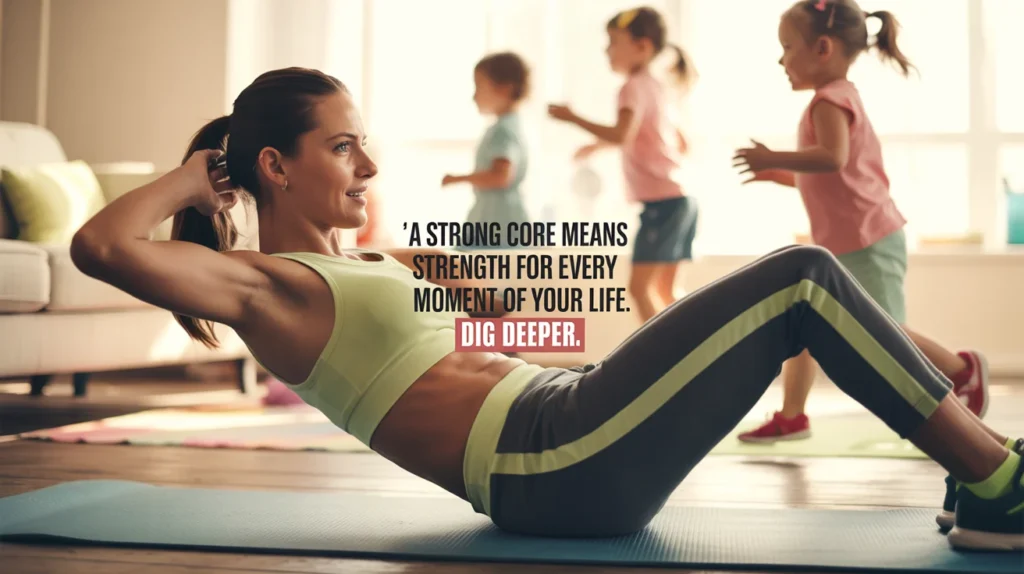
3. The Farmer’s Carry: The Ultimate Functional Movement
Think about how many times you carry heavy grocery bags, a laundry basket, or your child. The farmer’s carry directly trains this exact movement. It is one of the best exercises for building grip strength, core stability, and overall endurance. This is a true Full-Body Strength Workout condensed into one simple action.
Executing the Farmer’s Carry
All you need are two objects of equal weight, like dumbbells, kettlebells, or even two full grocery bags.
- Stand between your weights. Squat down with a flat back and pick them up, one in each hand.
- Stand up straight, keeping your shoulders back and down, your chest up, and your core tight.
- Walk forward for a set distance or time. Keep your posture tall and avoid leaning to one side.
- Turn around and walk back to your starting point.
This exercise is deceptively simple but incredibly effective. You will feel it in your hands, shoulders, back, and legs.

Structuring Your Full-Body Strength Workout
The beauty of this routine is its flexibility. You can adjust it based on the time you have and your current fitness level. Here are two sample structures.
Workout A: For Time
This is a great option when you are short on time.
- Circuit: Complete the following as many rounds as possible (AMRAP) in 15 minutes.
- 10 Dumbbell Rows (per side)
- 15 Sit-Ups
- Farmer’s Carry for 40 steps
Workout B: For Strength
This structure focuses on building strength with dedicated rest periods.
- Complete 4 rounds:
- 12 Dumbbell Rows (per side)
- Rest for 30 seconds
- 20 Sit-Ups
- Rest for 30 seconds
- Farmer’s Carry for 60 seconds
- Rest for 90 seconds before starting the next round.
Workout Variation Comparison
| Feature | Workout A (For Time) | Workout B (For Strength) |
|---|---|---|
| Primary Goal | Cardiovascular Endurance & Efficiency | Muscle & Strength Building |
| Structure | Circuit (AMRAP) | Set Rounds & Reps |
| Rest Periods | Minimal to none | Defined rest between exercises |
| Best For | Very busy days (15-20 mins) | When you have a bit more time (25-30 mins) |
| Intensity | High intensity, fast-paced | Moderate intensity, controlled pace |
Making Progress and Staying Consistent
Consistency is more important than intensity. Aim to complete this Full-Body Strength Workout 2-3 times per week on non-consecutive days. Your body needs time to recover and rebuild muscle.
How to Progress
To keep getting stronger, you need to apply the principle of progressive overload. This means gradually increasing the demand on your muscles. You can do this by:
- Increasing the weight: Use slightly heavier dumbbells for your rows and carries.
- Increasing the reps/time: Add more repetitions to your sets or walk for a longer duration during your farmer’s carry.
- Decreasing rest time: Shorten the rest periods between exercises to increase the intensity.
Listen to your body. Some days you will feel strong, and other days you will need to scale back. That is perfectly normal. The goal is to show up and do what you can. A well-rounded fitness plan also includes cardiovascular exercise. The American Heart Association suggests at least 150 minutes of moderate-intensity aerobic activity per week. This can be as simple as a brisk walk with the stroller.

FAQs: Your Questions Answered
Q1: How much weight should I start with?
Start with a weight that feels challenging but allows you to maintain proper form for all repetitions. For rows, a 10-15 pound dumbbell is a good starting point for many. For the farmer’s carry, try 15-25 pounds in each hand. It is better to start too light than too heavy.
Q2: Can I do this workout if I have diastasis recti?
If you have diastasis recti (abdominal separation), you should be cautious with traditional sit-ups. Consult a physical therapist who specializes in postpartum recovery. They can provide safe core-strengthening alternatives, such as pelvic tilts, heel slides, and bird-dog exercises. The row and farmer’s carry are generally safe, but proper core engagement is crucial.
Q3: What if I don’t have any equipment?
You can still do a great Full-Body Strength Workout!
- For rows: Use a resistance band looped around a sturdy anchor point, or use heavy household items like a gallon of water.
- For sit-ups: No equipment is needed.
- For farmer’s carries: Use two grocery bags filled with books, cans, or water bottles. The possibilities are endless!
Q4: How soon after childbirth can I start this workout?
Always get clearance from your doctor before resuming exercise after childbirth. This is typically around 6-8 weeks postpartum, but it can be longer, especially after a C-section. Start slowly and listen to your body. For more detailed guidance, consider resources on postpartum exercise from reputable sources like the American College of Obstetricians and Gynecologists (ACOG).
Conclusion: Embrace Your Strength
This Full-Body Strength Workout is more than just an exercise routine; it’s a commitment to your own health and well-being. By focusing on these three foundational movements, you build the functional strength needed to navigate the beautiful chaos of motherhood with more energy and less pain. You are already strong, but this workout helps you feel it.
Remember to be patient with yourself. Progress takes time. Celebrate the small victories, whether it’s lifting a heavier weight or simply finding 15 minutes for yourself. You deserve to feel capable, powerful, and resilient in the incredible journey of being a mom.