
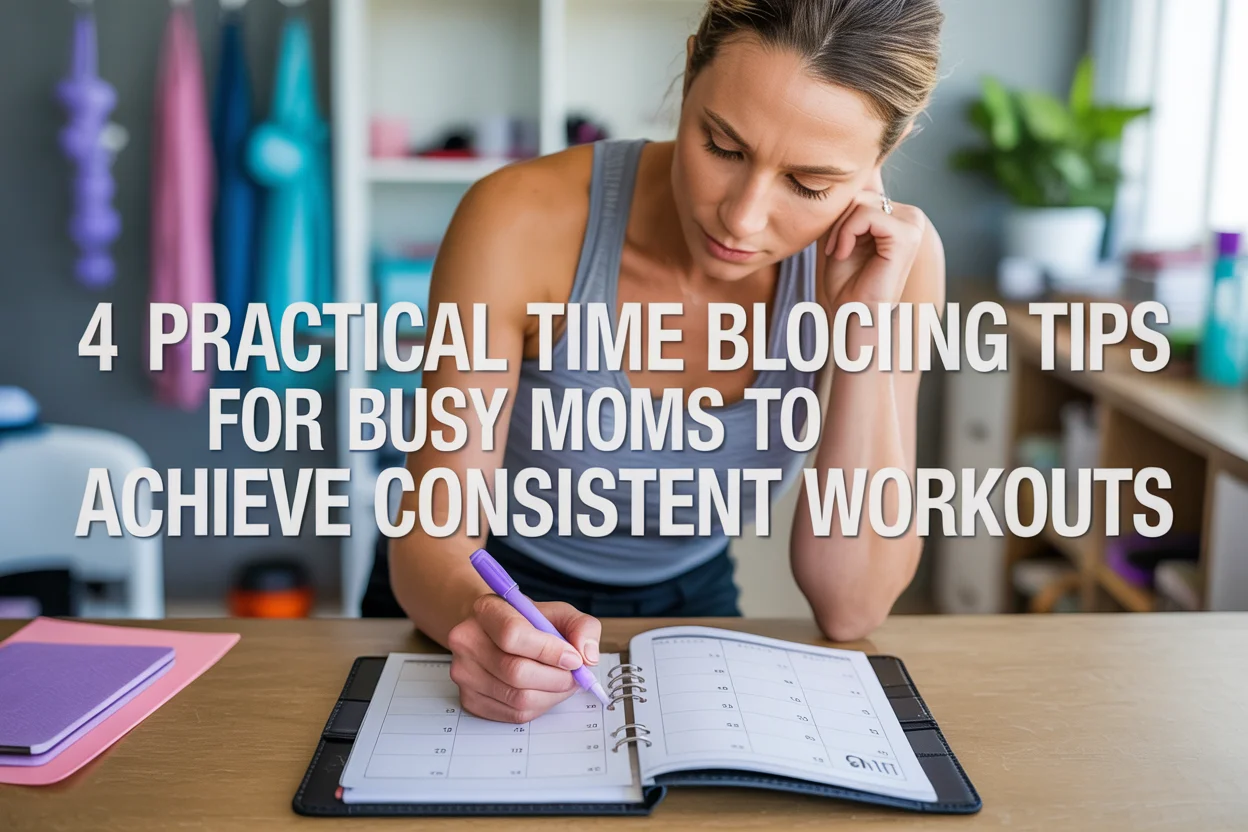
Introduction: Finding Time for Consistent Workouts
You have the best intentions. You buy the workout clothes, you save the fitness videos on Instagram, and you tell yourself, “This week, I’m going to work out.” But then life happens. A toddler skips their nap, a work deadline gets moved up, or you’re simply too exhausted by the end of the day to even think about exercise. For busy moms, finding time for consistent workouts can feel like an impossible puzzle. Your time is no longer just your own; it’s a shared resource, and your personal needs often fall to the bottom of the list.
What if there was a way to protect your time and finally make fitness a non-negotiable part of your week? Enter time blocking. This simple productivity method isn’t just for managing your work schedule; it’s a game-changer for your well-being.

Time Blocking for Moms: Transforming Fitness into a Non-Negotiable
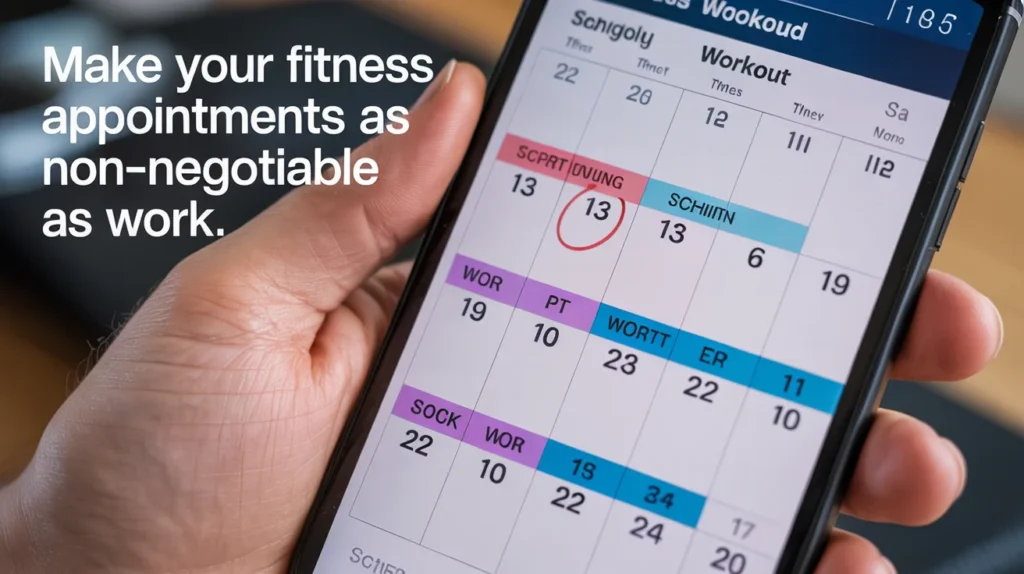
Time blocking for moms involves treating your workouts with the same importance as a doctor’s appointment or a crucial meeting. By scheduling it directly into your calendar, you transform a vague intention into a concrete commitment.
This guide will walk you through four practical tips to time block your way to a fitness routine that actually sticks. We’ll explore how to find the hidden pockets of time in your day, stay flexible, and build a system that supports your health goals, no matter how chaotic your schedule gets.

1. Conduct a Realistic Time Audit
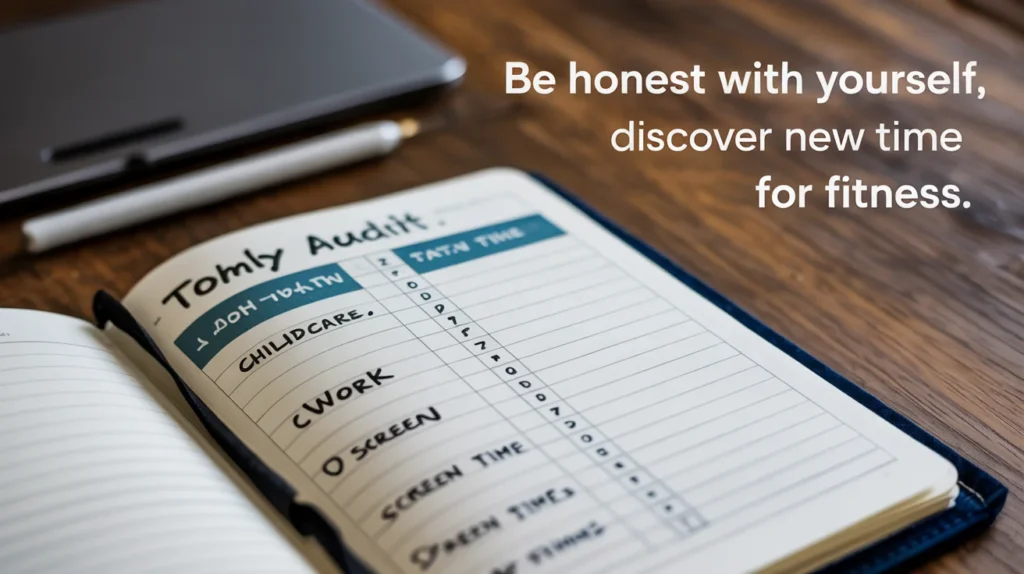
Before you can block out time, you need to know what you’re working with. Many of us have a perception of where our time goes, but the reality can be quite different. A time audit is the process of tracking your daily activities to get a clear, honest picture of your schedule. It’s not about judging yourself; it’s about collecting data. This step is crucial for identifying potential workout slots you may have previously overlooked.
You might discover that the 30 minutes you spend scrolling on your phone after putting the kids to bed could become a yoga session, or that your lunch break has more downtime than you realized. The goal is to find opportunities, not to create a rigid, jam-packed schedule.

How to Perform a Time Audit
For three to five days, keep a simple log of how you spend your time. You can use a notebook, a spreadsheet, or a time-tracking app. Be as detailed as possible, noting everything from making breakfast and commuting to answering emails and watching TV.
- Break your day into 30-minute intervals. For each interval, write down the primary activity you were engaged in.
- Be honest and non-judgmental. The purpose is to observe, not to criticize. If you spent an hour watching reels, write it down. This is valuable information.
- Categorize your activities. At the end of the tracking period, group your activities into categories like “Childcare,” “Work,” “Household Chores,” “Rest/Downtime,” and “Screen Time.”
Analyze the Results
Once you have your data, look for patterns. When are your natural energy highs and lows? Are there consistent pockets of time, even just 15-20 minutes, that are currently being used for low-priority tasks? This is where you’ll find your potential workout windows. You might see a 20-minute gap between your last work meeting and when you need to pick up the kids from school—perfect for a quick circuit workout.

2. Identify and Schedule Your “Power Pockets”
Not all time is created equal. A “Power Pocket” is a time slot that not only fits your schedule but also aligns with your energy levels and your family’s rhythm. Trying to force a high-intensity workout during your typical afternoon slump is a recipe for failure. Likewise, scheduling a run during the morning rush when you’re trying to get everyone out the door is unrealistic. The key is to work with your body’s natural energy patterns, not against them.
Think about when you feel most energetic. Are you a morning person who feels ready to go before the kids wake up? Or do you get a second wind in the afternoon while your toddler naps? These are your ideal times to schedule fitness.

How to Find Your Power Pockets
Based on your time audit, identify two or three potential workout slots. Consider the following scenarios for busy moms:
- The Early Bird: Waking up 30 minutes before your children. This time is quiet, uninterrupted, and yours alone. It’s perfect for setting a positive tone for the day.
- The Nap Time Hustle: This is a classic for a reason. If your child has a predictable nap schedule, this can be a golden opportunity. Even a 20-minute Consistent Workouts can be incredibly effective.
- The Lunch Break Power-Up: If you work from home or have a flexible lunch break, use part of that time for a quick walk, a yoga session, or a bodyweight routine.
- The Post-Bedtime Wind-Down: After the kids are asleep, you might prefer a calming Consistent Workouts like stretching or a gentle yoga flow to de-stress from the day.

Schedule It Like an Appointment
Once you’ve identified your Power Pockets, open your calendar and schedule your Consistent Workouts. Don’t just write “workout.” Be specific: “15-Minute HIIT Circuit” or “30-Minute Yoga Flow.” This creates a clear intention. Treat this appointment with the same respect you would a meeting with your boss. It is a commitment to yourself. If someone asks for that time, your default answer should be, “I have a commitment then, can we find another time?”
3. Plan for Flexibility with “Workout Stacking”
As a mom, you know that even the best-laid plans can be derailed by a sick child, a last-minute school event, or sheer exhaustion. An all-or-nothing approach to fitness will lead to frustration. The secret to consistency is building flexibility into your plan. This is where “workout stacking” comes in.
Workout stacking means having a collection of short, 10- to 15-minute Consistent Workouts ready to go at a moment’s notice. If your planned one-hour session gets cut short, you can still grab one of these “stacked” workouts later in the day. The goal is to accumulate movement throughout the day. A 10-minute walk in the morning, a 10-minute strength session during nap time, and 10 minutes of stretching at night adds up to a 30-minute workout.

How to Build Your Workout Stack
Create a playlist or a saved folder on YouTube, Pinterest, or your favorite fitness app with a variety of short Consistent Workouts. Organize them by type and duration:
- 10-Minute Cardio Blasts: Jumping jacks, high knees, burpees.
- 15-Minute Strength Circuits: Focus on different body parts (e.g., lower body, upper body, core).
- 10-Minute Yoga/Stretching: Perfect for mornings or evenings.
- 5-Minute Mindful Movement: For days when you have very little time or energy.

Overcoming Obstacles
When your scheduled time block is disrupted, don’t just scrap the idea of a Consistent Workouts for the day. Look at your workout stack and ask yourself, “Where can I fit in just 10 minutes?” You can do squats while waiting for the pasta to boil or a quick stretching routine while your kids are having screen time. This approach keeps your momentum going and reinforces the habit of moving your body, even on the most chaotic days.

4. Prepare Your Environment for Success
The final tip for successful time blocking is to remove as much friction as possible between you and your workout. When your scheduled time arrives, you want to be able to start immediately, without wasting precious minutes looking for your sneakers or clearing a space. Preparing your environment ahead of time is a powerful signal to your brain that this Consistent Workouts is happening.
Think about everything you need to complete your workout and have it ready to go. This simple act of preparation makes it significantly easier to follow through on your commitment, especially when motivation is low.

How to Set Yourself Up for Success
- Lay Out Your Clothes: The night before a morning Consistent Workouts, lay out your entire outfit—sports bra, top, leggings, socks, and shoes. When your alarm goes off, you can get dressed on autopilot without having to make any decisions.
- Prep Your Space: If you work out at home, designate a specific spot. Make sure it’s clean and clear of toys or clutter before your workout is scheduled to begin. If you need a yoga mat, weights, or resistance bands, have them already in place.
- Have Your Workout Queued Up: Don’t waste time scrolling to find a video. Decide on your Consistent Workouts ahead of time and have it queued up on your laptop or TV.
- Plan Your Pre- and Post-Workout Fuel: Fill your water bottle the night before. If you need a small snack before you exercise or have a protein shake after, get the ingredients ready so you can make it quickly.
By reducing these small barriers, you make the path to your Consistent Workouts smooth and easy. It becomes the path of least resistance, increasing the likelihood that you’ll stick with it.

Conclusion: Embrace Consistency Over Perfection
Building a consistent workouts routine as a busy mom is not about having perfect, hour-long sessions every day. It’s about showing up for yourself in small, sustainable ways. Time blocking is a powerful tool that helps you protect your time and honor the commitment you’ve made to your health.
Start by choosing just one of these tips to implement this week. Maybe you’ll conduct a time audit to see where your hours really go, or perhaps you’ll start by laying out your Consistent Workoutsclothes the night before. Each small step builds momentum and creates a positive feedback loop.

Be patient and give yourself grace. Some weeks will be more successful than others, and that’s okay. The goal is progress, not perfection.
Ready to take control of your schedule and make time for fitness? Save this article to your Pinterest board for future reference and try one of these time-blocking tips today. You deserve to feel strong, energized, and proud of the commitment you’re making to yourself.