Introduction
Fitting fitness into a packed schedule can feel like a huge challenge, especially for busy moms. Between school runs, work, and managing a household, finding time for yourself often falls to the bottom of the list. However, focusing on specific muscle groups can make your workouts more efficient and effective.
If you’re looking to strengthen and tone your inner thighs, you’ve come to the right place. These muscles, known as the adductors, play a vital role in stabilizing your hips and pelvis, supporting your knees, and helping you move with strength and grace.
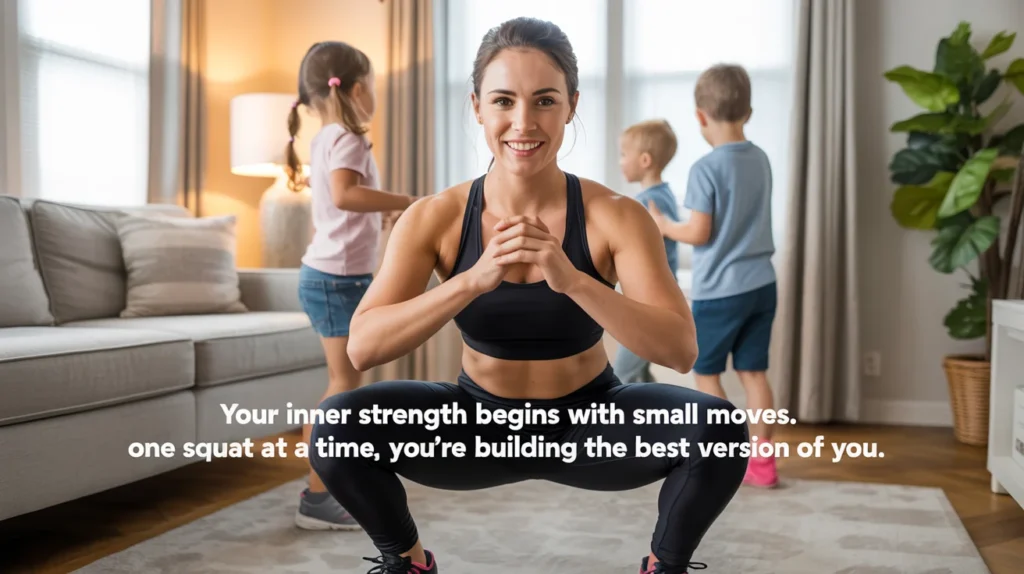
This guide is designed specifically for you. We’ll explore why your adductor muscles are so important and walk you through nine simple yet powerful Adductor Exercises you can do at home with minimal to no equipment. Get ready to build strength, improve stability, and boost your confidence with a routine that fits into your life.
Key Takeaways
- What Adductors Are: The adductor muscles are a group of five muscles on the inside of your thigh that help bring your legs together and stabilize your hips.
- Why They Matter: Strong adductors are crucial for pelvic stability, knee alignment, and preventing injuries, especially for moms whose bodies have gone through significant changes.
- Effective Workouts: You don’t need a gym. Simple bodyweight and light-resistance exercises can effectively target these muscles.
- Consistency is Key: Even short, consistent workouts a few times a week can lead to noticeable improvements in strength and tone.
Understanding Your Inner Thigh Muscles (The Adductors)
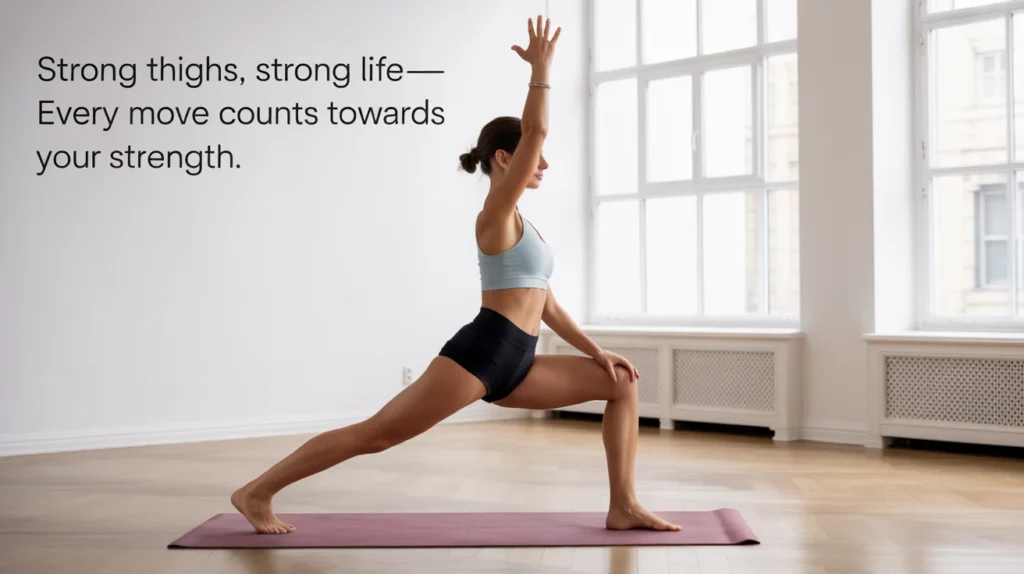
Before we jump into the exercises, let’s briefly get to know the muscles we’re targeting. The adductors are not just one muscle but a group of five located on the medial (inner) side of your thigh. Their primary job is adduction, which means moving your leg toward the centerline of your body. Think about squeezing your legs together—that’s your adductors at work.

Why Are Strong Adductors Important for Moms?
For moms, having strong adductors is about more than just aesthetics. Pregnancy and childbirth can affect pelvic alignment and stability. Strengthening the muscles that support the pelvis, including the adductors, is essential for postpartum recovery and long-term health. Strong adductors help:
- Improve Pelvic Stability: They work with your core and glutes to keep your pelvis stable during activities like walking, running, and carrying children.
- Prevent Knee Pain: Weak adductors can cause your knees to collapse inward, a condition that may lead to pain and injury. Strong inner thighs help maintain proper knee tracking.
- Enhance Overall Lower Body Strength: They assist in major movements like squats and lunges, contributing to better functional strength for daily mom duties.

9 Effective Adductor Exercises for At-Home Workouts
Here are nine fantastic exercises that target your inner thighs. Most require no equipment, making them perfect for a quick session whenever you can find a spare 15-20 minutes. Remember to warm up with some light cardio, like marching in place or jumping jacks, for 3-5 minutes before you begin.

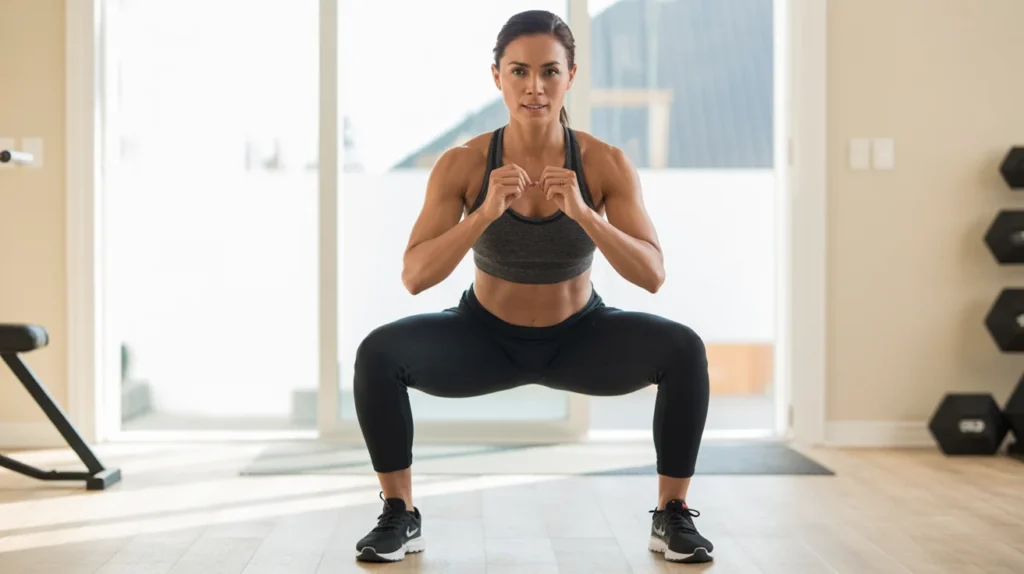
1. Sumo Squat (Plie Squat)
The sumo squat is a powerhouse move for the entire lower body, with a special emphasis on the inner thighs and glutes. Its wide stance is what makes it one of the most effective Adductor Exercises.
How to do it:
- Stand with your feet much wider than shoulder-width apart, with your toes pointed out at about a 45-degree angle.
- Keep your chest up and your core engaged.
- Lower your hips down and back as if you’re sitting in a chair. Go as low as you can comfortably while keeping your back straight.
- Ensure your knees are tracking in the same direction as your toes and not caving inward.
- Push through your heels to return to the starting position, squeezing your glutes and inner thighs at the top.
- Aim for 3 sets of 12-15 reps.
2. Side Lunge (Lateral Lunge)
Side lunges work your legs in a different plane of motion than traditional forward lunges, directly engaging the adductors of the straight leg and the glutes of the bent leg.
How to do it:
- Stand with your feet together.
- Take a large step out to your right side, keeping your left leg straight.
- Bend your right knee and push your hips back, lowering into a lunge. Keep your chest up and both feet flat on the floor. You should feel a stretch in your left inner thigh.
- Push off your right foot to return to the starting position.
- Repeat on the left side. That’s one rep.
- Aim for 3 sets of 10-12 reps per side.

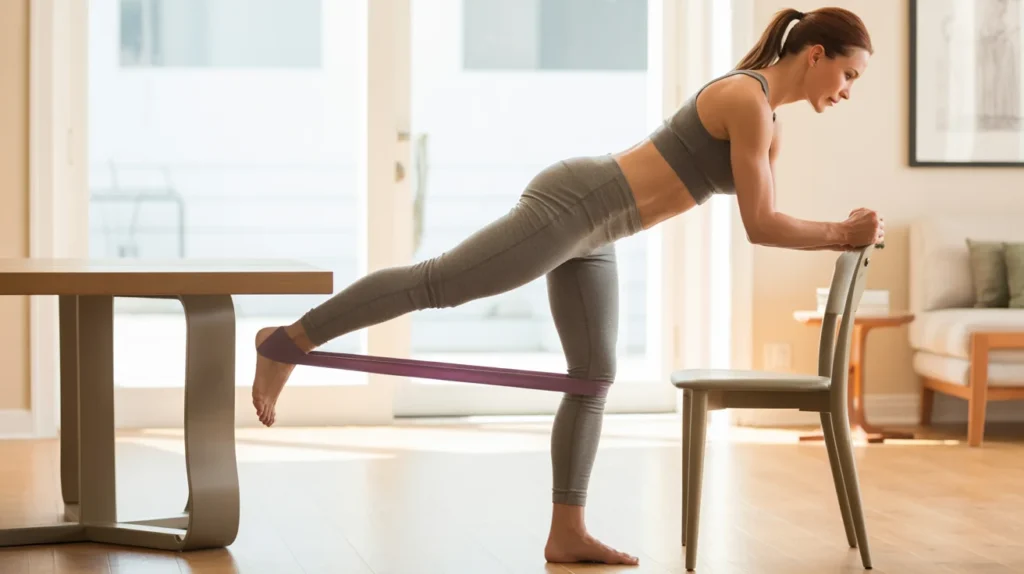
3. Standing Leg Adduction with Resistance Band
This isolation exercise uses a resistance band to put direct tension on the adductor muscles. It’s excellent for building targeted strength.
How to do it:
- Secure a loop resistance band around a sturdy anchor point (like a heavy table leg) and loop the other end around your right ankle.
- Stand with your left side facing the anchor point, far enough away to create light tension in the band. Hold onto a wall or chair for balance.
- Keeping your right leg straight, slowly pull it across the front of your body, past your stationary left leg.
- Focus on using your inner thigh muscle to control the movement.
- Slowly return to the starting position.
- Complete all reps on one side before switching to the other.
- Aim for 3 sets of 15 reps per side.
4. Clamshells
While often known as a glute medius exercise, a slight variation turns the clamshell into a fantastic inner thigh workout. It’s a low-impact move perfect for all fitness levels.
How to do it (for adductors):
- Lie on your right side with your legs stacked and knees bent at a 90-degree angle. Rest your head on your arm.
- Instead of lifting the top knee, keep your heels together and lift your bottom (right) knee off the floor toward the ceiling.
- The movement will be small, but you should feel the muscle on your right inner thigh engage.
- Hold for a second at the top, then slowly lower your knee back down.
- Aim for 3 sets of 15-20 reps per side.
5. Side-Lying Leg Lift (Adductor Lift)
This is one of the best isolation Adductor Exercises you can do. It directly targets the inner thigh of the bottom leg.
How to do it:
- Lie on your right side, supporting your head with your right hand.
- Bend your top (left) leg and place your left foot flat on the floor in front of your bottom leg for stability.
- Extend your bottom (right) leg straight out.
- Engage your inner thigh to lift your right leg off the floor as high as you can.
- Hold for a moment at the top, then slowly lower it back down without letting it rest completely.
- Aim for 3 sets of 15 reps per side. To make it harder, add an ankle weight.

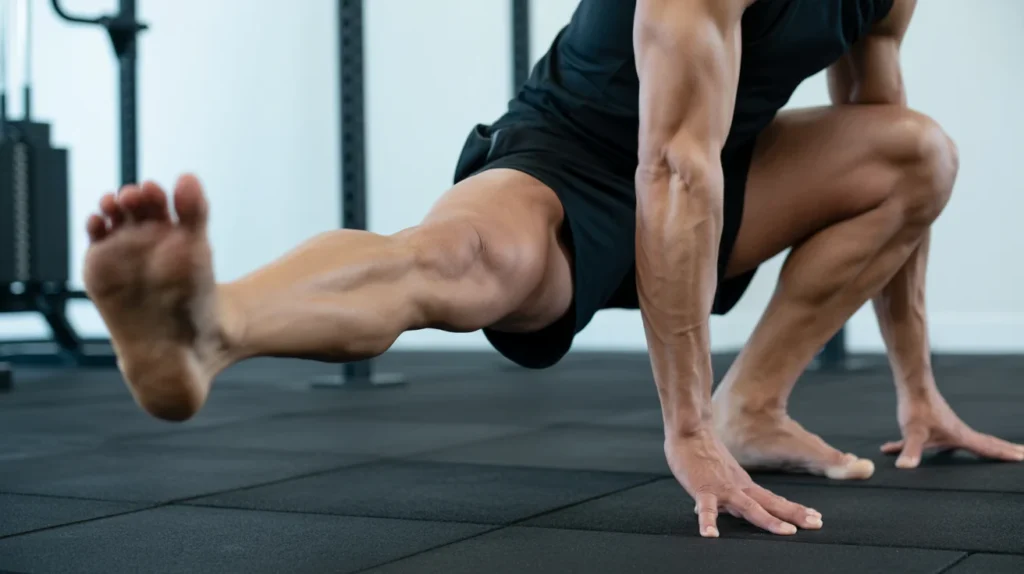
6. Cossack Squat
The Cossack squat is an advanced move that challenges your mobility, flexibility, and strength all at once. It provides a deep stretch for one adductor while strengthening the other.
How to do it:
- Start with a very wide stance, similar to a sumo squat, with toes pointed slightly out.
- Shift your weight to your right side, bending your right knee and lowering your hips as far as you can.
- Keep your left leg straight, with your foot either flat on the floor or flexing so only the heel is down (this requires more flexibility).
- Push off your right foot to return to the center, then repeat on the left side.
- Aim for 3 sets of 8-10 reps per side. Start with a smaller range of motion and work your way deeper as you get stronger.
7. Scissor Kicks
This core-focused move also does wonders for the adductors as you control your legs crossing over each other.
How to do it:
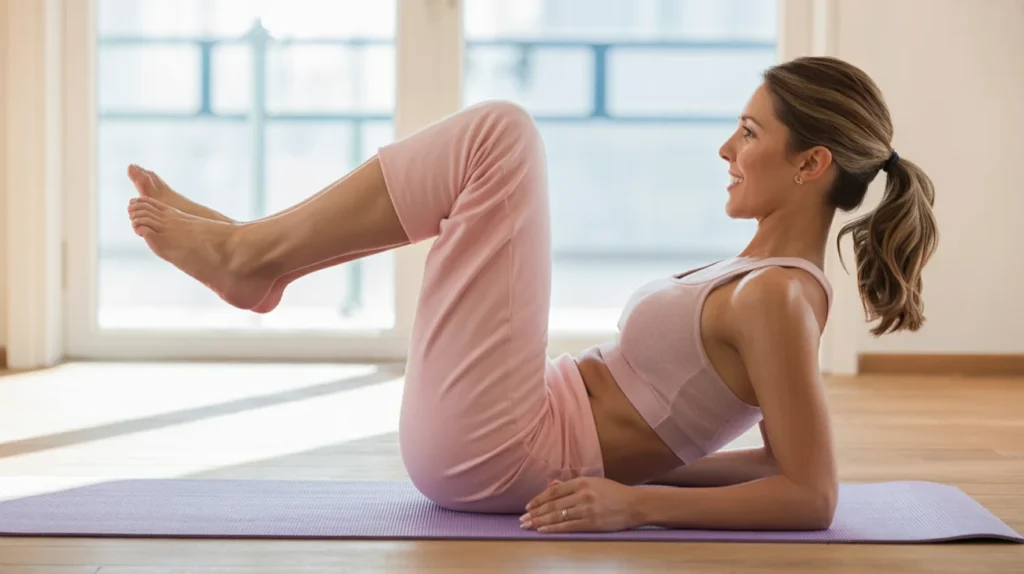
- Lie on your back with your legs extended straight out. You can place your hands under your lower back for support.
- Lift your heels about 6-12 inches off the floor. Engage your core to keep your lower back pressed into the mat.
- Begin a “scissor” motion by crossing your right leg over your left, then your left leg over your right.
- Keep the movement controlled, using your inner thighs and lower abs.
- Aim for 3 sets of 30-60 seconds.
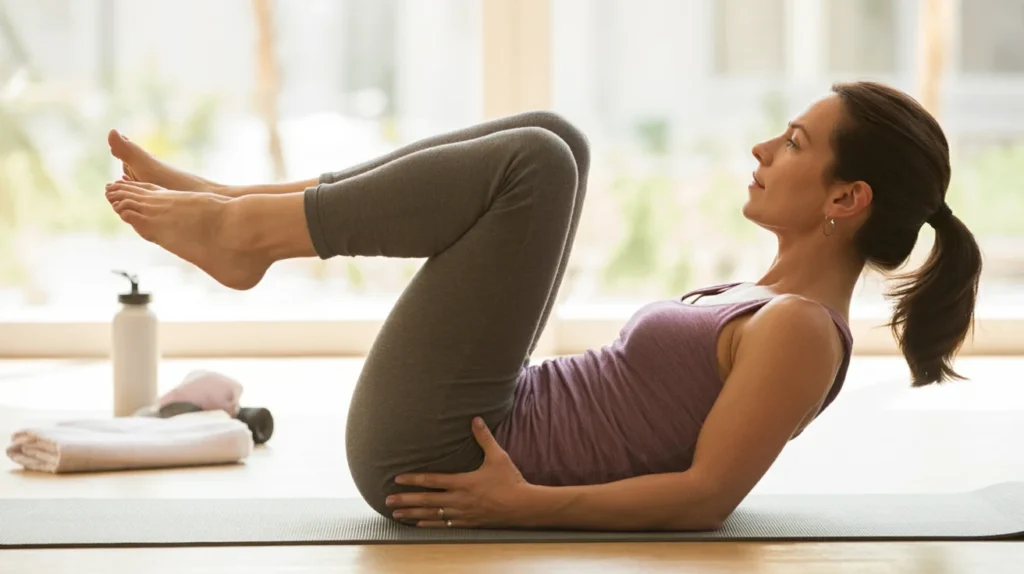
8. Ball or Pillow Squeeze
This isometric exercise is incredibly simple but highly effective. It involves statically contracting the adductor muscles, which helps build endurance and strength.
How to do it:
- Lie on your back with your knees bent and feet flat on the floor, hip-width apart.
- Place a small Pilates ball, yoga block, or a firm pillow between your knees.
- Squeeze the object with your knees, engaging your inner thigh muscles.
- Hold the squeeze for 30 seconds, maintaining constant pressure. Don’t forget to breathe!
- Release for 10-15 seconds and repeat.
- Aim for 3-5 reps of 30-second holds.

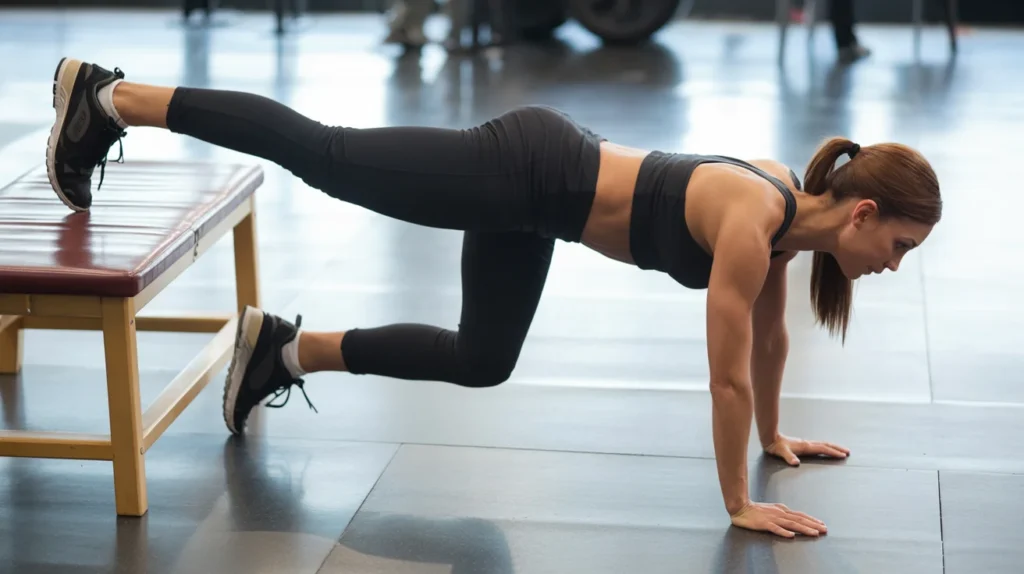
9. Copenhagen Adduction
This is a more advanced exercise, but it’s one of the most effective for building serious adductor strength and is often used by athletes to prevent groin injuries. You’ll need a bench or a sturdy chair.
How to do it (Modified):
- Lie on your right side, parallel to a bench. Place your top (left) leg on the bench so it’s supported from the knee down.
- Place your bottom (right) leg on the floor underneath the bench, with the knee bent.
- Prop yourself up on your right forearm, keeping your body in a straight line from head to knee.
- Engage your core and lift your hips off the floor into a side plank.
- Now, lift your bottom knee off the floor to meet the bench, using your inner thighs of both legs.
- Lower your hips and bottom knee back down.
- Aim for 3 sets of 8-12 reps per side.
Choosing Your Exercises: Bodyweight vs. Resistance
You can get a great workout using only your body weight. However, adding resistance can help you progress. Here’s a quick comparison.
| Feature | Bodyweight Exercises | Resistance Band/Weight Exercises |
|---|---|---|
| Best for | Beginners, warm-ups, improving mobility | Building strength, challenging muscles further |
| Equipment | None | Resistance bands, ankle weights, dumbbells |
| Examples | Sumo Squats, Side Lunges, Scissor Kicks | Banded Leg Adduction, Weighted Sumo Squats |
| Pros | Convenient, free, low risk of injury | Faster strength gains, more variety |
| Cons | May become too easy over time | Requires equipment, slightly higher risk |
Frequently Asked Questions (FAQ)
Q1: How often should I do these Adductor Exercises?
Aim to perform a selection of these Adductor Exercises 2-3 times per week on non-consecutive days. This gives your muscles time to recover and rebuild, which is when they get stronger.
Q2: Will these exercises make my thighs bulky?
No. For most women, strength training builds lean, toned muscle, not bulk. These exercises will help create a firmer, more sculpted appearance. Building significant muscle mass requires very heavy lifting and a specific, high-calorie diet.
Q3: Can I do these exercises if I have diastasis recti?
Many of these exercises are safe, but it’s crucial to focus on core engagement. Moves like the Ball Squeeze and Clamshells are generally safe. Avoid Scissor Kicks until your core is stronger. Always check with a physical therapist specializing in postpartum recovery, like those recommended by the American Physical Therapy Association, for personalized advice.
Q4: How soon will I see results?
Consistency is everything. If you stick to a routine 2-3 times a week, you may start to feel stronger in as little as 2-4 weeks. Visible changes in muscle tone typically become more noticeable after 6-8 weeks.

Conclusion
Strengthening your inner thighs is a fantastic goal that contributes to your overall health, stability, and confidence. As a busy mom, finding efficient workouts is a must, and this list of nine Adductor Exercises is designed to deliver results without requiring hours at the gym.
Start with two or three exercises that feel right for you and build from there. Listen to your body, focus on proper form, and be patient with your progress. Every squat, lunge, and leg lift is a step toward a stronger, more resilient you. You’ve got this!
For more information on the benefits of strength training for women’s health, resources like the Office on Women’s Health provide excellent guidance.