

Introduction
Being a mom often means you’re a master of multitasking, balancing schedules, and caring for everyone else. With such a busy lifestyle, it’s easy for your own well-being, especially digestive health, to take a backseat. Stress, hurried meals, and lack of movement can lead to uncomfortable issues like bloating, gas, and indigestion. The good news is that you don’t need a lot of time or fancy equipment to support your digestive system. A simple, gentle yoga practice can make a significant difference.

This article explores what busy moms should know about incorporatingYoga Poses for Digestion into their routine. We will guide you through seven specific yoga poses for digestion that are simple to perform, even with a packed schedule. These poses are designed to stimulate your digestive organs, reduce stress, and promote overall gut health. You will find that taking just a few minutes for yourself can lead to greater comfort and well-being.
Key Takeaways
- Yoga and Digestion are Linked: Gentle twists and forward folds in yoga can massage abdominal organs, improving circulation and function.
- Stress is a Major Factor: Yoga’s calming effects on the nervous system can directly reduce stress-related digestive issues like bloating and cramping.
- Consistency Over Duration: Even 10-15 minutes of daily practice can be more effective than one long, infrequent session.
- Listen to Your Body: These poses are meant to be gentle. Never force a stretch; modify poses to suit your comfort level.

Understanding the Connection Between Yoga and Digestive Health
Your digestive system is often called the body’s “second brain” because of its intricate network of nerves and its sensitivity to your emotional state. When you are stressed, your body enters “fight-or-flight” mode, diverting energy away from non-essential functions like digestion. This can slow things down, leading to discomfort. Yoga helps shift your body into the “rest-and-digest” state, managed by the parasympathetic nervous system.

By consciously breathing and moving through gentle postures, you calm your nervous system and send signals to your body that it’s safe to relax. Specific Yoga Poses for Digestion movements, particularly twists and compressions, act like an internal massage for your abdominal organs.
This can help stimulate the movement of food and waste through your system, alleviate gas, and reduce bloating. Incorporating Yoga Poses for Digestion into your daily routine is a proactive way to support your gut health and manage the physical effects of a busy, often stressful, life.
7 Modern Yoga Poses for Digestion
Ready to discover some innovative Yoga Poses for Digestion beyond the classics? These modern and lesser-known postures can give your digestive system a gentle nudge while keeping your practice fresh and engaging. Each pose is selected for its unique ability to stimulate digestion, relieve bloating, and fit into a busy mom’s routine.
1. Revolved Deer Pose (Parivrtta Mrigasana)
This contemporary variation blends hip opening with a gentle twist, targeting both the liver and intestines—essential for boosting digestion in a way that’s fresh and energizing.
How to Do It:
Sit with one leg bent in front of you (knee forward, shin angled), and the other leg bent behind you (knee backward, top of the foot on the floor). Inhale to lengthen your spine, then exhale as you turn your torso toward your back leg. Place one hand on the floor and the other on your thigh for leverage. Hold for 6-8 breaths, then switch sides.
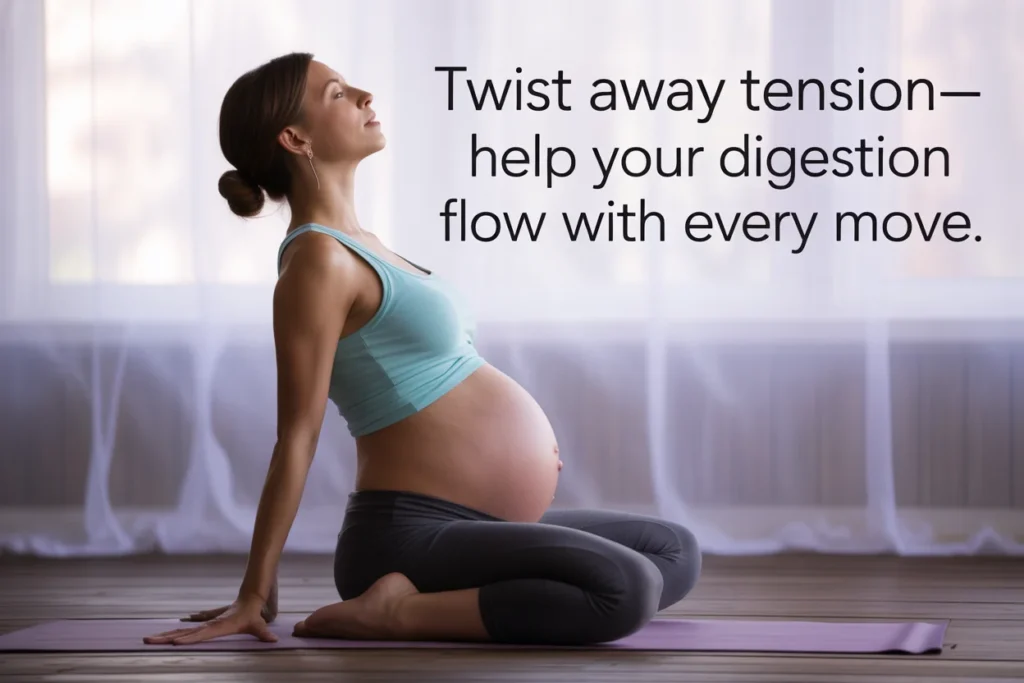
2. Thread-the-Needle Twist in Puppy Pose
This upgraded take on a gentle backbend combines shoulder and midsection stretch, twisting the torso in a way that lightly compresses your stomach.
How to Do It:
Begin in tabletop. Walk your hands forward, lowering your forehead toward the mat (like Puppy Pose). Then, slide one arm underneath the other, allowing your shoulder and head to rest on the ground. Relax and breathe for 8-10 breaths, then switch sides.
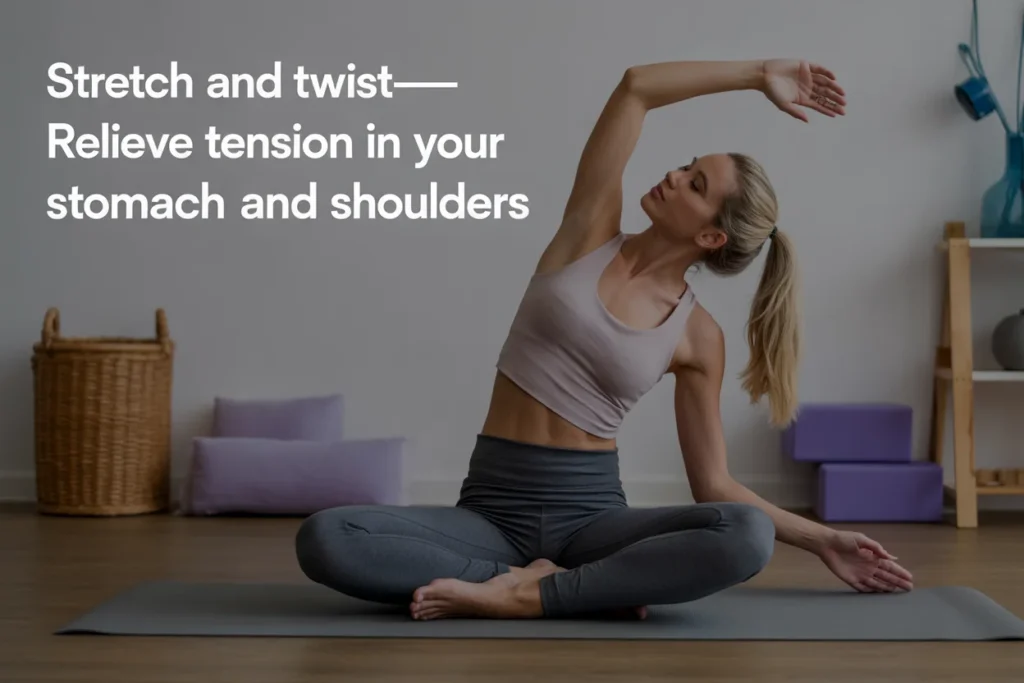
3. Supine IT Band Release with Belly Compression
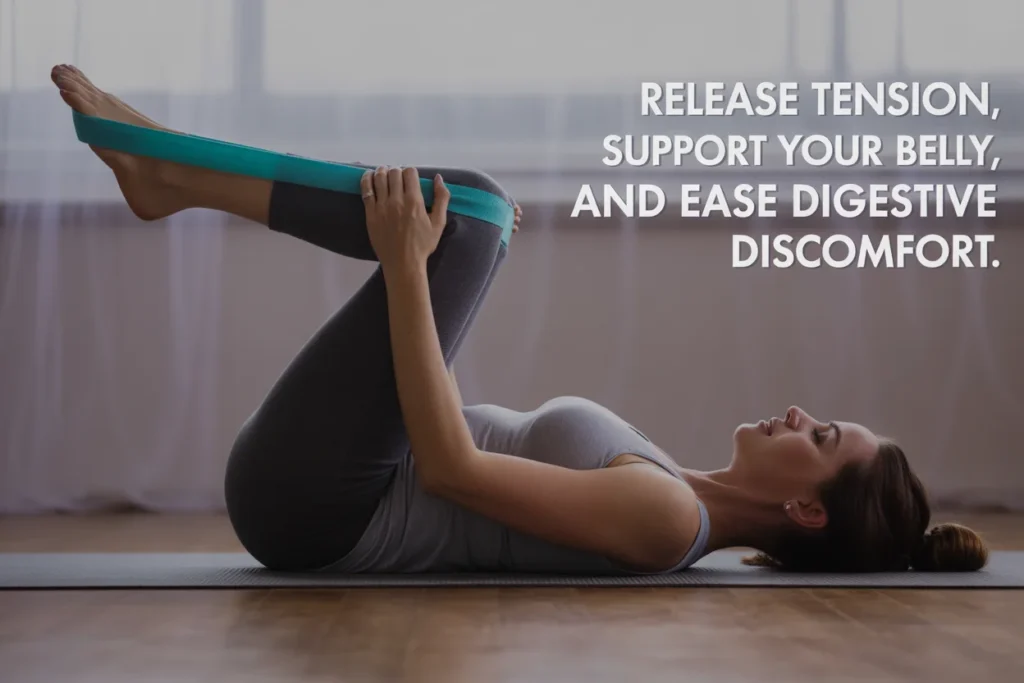
Often used in restorative Yoga Poses for Digestion, this pose uses a yoga strap (or towel) to stretch the outer thigh while compressing the lower abdomen—a modern approach to gentle colon massage.
How to Do It:
Lie on your back and loop a strap around your right foot. Extend your leg upward, then slowly cross it over your body to the left, keeping your shoulders on the mat. The stretch should be felt along your outer leg and hip, while your low belly receives a gentle squeeze. Hold for 6-8 breaths and repeat on the other side.
4. Yogi Squat with Reach (Malasana Variation)
This modernized squat opens the hips and adds an upward arm reach for spinal decompression and gentle abdominal stimulation, perfect for urban yoga flows.
How to Do It:
Stand with feet wider than hip-width, toes turned out. Lower into a squat, bringing palms to your chest. On an inhale, reach one arm up while keeping your shoulder aligned with your knee. Hold for a few breaths, then switch arms. This variation helps release abdominal tension and can encourage digestive flow.

5. Reclined Windshield Wipers with Hip Squeeze
More dynamic than traditional floor twists, this pose invites active movement, gently massaging your midsection and creating space in the digestive tract.
How to Do It:
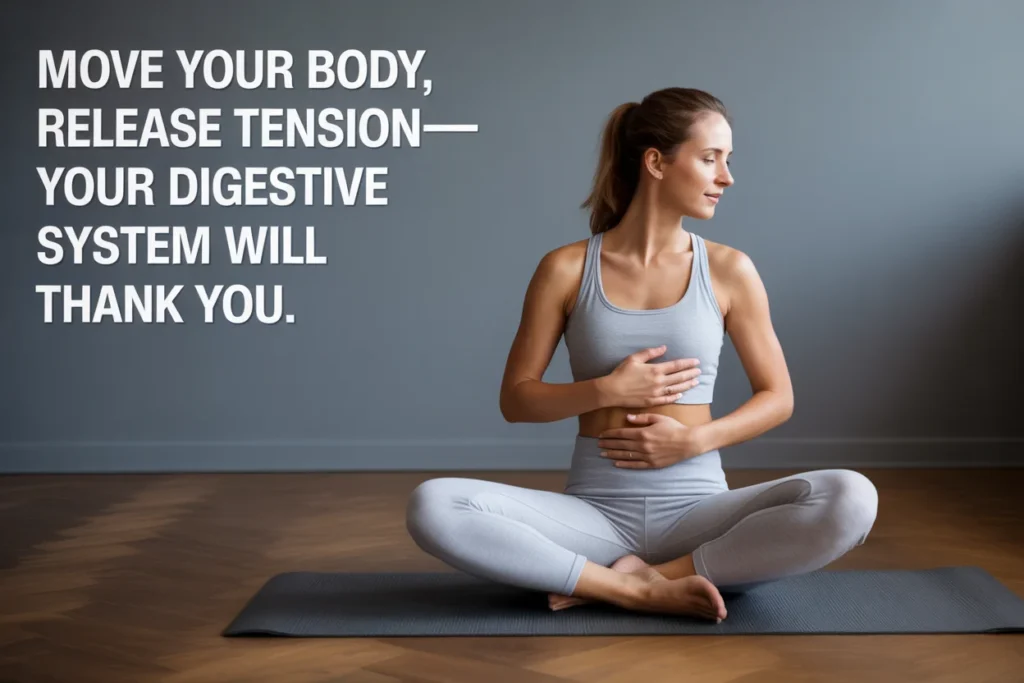
Lie on your back, knees bent, feet wider than hips. Drop your knees side to side in a rhythmic motion. For more belly massage, pause with both knees on one side, squeeze your knees together, and gently press your top knee downward for a few breaths before switching.
6. Prone Sphinx Twist
Sphinx Pose gets a digestive twist in this modern upgrade, combining gentle back bending and abdominal compression for gut stimulation.
How to Do It:
Lie belly-down, elbows under shoulders. Plant the palms and gently twist your chest to one side, looking over your shoulder while slightly pressing the opposite hip into the mat. Hold for 5 deep breaths and alternate sides.

7. Supported Wide-Legged Child’s Pose with Block Compression
Instead of traditional Child’s Pose, this modern variation uses a yoga block or cushion for added belly pressure—heightening digestive benefits and bringing fresh energy to your practice.
How to Do It:
Start on your knees and widen them. Place a block or pillow under your torso, then fold forward so your belly gently presses into the support. Let your arms stretch out or rest beside you, relaxing for several minutes, feeling the gentle belly compression.

Comparing Key Modern Poses for Digestion
| Pose | Primary Benefit for Digestion | Best For |
|---|---|---|
| Seated Twist | Massages abdominal organs, aids detoxification | Stimulating sluggish digestion |
| Knees-to-Chest | Relieves gas and bloating | Immediate relief from pressure |
| Cat-Cow Stretch | Gently massages intestines, warms up the core | Easing cramps and daily maintenance |
| Supine Spinal Twist | Deeply relaxes and stimulates the colon | Relieving constipation and stress |

Tips for a Successful Practice
To make these Yoga Poses for Digestion most effective, consistency is more important than intensity or duration. Even 10 minutes a day can make a substantial impact.
- Practice on an Empty Stomach: Wait at least 1-2 hours after a light meal or 3-4 hours after a heavy meal. Practicing with a full stomach can be uncomfortable.
- Focus on Your Breath: Your breath is the link between your body and mind. Deep, diaphragmatic breathing helps activate the parasympathetic nervous system, promoting relaxation and digestion.
- Don’t Push It: Yoga should never be painful. If you feel any sharp pain, gently back out of the pose. Use props like blankets or pillows for support.
- Create a Routine: Try practicing at the same time each day, such as first thing in the morning to wake up your system or in the evening to unwind.

Beyond the Mat: Lifestyle Habits for Better Digestion
While yoga is a powerful tool, it works best as part of a holistic approach. Supporting your practice with healthy lifestyle habits can amplify the benefits.
Hydration and Nutrition
Staying hydrated is crucial for a healthy digestive system. Water helps break down food and prevents constipation. A balanced diet rich in fiber from fruits, vegetables, and whole grains provides the necessary bulk for smooth digestive transit. Mindful eating—slowing down, chewing thoroughly, and savoring your food—also gives your digestive system a better chance to work efficiently.
Managing Stress
As a busy mom, stress is often unavoidable. Finding small ways to manage it throughout the day is key. In addition to a dedicated yoga practice, try taking a few deep breaths before meals or stepping outside for a few minutes of fresh air. A helpful resource is the National Institutes of Health (NIH) page on Relaxation Techniques for Health, which offers evidence-based methods for stress reduction.

Conclusion
For busy moms juggling countless responsibilities, digestive discomfort can feel like just another thing to endure. However, you have the power to support your well-being with simple, accessible tools. By integrating these seven Yoga Poses for Digestion into your life, you can actively reduce bloating, ease gas, and calm your nervous system.
Remember that taking just a few minutes each day to connect with your body through breath and movement is a profound act of self-care. Start slowly, be patient with yourself, and enjoy the journey to a happier, healthier gut.

Frequently Asked Questions (FAQ)
1. How long should I hold each yoga pose?
For most of these poses, aim to hold for 5-8 deep breaths, which is roughly 30-60 seconds. For restorative poses like Child’s Pose or Knees-to-Chest, you can hold them for several minutes. The most important thing is to listen to your body.
2. Can I do these yoga poses if I’m a beginner?
Absolutely. All seven of these poses are beginner-friendly. Move slowly, don’t force anything, and focus on how the stretch feels rather than how it looks. Using a blanket for knee support can also be helpful.
3. When is the best time of day to practice yoga for digestion?
Practicing in the morning can help stimulate your digestive system for the day ahead. An evening practice can help you unwind and may aid in overnight digestion. The key is to avoid practicing on a full stomach.
4. Will yoga help with serious digestive issues like IBS or Crohn’s disease?
While yoga can be a wonderful complementary therapy for managing symptoms like stress and bloating associated with conditions like IBS, it is not a substitute for medical treatment. Always consult with your doctor. Research from institutions like Johns Hopkins Medicine supports yoga’s role in improving gut health, but it should be part of a comprehensive care plan.
5. How soon will I see results?
Some people feel immediate relief from gas or bloating after practicing poses like Knees-to-Chest. For more sustained benefits, like reduced stress and improved regularity, consistency is key. You may notice significant improvements within a few weeks of regular practice.