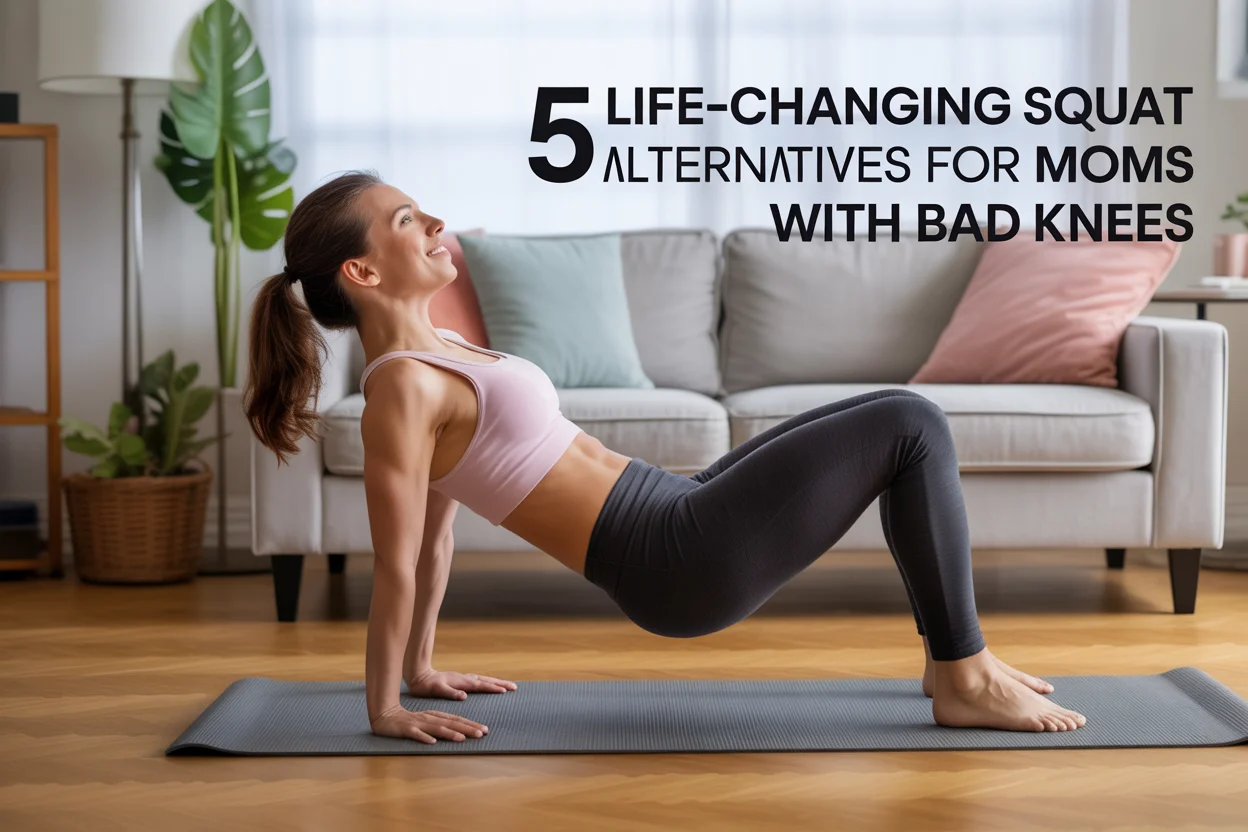
Intro To Squat Alternatives
Squats are often hailed as the king of lower body exercises, and for good reason. They strengthen your glutes, quads, and hamstrings all at once. But for many busy moms, especially those dealing with knee pain, the thought of doing a deep squat can be daunting, if not impossible.
Knee discomfort can turn this powerhouse exercise into a source of pain and potential injury. The good news is you don’t have to give up on building strong, toned legs. There are fantastic Squat Alternatives that deliver amazing results without putting stress on your joints.

This guide is designed for you. We understand that your time is precious and your body has been through a lot.
We’ll explore five effective, joint-friendly exercises that will help you build strength, improve mobility, and feel confident in your fitness routine, all while protecting your knees. Get ready to discover new ways to work your lower body that feel good and deliver powerful results.
Key Takeaways
- You can build strong glutes and legs without performing traditional squats that may hurt your knees.
- Exercises like Glute Bridges, Clamshells, and Leg Presses can effectively target lower body muscles with minimal knee strain.
- Proper form is crucial for all exercises to maximize benefits and prevent injury.
- Strengthening the muscles around the knee joint, particularly the glutes and hamstrings, can help improve knee stability.
- Consistency is more important than intensity. Start slowly and listen to your body.

Understanding Knee Pain and Its Impact on Exercise
Knee pain is incredibly common, affecting millions of people. For moms, it can stem from various sources: hormonal changes during and after pregnancy that affect joint laxity, the physical strain of carrying children, or pre-existing conditions.
When you do Squat Alternatives with knee pain, certain movements can make it worse. The deep flexion required in a traditional squat can compress the patellofemoral joint (the joint between your kneecap and thigh bone), leading to irritation and pain.

Ignoring this pain and pushing through is not a solution. It can lead to chronic inflammation or more severe injuries. The key is to work smarter, not harder. This means choosing exercises that strengthen the supporting cast of muscles—
your glutes, hamstrings, and inner thighs—without creating that painful compression in the knee joint. By focusing on these Squat Alternatives, you can build a strong foundation that supports your knees, potentially reducing pain over time.
Why Strong Glutes Are Your Knees’ Best Friend
It might seem Squat Alternatives, but one of the best ways to protect your knees is to focus on your backside. Your gluteal muscles (gluteus maximus, medius, and minimus) are the largest and most powerful muscles in your body.
They are responsible for hip extension, abduction, and external rotation. When your glutes are weak, other muscles and joints have to pick up the slack, and often, the knees bear the brunt of this compensation.
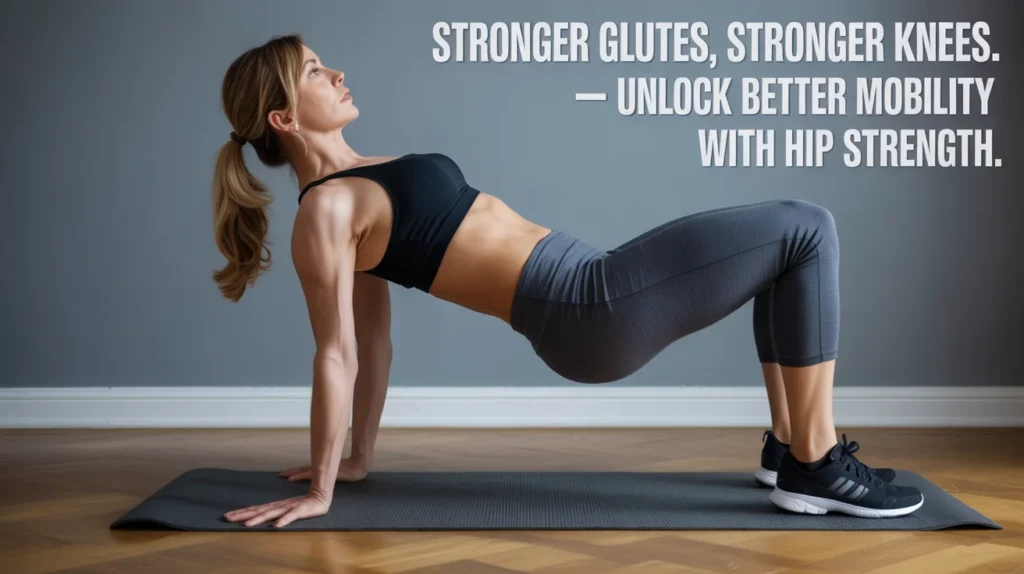
Weak glutes can cause your thigh bone (femur) to rotate inward, a movement pattern known as femoral adduction. This misalignment places significant stress on the knee joint and can contribute to conditions like patellofemoral pain syndrome.
By strengthening your glutes, you improve your entire lower body alignment, ensuring your hips, knees, and ankles work together harmoniously. Strong glutes act as a support system, absorbing impact and stabilizing your pelvis so your knees don’t have to.
The Top 5 Modern, Low-Effort Squat Alternatives That Make a Big Impact
If you’re looking for fresh, science-backed ways to strengthen your lower body without stressing your knees, these five innovative squat alternatives are designed just for you. They’re easy to pick up, gentle on joints, and surprisingly effective. Let’s explore some less familiar moves that offer big results with less effort.
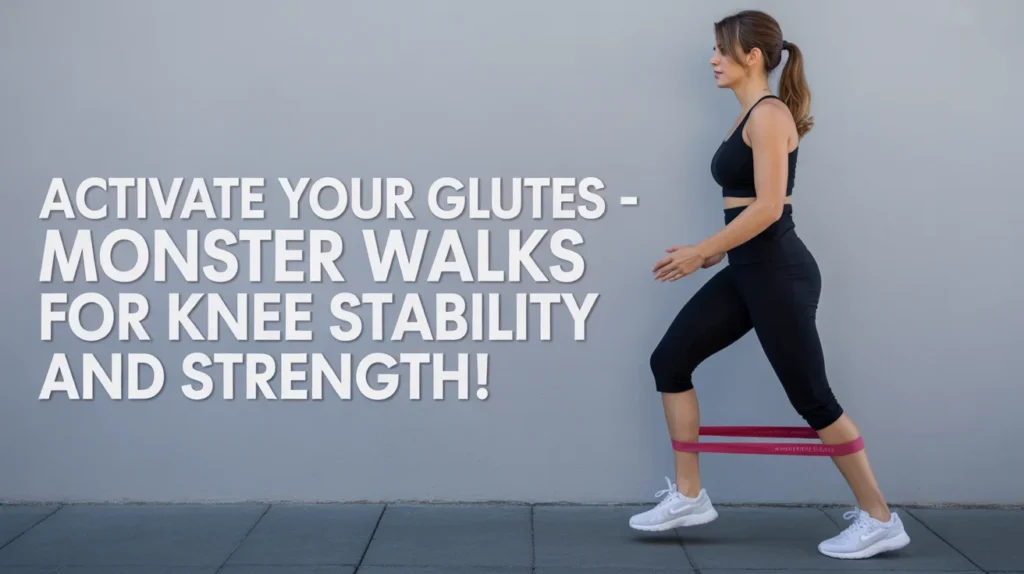
1. Mini Band Monster Walks
Monster walks are an innovative way to activate your glutes and hips while protecting your knees. Wearing a mini resistance band around your thighs, you’ll walk sideways and diagonally, targeting neglected muscles that support knee health.
How to Perform Monster Walks
- Place a mini band just above your knees or around your ankles.
- Stand in a slight squat position with feet hip-width apart—don’t worry, this is a shallow bend, not a classic squat.
- Step sideways, keeping tension on the band. Take 10 steps in one direction, then back.
- For extra challenge, try diagonal monster walks—step forward and out at a 45-degree angle, then switch.
Monster walks are favored by physical therapists and athletes for knee protection and glute engagement. They require minimal space and effort, but deliver big on results.
2. B-Stance Hip Thrusts
A step up from the traditional hip thrust, the B-stance version is a modern single-leg variation that supercharges your glutes while minimizing knee strain.
How to Perform B-Stance Hip Thrusts
- Sit on the floor, upper back resting against a bench.
- Bend both knees. Keep one foot flat, slide the other foot forward a few inches—heel stays down, toes up.
- Push through the flat foot to lift hips, letting the forward heel act as a kickstand.
- Squeeze at the top, then lower down slowly. Complete reps on each side.
The B-stance isolates each glute, making it more efficient than classic bridges or hip thrusts—no heavy weights required!

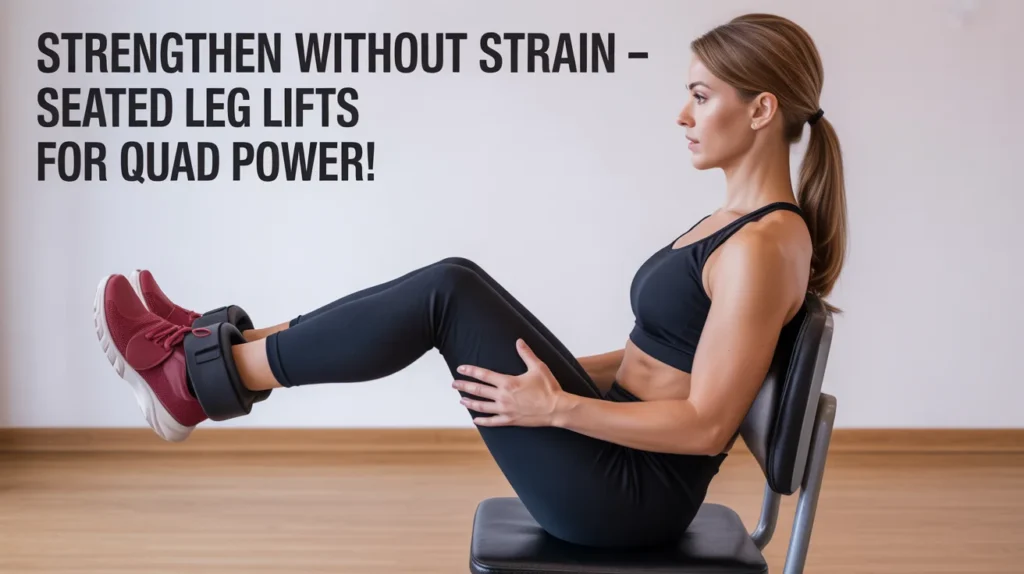
3. Seated Straight-Leg Lifts with Ankle Weights
This upgraded, joint-friendly move builds quad strength and stability without any knee bending or squatting.
How to Perform Seated Straight-Leg Lifts
- Sit on a sturdy chair, legs extended in front.
- Add ankle weights (1–5 lbs).
- Keeping your torso upright, slowly lift one leg a few inches, hold, and lower.
- Repeat for 10–15 reps each leg.
Great for burning out the front of your thighs and reinforcing knee support, this move is recommended by orthopedic specialists for those recovering from knee issues.
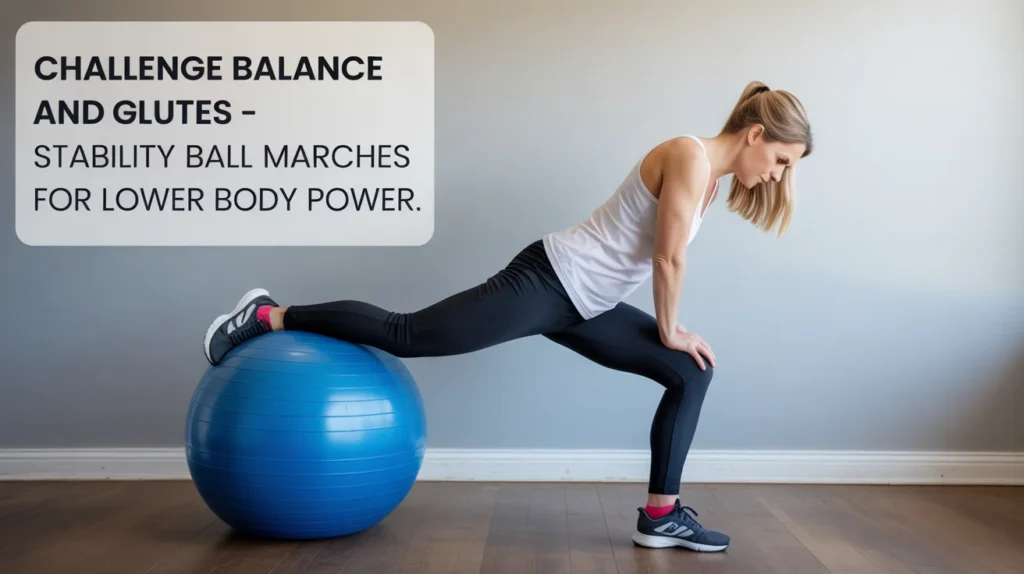
4. Stability Ball Wall March
A new favorite for targeting the entire hip complex, this exercise challenges balance and activates glutes and hamstrings, all while removing weight from your knees.
How to Perform Stability Ball Wall Marches
- Stand facing a wall, place a stability ball behind your lower back.
- Lean gently into the ball for support.
- Keeping your core engaged, slowly lift one knee to hip height, pause, and lower—alternate sides as if marching in place.
The ball provides gentle support while forcing your stabilizer muscles to work, making this a deceptively powerful substitute for traditional squats.
5. Reverse Slide Lunges with Sliders or Towels
A surprisingly knee-friendly and modern exercise, reverse slide lunges utilize furniture sliders (or small towels on wood floors) to take pressure off the front knee while still firing up glutes and hamstrings.
How to Perform Reverse Slide Lunges
- Stand with both feet on the ground, a slider or towel under one foot.
- Keeping most weight on your stationary leg, slide the other leg back and lower your body a little.
- Slide the moving leg back in to return to standing.
- Switch sides after each set.
Unlike regular lunges, the sliding motion removes jarring pressure from your knee, resulting in a safer, smoother movement with excellent results.

Exercise Comparison: Knee-Friendliness & Muscle Focus
| Exercise | Primary Muscle(s) Worked | Knee Stress Level | Why It’s a Good Squat Alternative |
|---|---|---|---|
| Mini Band Monster Walks | Glutes, Hips | Very Low | Activates lateral hip muscles; great for knee alignment and stability. |
| B-Stance Hip Thrusts | Glutes, Hamstrings | Very Low | Single-leg focus increases efficiency with minimal weight and effort. |
| Seated Straight-Leg Lifts | Quads, Hip Flexors | None | No knee bending; isolates and strengthens stabilizing muscles. |
| Stability Ball Wall March | Glutes, Hamstrings, Core | Very Low | Stability challenge, continuous activation, full lower-body focus. |
| Reverse Slide Lunges | Glutes, Hamstrings, Quads | Low | Sliding action provides support—easy to adjust depth and range as needed. |
You don’t need to spend hours at the gym to see results. As a busy mom, efficiency is everything. You can combine these exercises into a quick and effective lower-body circuit.

Sample 20-Minute Knee-Friendly Workout
- Warm-up (3 minutes): Gentle walking, leg swings.
- Circuit (Perform 3 rounds):
- Glute Bridges: 15 reps
- Clamshells: 15 reps per side
- Standing Donkey Kicks: 12 reps per side
- Wall Sit: Hold for 45 seconds
- Rest: 60 seconds between rounds.
- Cool-down (2 minutes): Gentle stretching for your glutes and hamstrings.
Performing this routine 2-3 times per week is a great starting point. As you get stronger, you can add resistance bands or increase your reps. These powerful Squat Alternatives will build a strong, functional lower body.
Listening to Your Body: The Golden Rule
No fitness guide can replace the feedback your own body gives you. The most important rule is to stop if you feel sharp, stabbing, or unusual pain. A slight muscle burn is normal and indicates your muscles are working. Joint pain is not.
Be patient with yourself. Progress takes time, and consistency is far more valuable than pushing yourself to the point of injury. The goal is to build a sustainable fitness habit that makes you feel strong and capable for years to come.
Frequently Asked Questions (FAQ)
Q1: Can these exercises really replace squats?
A: Yes. While squats are a compound movement, this collection of Squat Alternatives effectively targets all the same major muscle groups (quads, hamstrings, and glutes) in a way that is safer for sensitive knees. You can absolutely build a strong and toned lower body without traditional squats.
Q2: How soon will I see results?
A: With consistency (working out 2-3 times per week), most people begin to feel stronger and notice improvements in muscle activation within 3-4 weeks. Visible changes in muscle tone typically become more apparent after 6-8 weeks.
Q3: What if I feel some discomfort even with these exercises?
A: If you feel discomfort, first check your form. Make sure you are moving in a slow, controlled manner. If the pain persists, try reducing the range of motion. For example, don’t lift your hips as high in a glute bridge. If pain continues, it is best to consult with a physical therapist or healthcare professional. A professional can provide a personalized diagnosis and exercise plan.
Q4: Can I add weight to these exercises?
A: Absolutely! Once you have mastered the bodyweight versions, you can add challenges. Use a dumbbell or plate across your hips for glute bridges, use stronger resistance bands for clamshells and donkey kicks, and gradually increase the weight on the leg press machine.