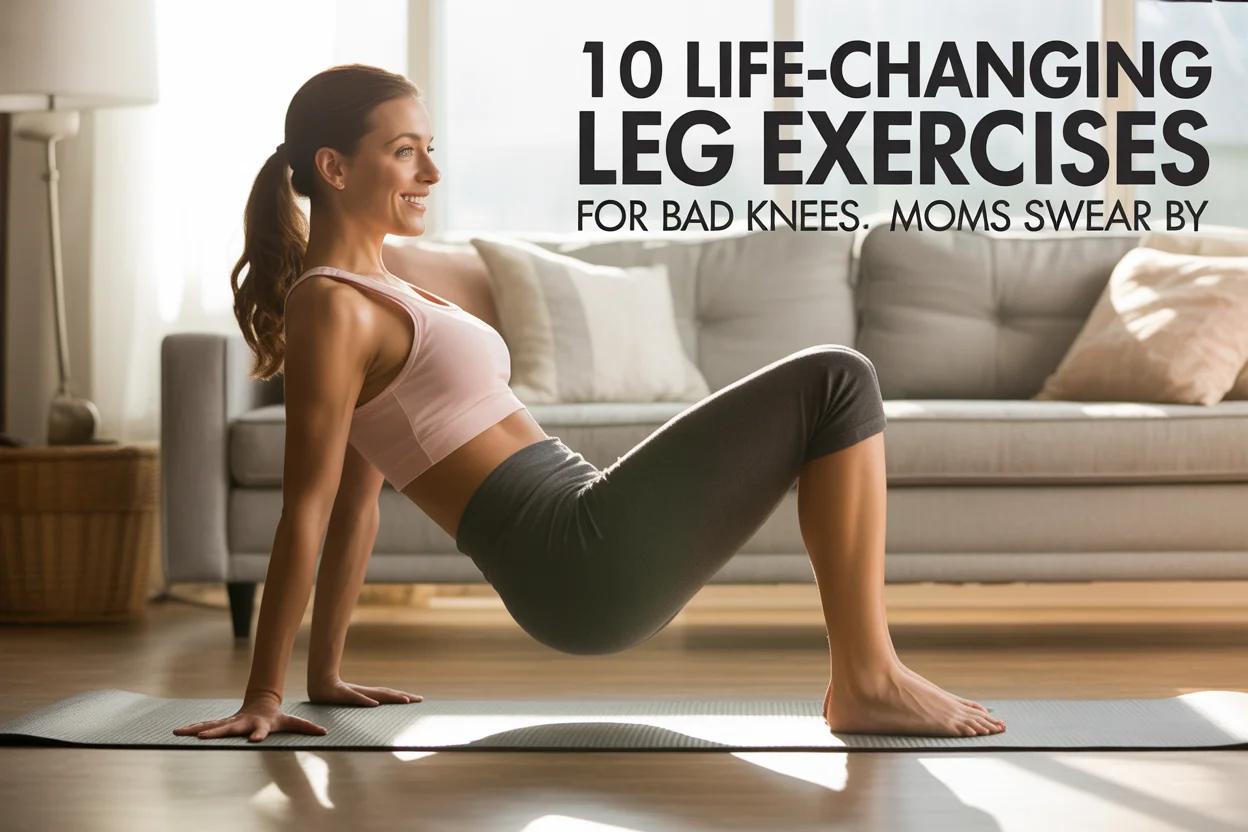
Introduction To Leg Exercises for Bad Knees
Dealing with knee pain can feel like a constant battle, especially when you’re a busy mom juggling a million things at once. The thought of exercise might even seem scary, fearing it will make the discomfort worse. But what if the right kind of Leg Exercises for Bad Knees could actually be the solution?
Strengthening the muscles around your knees with Leg Exercises for Bad Knees provides better support for the joint, which can reduce pain and improve your mobility. This guide is designed for you—the mom who needs safe, effective, and simple ways to build leg strength without aggravating sensitive knees. We’ll explore gentle movements you can easily fit into your packed schedule, helping you feel stronger and more confident on your feet.
These aren’t just any exercises; they are carefully selected low-impact moves that focus on building strength where it counts. You’ll learn how to engage your quadriceps, hamstrings, glutes, and calves without putting unnecessary strain on your knee joints. Let’s get started on this journey to happier, healthier knees.
Key Takeaways
- Strengthening the muscles that support your knees, like the quadriceps and glutes, is crucial for reducing knee pain and preventing further injury.
- Low-impact exercises are the safest choice for people with bad knees, as they minimize stress on the joints.
- Proper form is more important than the number of repetitions. Focus on slow, controlled movements to get the most benefit without causing harm.
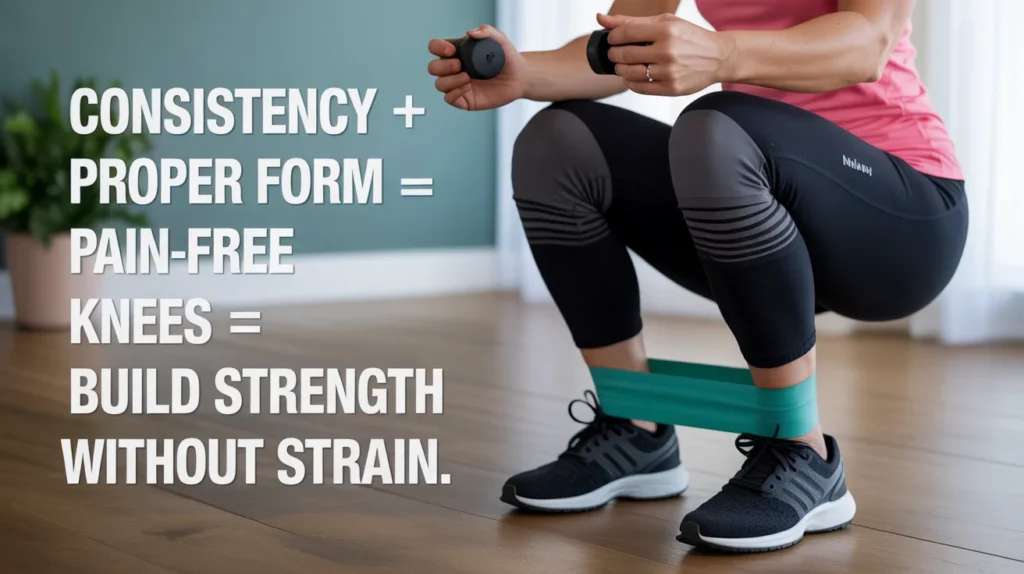
- Consistency is key. Incorporating these simple leg exercises into your regular routine will yield the best long-term results for knee health.
Understanding Knee Pain in Busy Moms
Life as a mom is physically demanding. From carrying toddlers and groceries to constantly bending and moving, your body is always working hard. Over time, these daily activities can contribute to wear and tear on your knee joints.
Hormonal changes, previous injuries, and the natural aging process can also play a significant role. Many moms experience knee pain due to conditions like osteoarthritis, patellofemoral pain syndrome (runner’s knee), or general joint strain.

The good news is that you don’t have to accept knee pain as a permanent part of your life. By focusing on targeted leg exercises for bad knees, you can build a muscular support system for your joints. Strong quadriceps, hamstrings, and glutes act like natural braces, absorbing shock and stabilizing the knee.
This reduces the load on the joint itself, which can lead to a significant decrease in pain and an increase in function. It’s about working smarter, not harder, to protect your body for the long haul.
The Importance of Proper Form
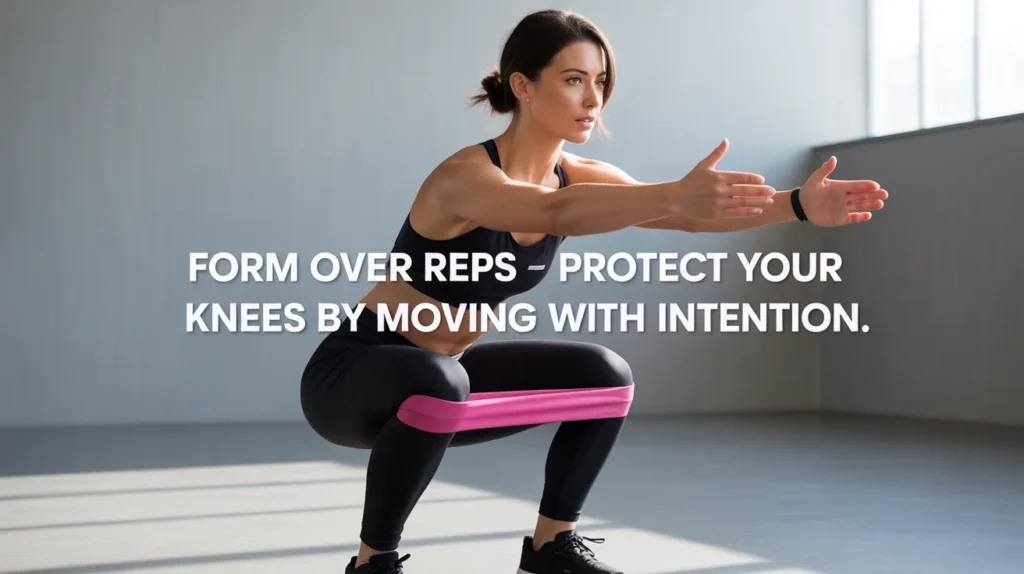
Before we dive into the Leg Exercises for Bad Knees, let’s talk about the single most important rule: form over everything. When you have sensitive knees, performing an exercise incorrectly can do more harm than good. It can place stress on the very joint you’re trying to protect. The goal is to isolate and strengthen the muscles surrounding the knee, not the knee joint itself.
Always move slowly and with intention. Pay close attention to how your body feels. You should feel the targeted muscles—like your thighs and glutes—working. You should not feel sharp, stabbing, or grinding pain in your knee.
If you do, stop immediately and reassess your form. It might mean reducing your range of motion or choosing a simpler modification. Remember, building strength is a marathon, not a sprint. Prioritizing correct technique will ensure you stay safe and make steady progress.
Top 10 Innovative Leg Exercises for Bad Knees
Looking for something new? These modern, less-common exercises are designed to strengthen your legs and protect your knees, all while fitting easily into a busy mom’s schedule. Give these unique moves a try to keep your workouts feeling fresh and effective.
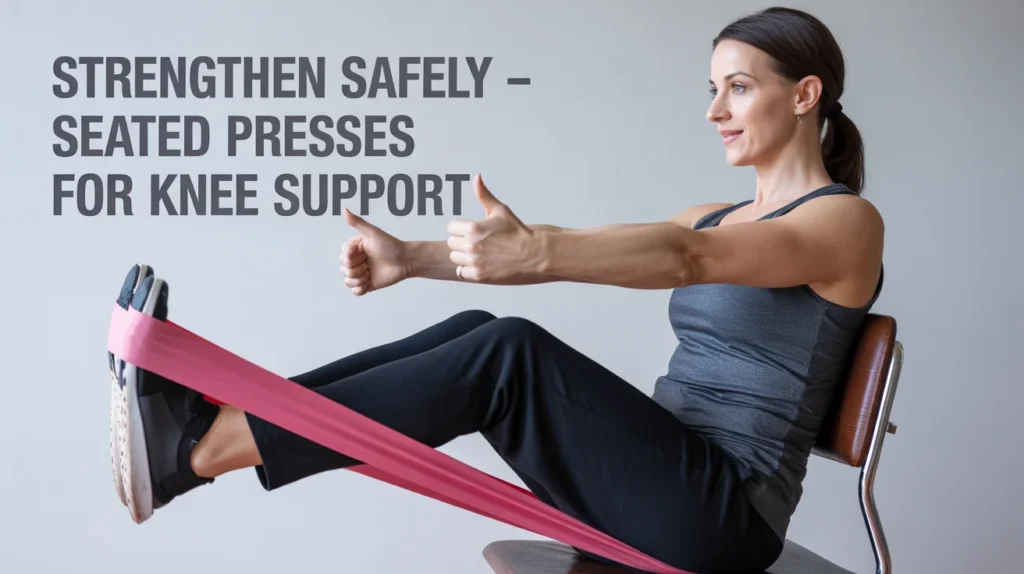
1. Seated Banded Leg Press
This gentle Leg Exercises for Bad Knees uses a resistance band to mimic the benefits of a leg press machine but can be done right at home.
How to do it:
- Sit tall on a sturdy chair, looping a resistance band around both feet and holding the ends in your hands.
- Start with knees bent, then push your feet forward and straighten your legs against the band’s resistance.
- Return slowly to starting position. That’s one rep.
- Try 2–3 sets of 12 presses.
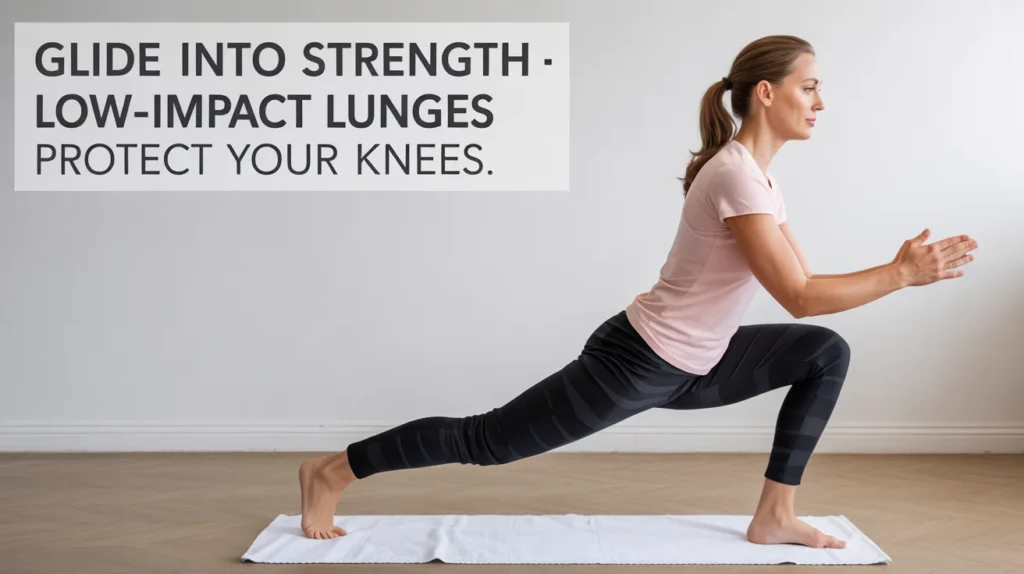
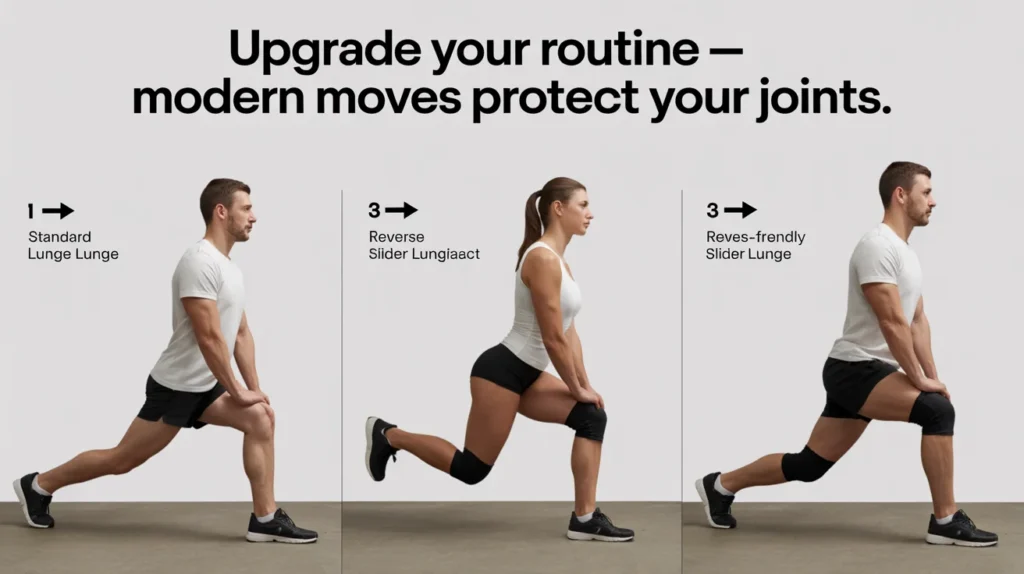
2. Reverse Slider Lunges
This modern twist on the classic lunge uses a slider or towel to smoothly glide your foot back, reducing knee pressure.
How to do it:
- Stand tall with one foot on a slider or towel.
- Gently slide that foot back as you bend your standing knee slightly—don’t let your front knee go past your toes.
- Slide the foot forward to return.
- Perform 10 reps per leg, 2 sets.
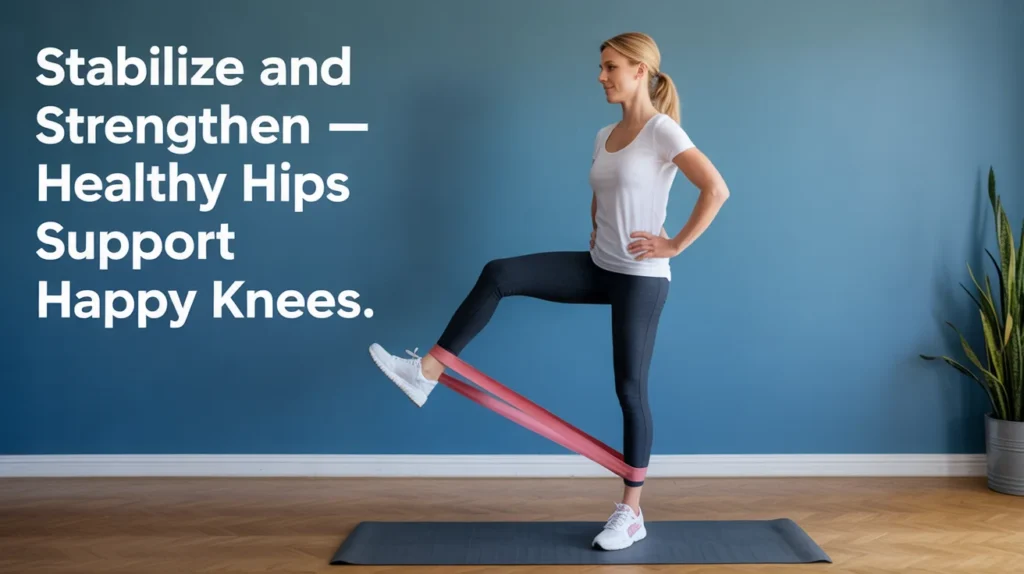
3. Standing Resistance Band Hip Abduction
Popular in today’s functional fitness routines, this move targets your outer hips to stabilize the knees.
How to do it:
- Stand upright, resistance band around your lower legs.
- Lift one leg out to the side, keeping your hips straight.
- Slowly lower and repeat.
- Do 2 sets of 12 reps on each leg.
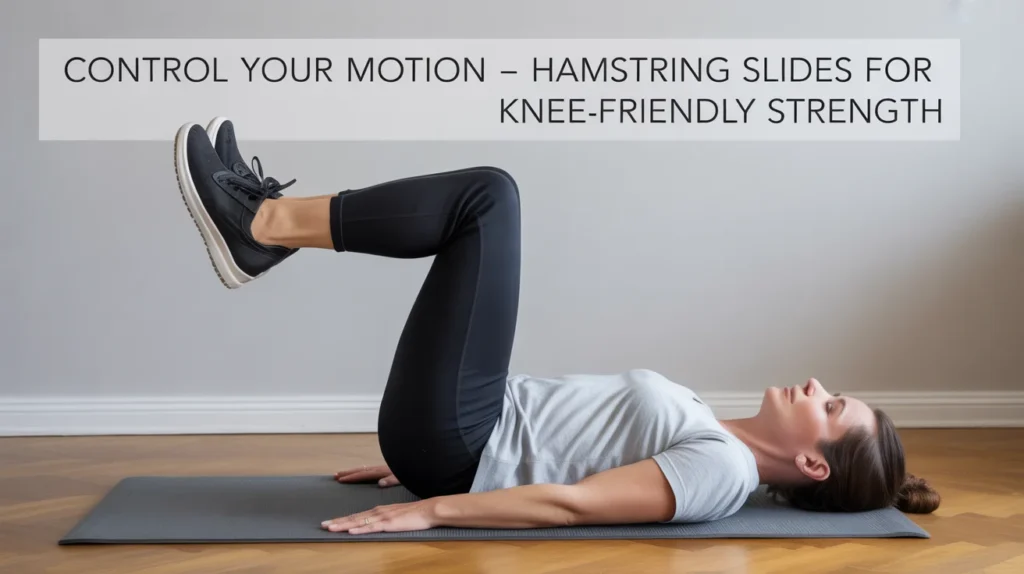
4. Eccentric Hamstring Slides
A physical therapy favorite, this modern exercise strengthens your hamstrings in a knee-friendly way.
How to do it:
- Lie on your back, heels on two sliders (or towels) on a smooth floor.
- Lift your hips into a bridge, then slowly slide your feet away to extend your legs.
- Drop your hips to the floor, return your feet, and repeat.
- Aim for 10 slides, 2 sets.
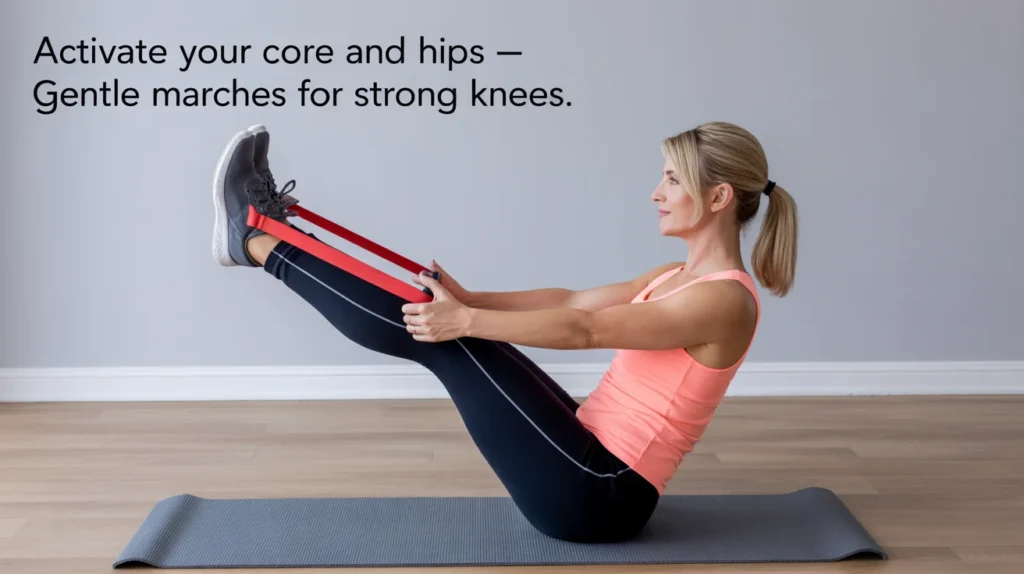
5. Seated Marches with Mini Band
This dynamic move is trending in pilates classes for activating hip flexors and core stability.
How to do it:
- Sit near the front of a chair, mini band just above your knees.
- Lift one knee toward your chest, keeping tension on the band.
- Lower and repeat on the other side like a march.
- Do 15 per leg, 3 sets.
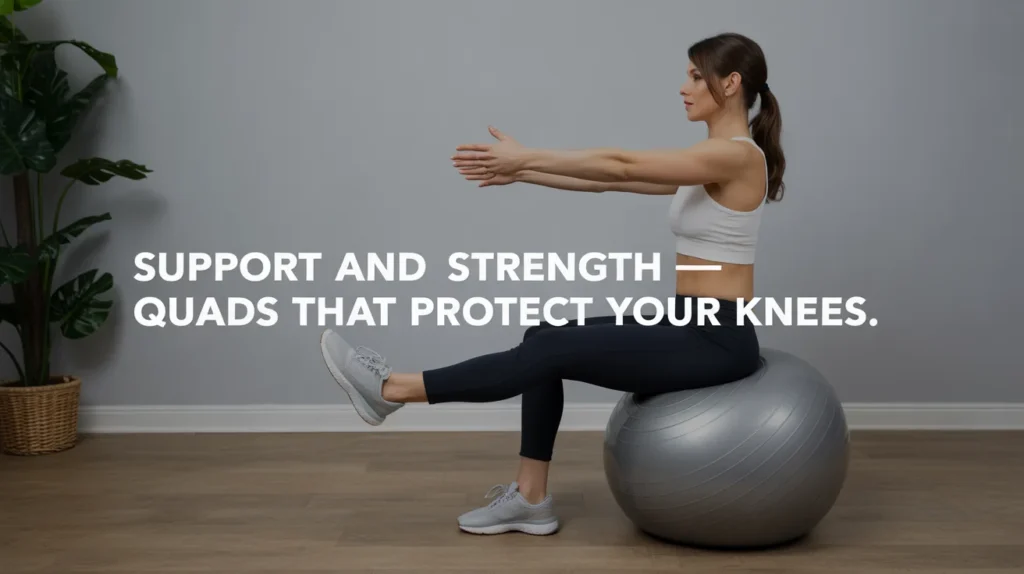
6. Stability Ball Leg Extensions
A modern approach, this Leg Exercises for Bad Kneessupports the knee joint while engaging your quads and core.
How to do it:
- Sit on a stability ball, feet flat.
- Slowly extend one knee so your foot lifts a few inches off the ground.
- Hold for a second, then lower.
- Complete 10 reps per leg, 2 rounds.
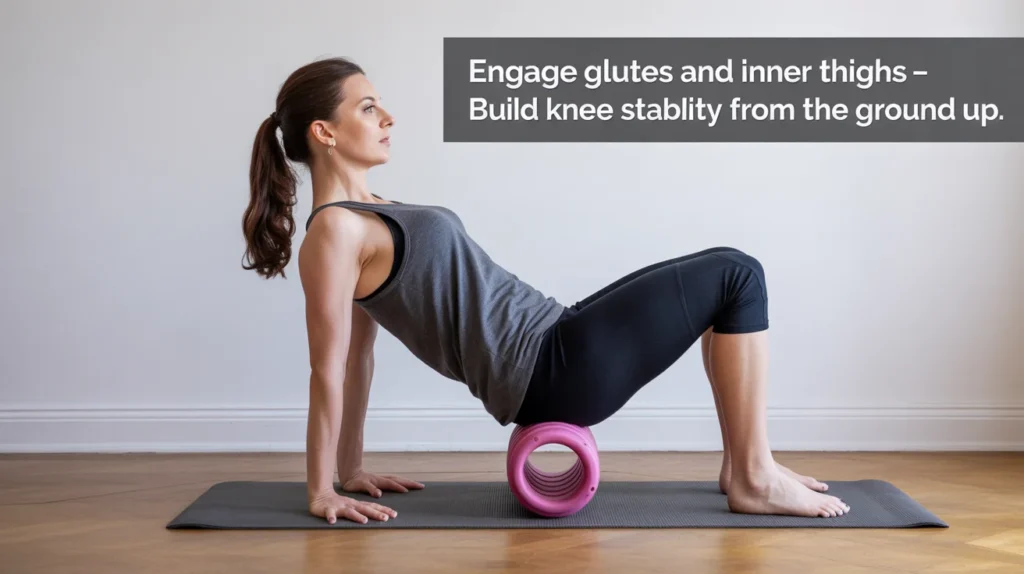
7. Bridge with Foam Roller Squeeze
A contemporary update to glute bridges, this version adds inner thigh activation for better knee alignment.
How to do it:
- Lie on your back, knees bent, feet flat with a foam roller or small ball between your knees.
- Squeeze the roller as you lift your hips into a bridge.
- Lower with control and repeat.
- Try 12 reps, 2–3 sets.
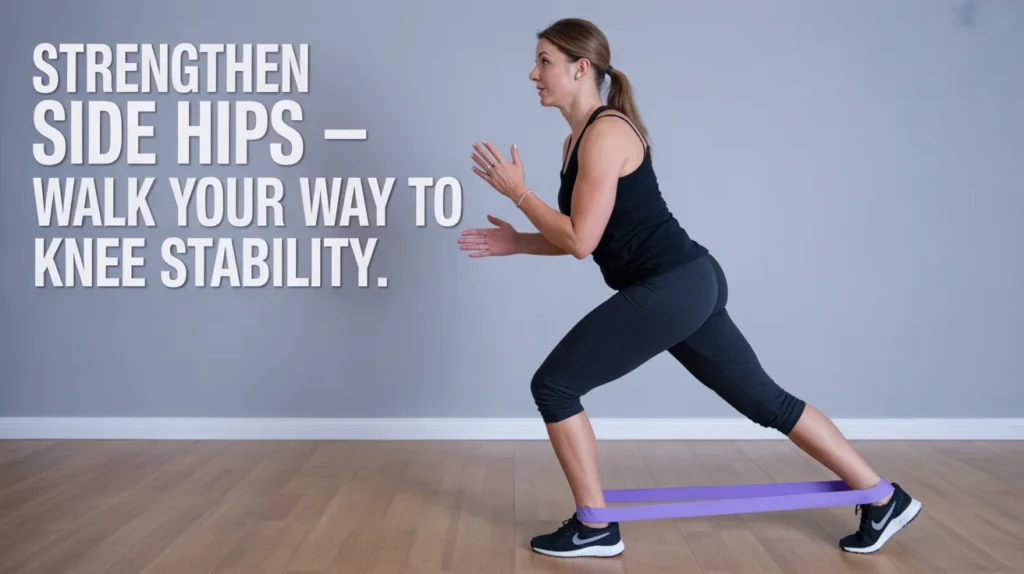
8. Lateral Mini Band Walks
A favorite in modern rehab, these walks strengthen the hip abductors, crucial for knee stability.
How to do it:
- Stand with a mini band around your ankles.
- Slightly bend your knees (just a partial squat), then take small steps to the side.
- Take 8–10 steps each direction.
- Repeat for 3 rounds.
9. Standing Terminal Knee Extension (TKE) with Band
This innovative move builds quad strength and joint stability without joint strain.
How to do it:
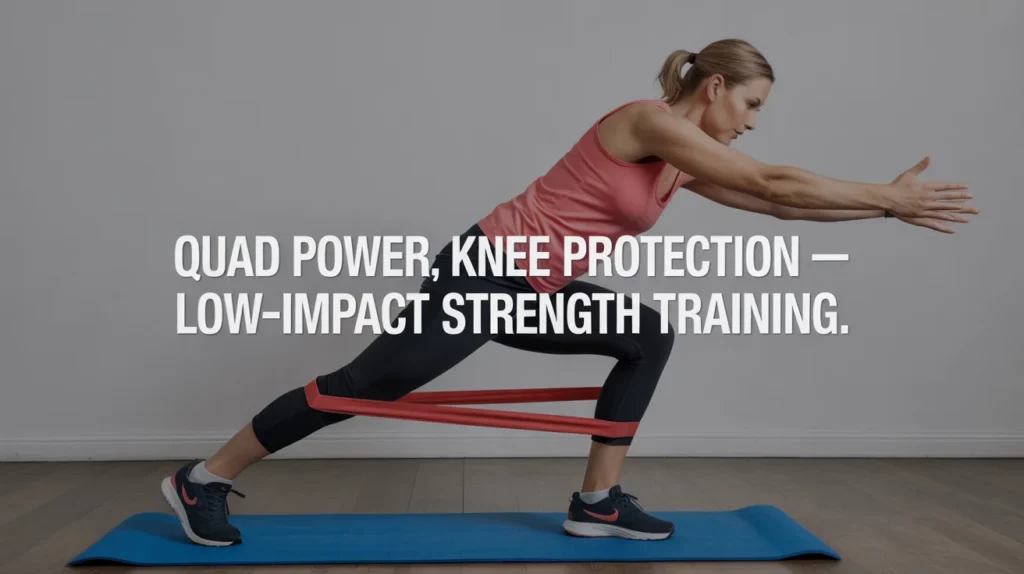
- Anchor a resistance band behind your knee (tied to a doorknob works).
- Stand with a slight bend at the knee, foot flat, and let the band pull your knee forward.
- Straighten your knee against the band’s force while tightening your thigh and glute.
- Do 12–15 reps per leg, 2 sets.
10. Aquatic Running Drills
Take your routine to the pool with trending aquatic running or high knees in the water, nearly impact-free but highly effective.
How to do it:
- In chest-deep water, jog in place, raising your knees as high as comfortable.
- Focus on staying tall and swinging your arms.
- Continue for 1–2 minutes, rest, and repeat for 3 rounds.

Exercise Modification Comparison
| Exercise | Classic Approach | Modern, Low-Impact Upgrade |
|---|---|---|
| Standard Lunge | Deep step forward with impact | Reverse Slider Lunge: Controlled, knee-friendly glide |
| Seated Leg Extension Machine | Gym machine, heavy weights | Stability Ball Leg Extension: At-home, joint-supportive |
| Conventional Walking or Running | Repetitive ground impact | Aquatic Running Drills: Zero impact, full lower-body workout |
| Traditional Side-Lying Leg Raises | Basic bodyweight movement | Mini Band Hip Abduction/March: Functional, adds resistance |
Creating a Consistent Routine
Finding time to exercise can be the biggest hurdle for any mom. The key is to start small and be realistic. You don’t need to do all ten of these exercises every day. Try picking 3-4 exercises to do on one day, and then a different 3-4 the next time you work out. Aim for two to three sessions per week.
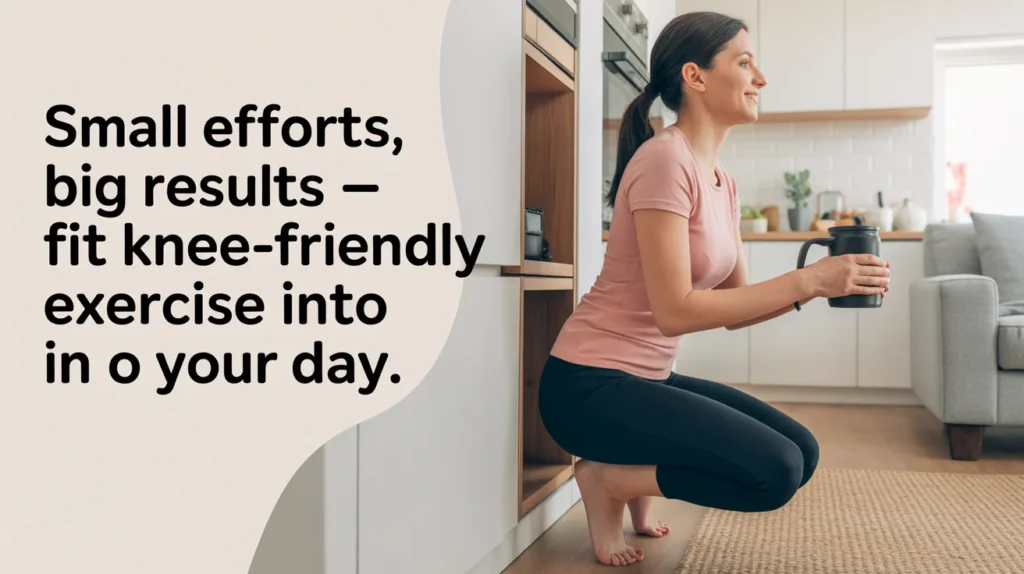
You can even break it up throughout your day. Do a set of calf raises while you wait for your coffee to brew. Do some wall sits while you’re on the phone. Consistency is far more important than intensity. Over time, these small efforts add up to big improvements in your strength and a significant reduction in knee pain. Remember to complement these leg exercises for bad knees with gentle stretching to maintain flexibility.
For more information on the benefits of exercise for arthritis and joint pain, the Centers for Disease Control and Prevention (CDC) provides excellent resources. Additionally, the American Academy of Orthopaedic Surgeons offers detailed insights into knee conditioning programs.
Conclusion: Take Control of Your Knee Health
Living with knee pain doesn’t have to be your reality. As a busy mom, you deserve to move through your day with strength and without discomfort. By incorporating these ten life-changing leg exercises for bad knees into your routine, you can build the muscular support needed to protect your joints, reduce pain, and improve your overall quality of life.
Start slowly, listen to your body, and celebrate every small victory. You are taking a powerful and proactive step toward a healthier, more active future for yourself and your family.
Frequently Asked Questions (FAQ)
Q1: Can I do these exercises if I have arthritis in my knees?
A1: Yes, many of these low-impact exercises are specifically recommended for people with arthritis. They help strengthen supporting muscles without stressing the joint. However, it’s always best to consult with your doctor or a physical therapist before starting a new exercise program.
Q2: How soon will I see results from these leg exercises?
A2: While some people may feel a difference in stability within a couple of weeks, significant improvements in strength and pain reduction typically take 4-6 weeks of consistent exercise. Be patient and stick with it.
Q3: What should I do if an exercise causes pain?
A3: If you feel any sharp or intense pain in your knee joint, stop the exercise immediately. Try reducing the range of motion or switching to a different exercise. The goal is to feel the muscles working, not to feel pain in the joint.
Q4: Do I need any special equipment?
A4: No, all of these exercises can be done at home with just your body weight. For step-ups, you can use the bottom stair of a staircase. A yoga mat can make floor exercises more comfortable, but it’s not required.